
The STOP/DJVU family of ransomware-type infections includes the Foza virus. This virus uses a strong encryption method that encrypts your files (videos, photos, and documents). It adds a specific “.foza” extension to the encrypted files, making it impossible to calculate the key.
I’ve compiled a comprehensive collection of all possible solutions, techniques, and tricks to neutralize the FOZA virus and decrypting files. In certain situations, it is easy to restore your files. Sometimes, it’s impossible.
There are several universal methods for recovering encrypted .foza files, which will be demonstrated below. Reading the entire instruction manual carefully and understanding it all is vital. Do not skip any steps. Each of these steps is very important and must be completed by you.
Once the Foza virus infects the computer system and starts encrypting files, it demands a ransom payment in exchange for a decryption key to unlock the encrypted files. The ransom note, which appears as a text file named “_readme.txt“, includes details on paying the ransom.
However, it is important to note that payment of the ransom does not guarantee that you will get your data back. Cybercriminals behind Foza have been known to be unreliable, and there were instances where they failed to provide the encryption key after receiving the ransom.
The Foza key is unique for every victim, with one limitation:
- If Foza is not able to establish a connection to its command and control server (C&C Server) before beginning the process of encryption, it uses the offline key. This key is the same for all victims, which makes it possible to decrypt encrypted files during a ransomware attack.
Foza virus?
☝️ Foza can be correctly identified as a STOP/DJVU ransomware infection.
Foza
🤔 Foza virus is ransomware that originates from the DJVU/STOP family. Its primary purpose is to encrypt files that are important for you. After that ransomware virus asks its victims for a ransom fee ($490 – $980) in BitCoin.
The Foza ransomware is a kind of threat that encrypted your files and then forces you to pay to restore them.
Foza virus is similar to other the same DJVU family: Gash, Coza, Coty. This virus encrypt all common file types and adds its particular “.foza” extension into all files. For instance, the file “1.jpg”, will be changed into “1.jpg.foza“. As soon as the encryption is successfully accomplished, virus generates a specific message file “_readme.txt” and puts it into all folders that contain the modified files.
The image below gives a clear vision of how the files with “.foza” extension look like:
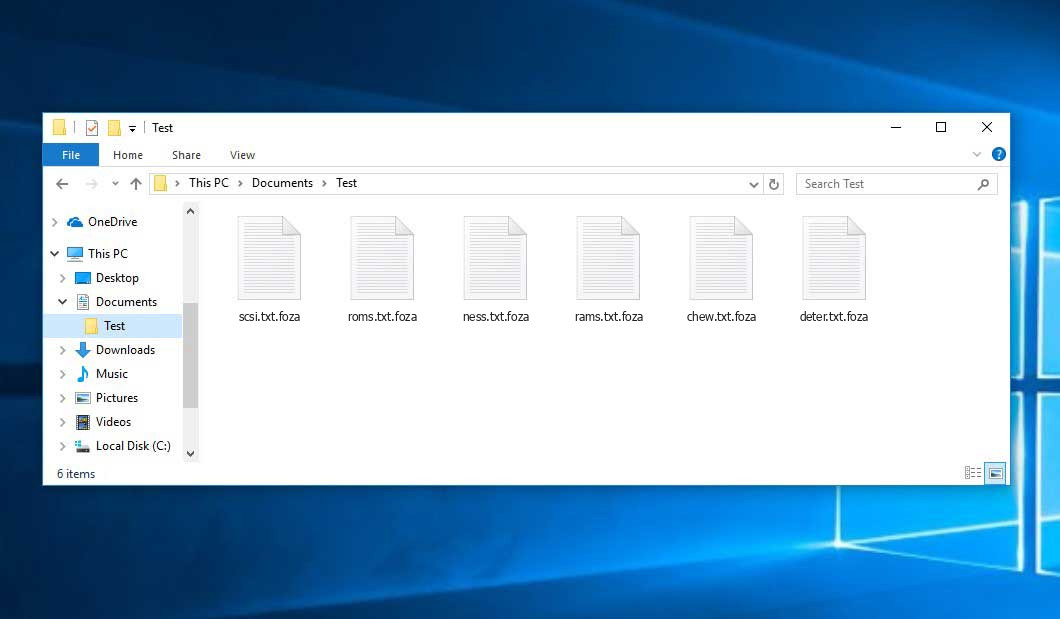
Foza File (STOP/DJVU Ransomware)
| Name | Foza Virus |
| Ransomware family1 | DJVU/STOP2 ransomware |
| Extension | .foza |
| Ransomware note | _readme.txt |
| Ransom | From $490 to $980 (in Bitcoins) |
| Contact | [email protected], [email protected] |
| Detection | Trojan:Win32/Smokeloader.GHN!MTB, Trojan:Win32/RedLine.LD!MTB, Ransom:MSIL/TankixCrypt.PA!MTB |
| Symptoms |
|
| Fix Tool |
To remove possible malware infections, scan your PC:
6-day free trial available. |
This _readme.txt file asking payment is for restore files via decryption key:
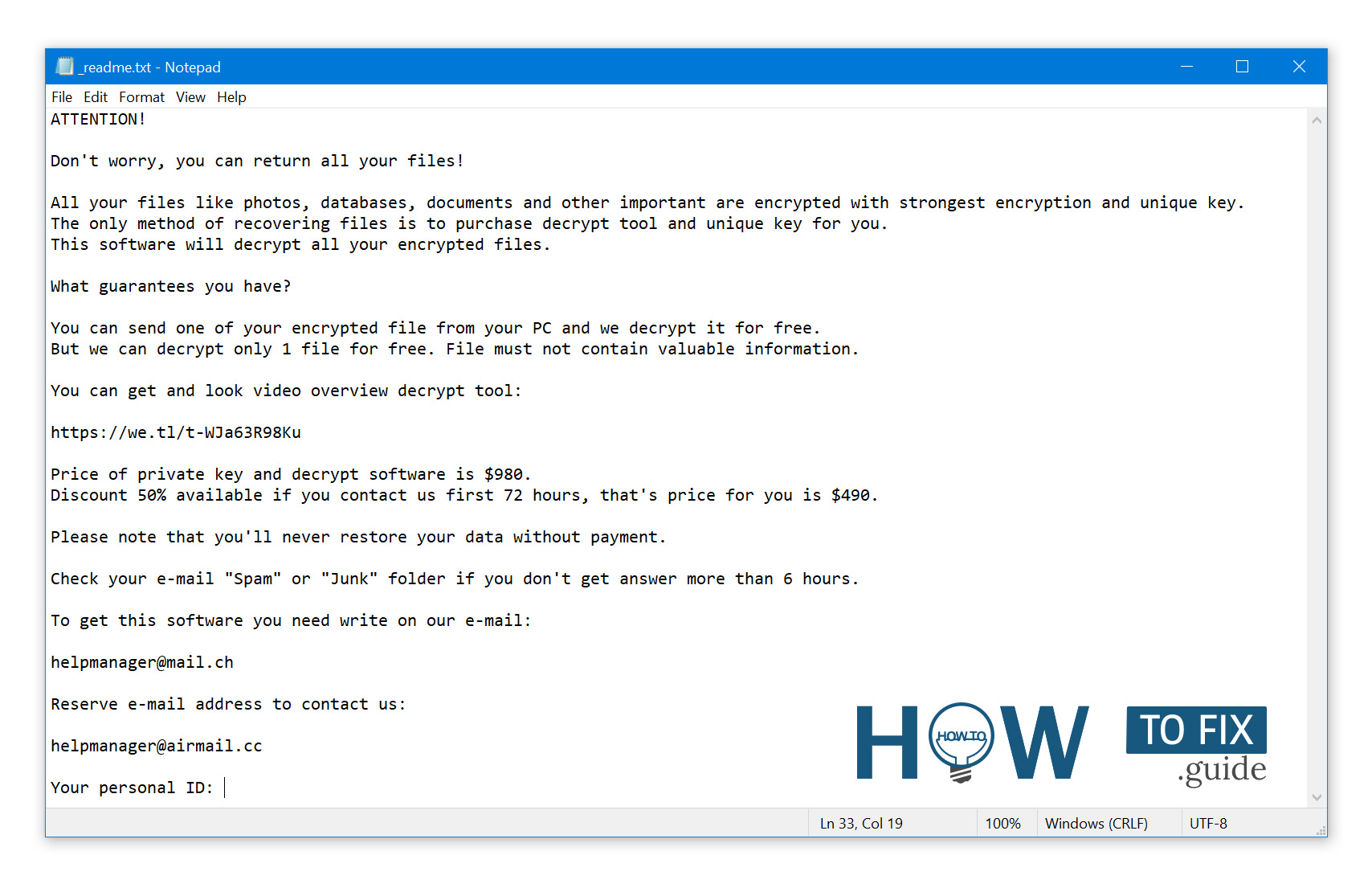
_readme.txt (STOP/DJVU Ransomware) – The scary alert demanding from users to pay the ransom to decrypt the encoded files contains these frustrating warnings
Foza ransomware arrives as a set of processes that are meant to perform different tasks on a victim’s computer. One of the first ones being launched is winupdate.exe, a tricky process that displays a fake Windows update prompt during the attack. This is meant to convince the victim that a sudden system slowdown is caused by a Windows update. However, at the same time, the ransomware runs another process (usually named by four random characters) which starts scanning the system for target files and encrypting them. Next, the ransomware deletes Volume Shadow Copies from the system using the following CMD command:
vssadmin.exe Delete Shadows /All /Quiet
“The deletion of System Restore Points makes it impossible to restore the previous computer state using System Restore Points. Ransomware operators are eliminating any Windows OS-based methods that could assist victims in restoring files for free. Moreover, the crooks add a list of domains to the Windows HOSTS file and map them to the localhost IP, causing the victim to encounter a DNS_PROBE_FINISHED_NXDOMAIN error when attempting to access one of the blocked websites.”
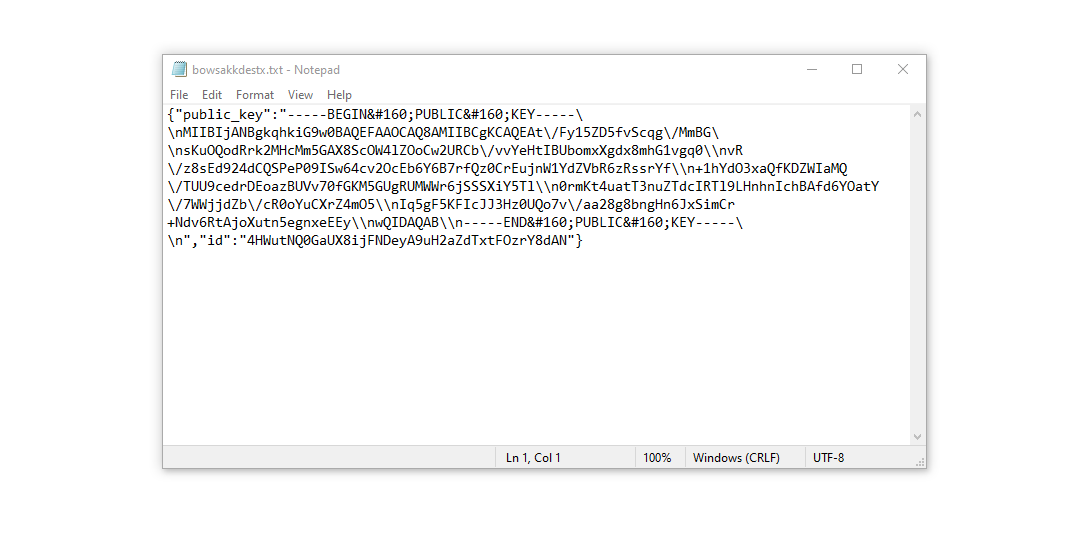
We have observed that cybercriminals use ransomware to block websites that provide various how-to guides for computer users. The criminals aim to prevent victims from accessing relevant and helpful information about ransomware attacks online by restricting access to specific domains. The virus also generates two text files on the victim’s computer, which contain attack-related details – the victim’s public encryption key and personal ID. The files are named bowsakkdestx.txt and PersonalID.txt.
After all these modifications, the malware doesn’t stop. Variants of STOP/DJVU tend to drop Vidar password-stealing Trojan on compromised systems. This threat has a lengthy list of capabilities, such as:
- Stealing Steam, Telegram, Skype login / password;
- Stealing cryptocurrency wallets;
- Downloading malware to the computer and running it;
- Stealing browser cookies, saved passwords, browsing history, and more;
- Viewing and manipulating files on victim’s computer;
- Allowing the hackers to perform other tasks on the victim’s computer remotely.
The cryptography algorithm used by DJVU/STOP virus is AES-256. So, if your files got encrypted with an online decryption key, which is totally distinct. The sad reality is that it is impossible to decrypt the files without the unique key.
In case if Foza worked in online mode, it is impossible for you to gain access to the AES-256 key. It is stored on a distant server owned by the criminals who distibute the Foza infection.
For receiving decryption key the payment should be $980. To obtain the payment details, the victims are encouraged by the message to contact the frauds by email ([email protected]).
The message by the ransomware states the following information:
ATTENTION!

Don't worry, you can return all your files!

All your files like photos, databases, documents and other important are encrypted with strongest encryption and unique key.
The only method of recovering files is to purchase decrypt tool and unique key for you.
This software will decrypt all your encrypted files.

What guarantees you have?

You can send one of your encrypted file from your PC and we decrypt it for free.
But we can decrypt only 1 file for free. File must not contain valuable information.

You can get and look video overview decrypt tool:

https://we.tl/t-WJa63R98Ku

Price of private key and decrypt software is $980.
Discount 50% available if you contact us first 72 hours, that's price for you is $490.

Please note that you'll never restore your data without payment.

Check your e-mail "Spam" or "Junk" folder if you don't get answer more than 6 hours.

To get this software you need write on our e-mail:

[email protected]

Reserve e-mail address to contact us:

[email protected]

Your personal ID:
XXXXXXXXXXXXXXXXXXXXXXXXXXXXXXX
Do not pay for Foza!
Please, try to use the available backups, or Decrypter tool
_readme.txt file also indicates that the computer owners must get in touch with the Foza representatives during 72 hours starting from the moment of files were encrypted. On the condition of getting in touch within 72 hours, users will be granted a 50% rebate. Thus the ransom amount will be minimized down to $490). Yet, stay away from paying the ransom!
I definitely recommend that you do not contact these frauds and do not pay. The one of the most real working solution to recover the lost data – just using the available backups, or use Decrypter tool.
The peculiarity of all such viruses apply a similar set of actions for generating the unique decryption key to recover the ciphered data.
Thus, unless the ransomware is still under the stage of development or possesses with some hard-to-track flaws, manually recovering the ciphered data is a thing you can’t perform. The only solution to prevent the loss of your valuable data is to regularly make backups of your crucial files.
Note that even if you do maintain such backups regularly, they ought to be put into a specific location without loitering, not being connected to your main workstation.
For instance, the backup may be kept on the USB flash drive or some alternative external hard drive storage. Optionally, you may refer to the help of online (cloud) information storage.
Needless to mention, when you maintain your backup data on your common device, it may be similarly ciphered as well as other data.
For this reason, locating the backup on your main PC is surely not a good idea.
How I was infected?
Ransomware has a various methods to built into your system. But it doesn’t really matter what concrete way was used in your case.
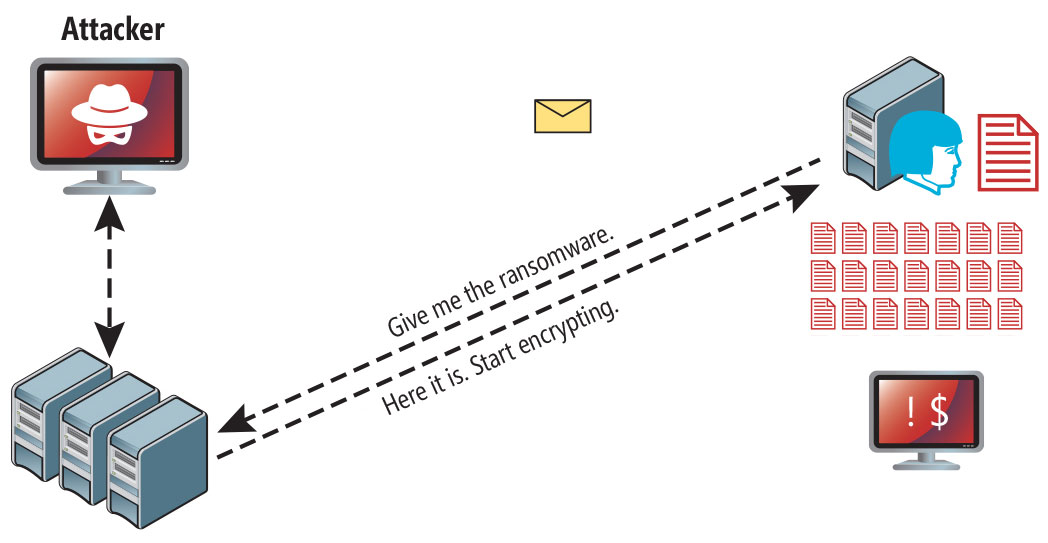
Foza ransomware attack following a successful phishing attempt.
- hidden installation along with other apps, especially the utilities that work as freeware or shareware;
- dubious link in spam emails leading to the virus installer
- online free hosting resources;
- using illegal peer-to-peer (P2P) resources for downloading pirated software.
There were cases when the Foza virus was disguised as some legitimate tool, for example, in the messages demanding to initiate some unwanted software or browser updates. This is typically the way how some online frauds aim to force you into installing the Foza ransomware manually, by actually making you directly participate in this process.
Surely, the bogus update alert will not indicate that you are going to actually inject the virus. This installation will be concealed under some alert mentioning that allegedly you should update Adobe Flash Player or some other dubious program whatsoever.
Cracked apps represent damage and may inject serious malware, including the Foza ransomware. Using P2P is illegal. Take precautions to prevent Foza ransomware from infecting your device.
Although there is no guarantee of complete protection, follow these tips: be cautious when installing free software, read the installers’ additional offerings, avoid opening suspicious email attachments or files from unknown sources, and keep your security program updated.
The malware disguises itself as a malicious process running in the background and will not be listed as an available program. However, it will be masked under some malicious process running regularly in the background, starting from the moment when you launch your PC.
How To Remove Foza Virus?
In addition to encode a victim’s files, the Foza infection has also started to install the Vidar Stealer on computer to steal account credentials, cryptocurrency wallets, desktop files, and more.3
Reasons why I would recommend GridinSoft4
-
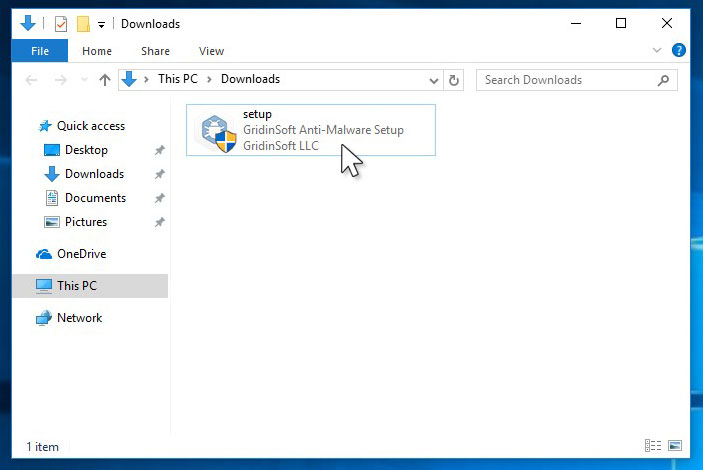
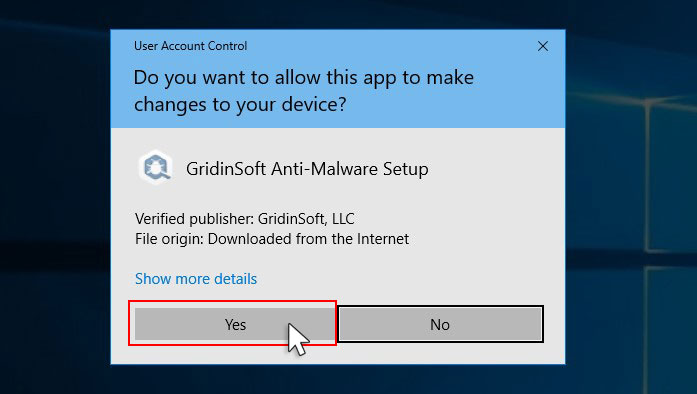
Run the setup file.
-
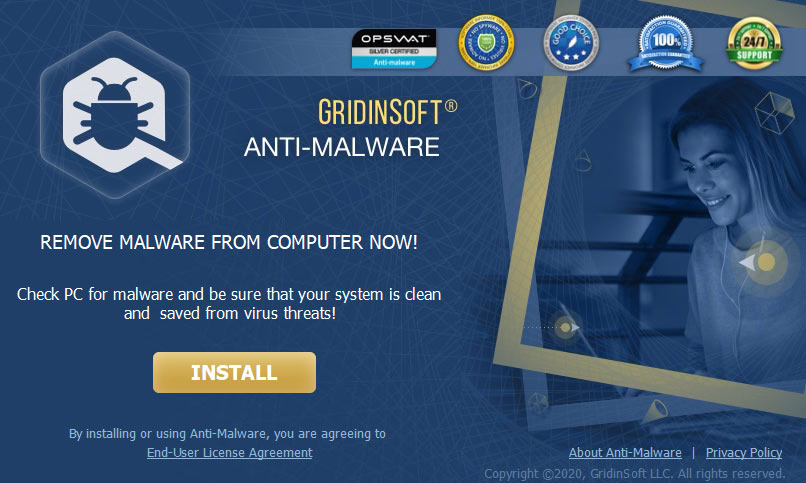
Press “Install” button.
-
Once installed, Anti-Malware will automatically run.
-
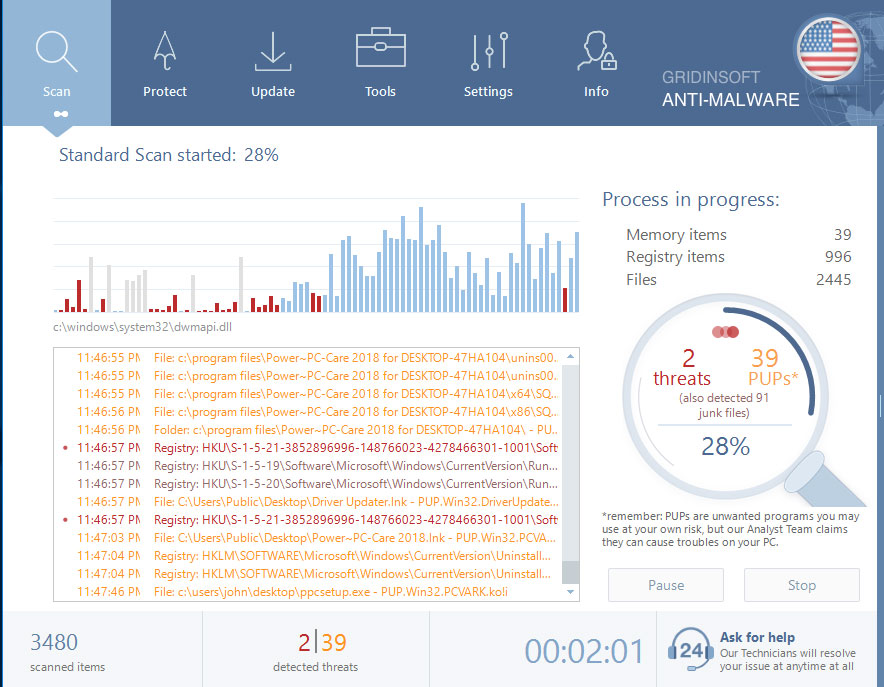
Wait for complete.
-
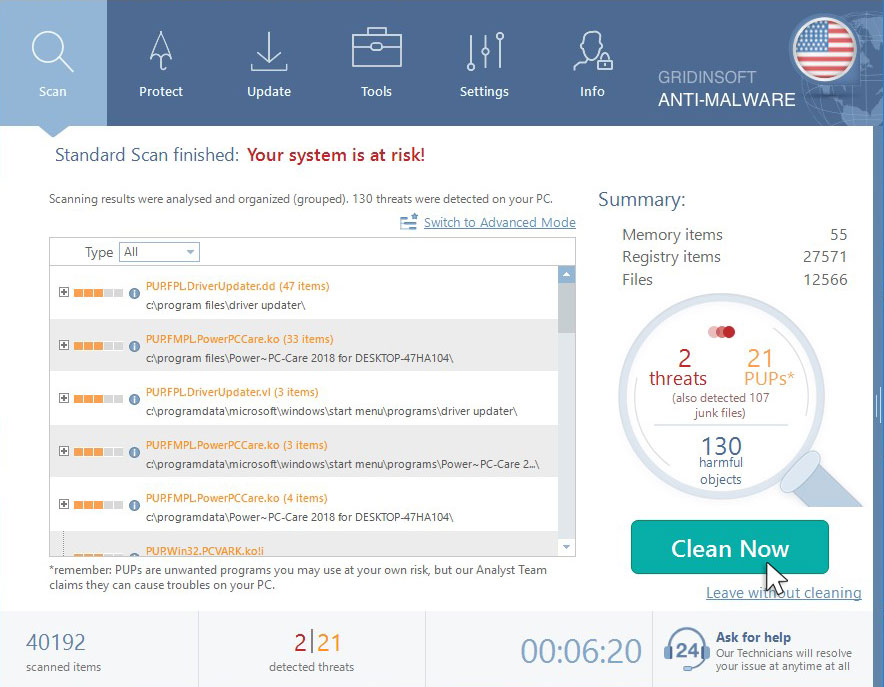
Click on “Clean Now”.


Leave a Comment