
Seeing the TrojanRansom.Cerber malware detection usually means that your computer is in big danger. This computer virus can correctly be named as ransomware – virus which ciphers your files and asks you to pay for their decryption. Removing it requires some peculiar steps that must be done as soon as possible.
TrojanRansom.Cerber detection is a virus detection you can spectate in your computer. It frequently shows up after the preliminary procedures on your computer – opening the suspicious email, clicking the banner in the Web or installing the program from untrustworthy resources. From the instance it appears, you have a short time to do something about it until it starts its malicious activity. And be sure – it is much better not to wait for these destructive things.
What is TrojanRansom.Cerber virus?
TrojanRansom.Cerber Summary
Summarizingly, TrojanRansom.Cerber virus actions in the infected computer are next:
- Sample contains Overlay data;
- Reads data out of its own binary image;
- Authenticode signature is invalid;
- Encrypting the files kept on the victim’s drives — so the victim cannot open these documents;
- Blocking the launching of .exe files of anti-malware programs
- Blocking the launching of installation files of anti-virus programs
Ransomware has been a major problem for the last 4 years. It is difficult to picture a more damaging virus for both individuals and companies. The algorithms used in TrojanRansom.Cerber (typically, RHA-1028 or AES-256) are not hackable – with minor exclusions. To hack it with a brute force, you need to have a lot more time than our galaxy actually exists, and possibly will exist. But that malware does not do all these horrible things without delay – it may take up to several hours to cipher all of your documents. Hence, seeing the TrojanRansom.Cerber detection is a clear signal that you need to start the elimination process.
Where did I get the TrojanRansom.Cerber?
Routine tactics of TrojanRansom.Cerber injection are common for all other ransomware examples. Those are one-day landing websites where users are offered to download and install the free software, so-called bait e-mails and hacktools. Bait e-mails are a quite new method in malware distribution – you get the email that imitates some routine notifications about deliveries or bank service conditions changes. Within the email, there is a corrupted MS Office file, or a web link which leads to the exploit landing page.
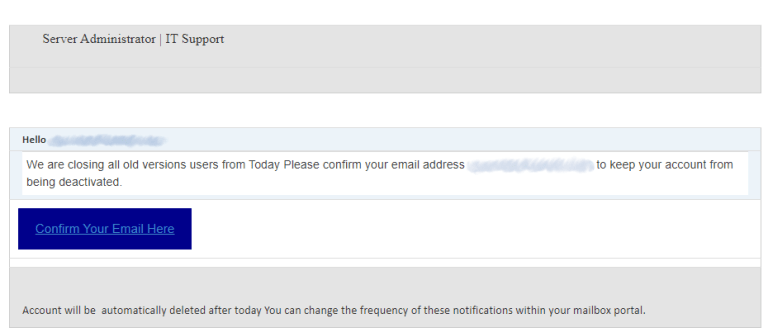
Malicious email message. This one tricks you to open the phishing website.
Avoiding it looks pretty easy, however, still needs a lot of recognition. Malware can hide in different places, and it is better to stop it even before it gets into your computer than to rely upon an anti-malware program. Basic cybersecurity knowledge is just an important item in the modern-day world, even if your interaction with a PC remains on YouTube videos. That can save you a great deal of time and money which you would certainly spend while trying to find a fix guide.
TrojanRansom.Cerber malware technical details
File Info:
name: 4542058B328C84D77A5A.mlwpath: /opt/CAPEv2/storage/binaries/c235fe8fbe86193a71a7f0c32aab0bf47b8f6563b7ef42dc9410e89b1c179c66crc32: 051CD30Bmd5: 4542058b328c84d77a5a96c45813e425sha1: b0c52cecf5fc151926f8cb04654d702f67a64f01sha256: c235fe8fbe86193a71a7f0c32aab0bf47b8f6563b7ef42dc9410e89b1c179c66sha512: 021731e25d74c43dc0c01848fba8ca22df39aa86246c2125f953af58bc6227aa4667bf0f43a89f092c5c5a5eaf8c640e2f24e92d78b5ad07b3948d57b3be7dfbssdeep: 12288:/mWZW0gQFsJqZgCy+GKYGJRcqMmb5MnYP7wHNPvA6Z7uPYejcv71CT:uWZeQzgC9TZh5GYP7INP4w6ZtTtype: PE32 executable (GUI) Intel 80386, for MS Windowstlsh: T118E42390B316F888D5B05A322678FEBA47B4BB766D21DF0727427F1CB429182F5792D0sha3_384: a718b79600c7b55decc7e3f08cbee2271d2de34ed57ffdda750009233b1f4bdae86dcee061ad9a96bb0c8d2f2166c27cep_bytes: 81ecd40200005356576a205f33db6801timestamp: 2016-04-03 20:19:02Version Info:
0: [No Data]
TrojanRansom.Cerber also known as:
| Bkav | W32.AIDetectMalware |
| CrowdStrike | win/grayware_confidence_60% (D) |
| APEX | Malicious |
| McAfee-GW-Edition | BehavesLike.Win32.Generic.jc |
| Detected | |
| Microsoft | Ransom:Win32/Cerber |
| Cynet | Malicious (score: 100) |
| McAfee | Artemis!4542058B328C |
| VBA32 | TrojanRansom.Cerber |
| Cylance | unsafe |
| Panda | Trj/CI.A |
| Rising | [email protected] (RDML:sffFVHPcU7SzLwkq6Cp92A) |
| Ikarus | Trojan.Win32.Krypt |
| Fortinet | W32/GenKryptik.FARC!tr |
| DeepInstinct | MALICIOUS |


Leave a Comment