
Seedmine.exe is a suspicious process when it appears without clear consent, consumes CPU/GPU resources, or keeps returning after reboot. Start by checking where the file is located and what launched it.
Seedmine.exe coin miner overview
Seedmine.exe is suspicious when it runs without consent, consumes CPU or GPU resources, starts with Windows, or comes back after being closed. The name is commonly discussed in the context of coin miners: programs that use your hardware to mine cryptocurrency for someone else.
The key question is consent. Mining software is not automatically malware when a user installs and configures it knowingly. It becomes a threat or unwanted program when it is hidden, bundled, or launched without clear permission.
Why it matters
A miner can make the PC slow, hot, noisy, and unstable. It may increase electricity use and reduce hardware lifespan if the CPU/GPU stays under heavy load for long periods. Some miners also arrive with loaders, proxy changes, unwanted extensions, or scripts that reinstall the miner after deletion.
Common infection sources
- Cracked games, activators, and keygens.
- Fake browser updates or fake video players.
- Bundled installers from download portals.
- Malicious ads leading to scripts or archives.
- Remote access abuse on poorly protected systems.
Manual verification checklist
- Open Task Manager and check CPU, GPU, disk, and network usage.
- Open the file location for Seedmine.exe and note the full path.
- Look for configuration files containing mining pool or wallet addresses.
- Review installed apps from the day the slowdown began.
- Check Task Scheduler, Services, Startup Apps, and browser extensions.
- Use Resource Monitor or your security tool to see whether the process connects to mining pools.
Removal steps
- Disconnect from suspicious downloads and close unknown browser tabs.
- Uninstall the parent bundle or recently installed suspicious app.
- Quarantine Seedmine.exe and related files with a full anti-malware scan.
- Remove scheduled tasks, services, and startup entries pointing to the same folder.
- Reboot, then confirm CPU/GPU usage remains normal for several minutes.
After cleanup
Check that the miner does not return after reboot and that no unknown process immediately starts using GPU or network. If you used passwords while the suspicious bundle was active, change important accounts from a clean device. Miners are sometimes bundled with stealers.
FAQ
Can Seedmine.exe damage hardware? Continuous high load can increase heat and wear, especially on laptops and poorly cooled systems.
Why does it return after I delete it? A scheduled task, service, loader, or parent bundle may recreate it.
Is every miner a virus? No. The problem is hidden installation and unauthorized resource use.
Related guides: Win32:Zorex-A, coin miner removal guides, and malware guides.
Seedmine.exe behavior and hardware impact
Seedmine.exe can overload CPU or GPU resources when it is running as an unauthorized miner. If the process keeps returning, focus on the startup entry, scheduled task, service, or parent bundle that launches it rather than only deleting the visible file.
How dangerous is the Seedmine.exe miner?
Coin miners does not deal damage to your files. However, they make a lot of unpleasant things with the whole system
First of all, Seedmine.exe malware makes your PC overloaded. It is not able to run your applications now, since all processor power is consumed by a virus. That malware does not care for your demands, all it pays attention to is making money on you. Even if you are patient, and you waited until browser is open, you will likely suffer from extremely sluggish efficiency. Pages will open up for years, any type of logins will likely take about a minute – just a horror story for a person that works online.
Seedmine.exe Technical Summary.
| File Name | Seedmine.exe |
| Type | Trojan Coin Miner |
| Detection Name | Trojan:Win32/CoinMiner |
| Distribution Method | Software bundling, Intrusive advertisement, redirects to shady sites etc. |
| Similar behavior | Intel_pie_service.exe, Asusosd.exe, Adobenotificationclient.exe |
| Removal | Remove the parent bundle, clear persistence entries, scan the system, and confirm CPU/GPU usage stays normal after reboot. |
“Visible” damage is not a solitary bad activity coin miners perform to your computer. Seedmine.exe coin miner likewise deals damage to your operating system. To conduct all malicious operations successfully, it wrecks the protection features of your system. You will likely see your Microsoft Defender disabled – malware halts it to prevent detection. If you open the HOSTS file, you will likely see a load of new entries – they are brought in by this trojan miner to connect your PC to a malicious mining network. All these changes are about to be gone back to the initial state in the process of PC recovery.
Hardware effects of coin miner activity
Besides slowing down your computer, running at peak level for a long period of time can trigger damage to your machine as well as raise power costs. PC components are designed to easily get along with high load, but they are good with it only in case when they are in a good shape.
Tiny and well-protected processor cooling system is quite hard to crack. Meanwhile, GPUs have large and easy-to-access rotors, which can be easily broke if touched while spinning, for example, by the user much earlier before the malware injection. Malfunctioning cooling system, together with the very high load caused by Seedmine.exe miner can easily lead to graphic processing unit failure. Video cards are also tend to have fast wearing when used for cryptocurrency mining. It is surely an undesirable situation when your GPU’s performance decreases on 20-30% just after 1-2 weeks of being exploited in such a way.
How did I get Seedmine.exe coin miner virus?
Coin miners are spread through different ways, but their main sources are malicious banners and programs from dubious sources
Coin miners are the most widespread malevolent programs through “major” viruses. Adware frequently acts as a carrier for Seedmine.exe malware injection: it shows you the banners, which have a link to malware downloading. Yes, this abstract “malware” can belong to any type – an additional adware, spyware, rogue or backdoor. However, the statistics say that approximately 30% of all malware spread through the malicious banners are coin miners – and Seedmine.exe is just one of them.
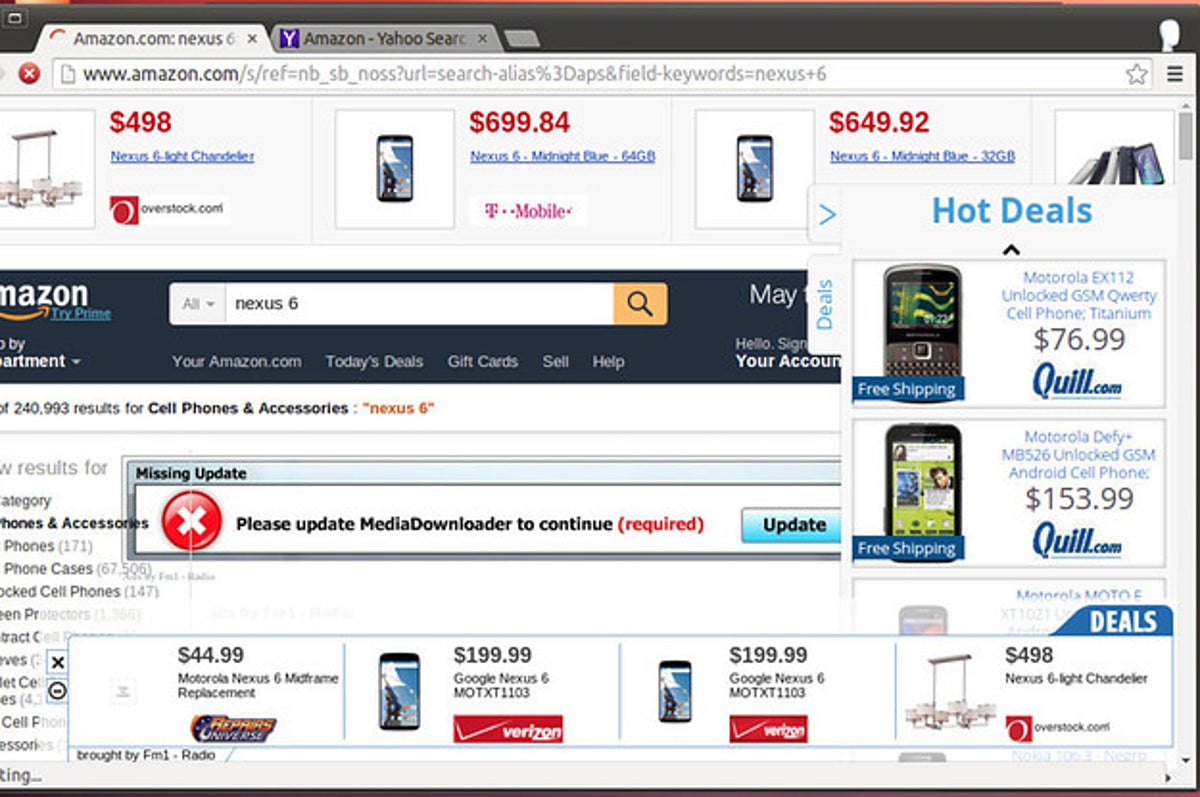
The example of malicious banners you can see in the Internet
An additional way you could get this thing on your PC is by downloading it from the unreliable web page as a part of a program. Users that spread hacked versions of favored programs (which do not require the license key) have small chances to get paid. Hence, there is a huge temptation to add in malware to the final package of the hacked application and receive a coin for every installation. Before criticizing these individuals for hacking and also malware spreading, ask yourself – is it alright to avoid purchasing the program in such a way? It is much cheaper to pay $20-$30 one time than to pay a much bigger figure for antivirus software as well as new parts for your desktop.



Leave a Comment