
Prysmax is stealer malware that stands out for its sophisticated spreading methods. It includes deceptive emails with malicious attachments, compromised websites, and exploitation of software vulnerabilities, particularly in PDF and Excel files.
Its key actions involve stealing sensitive data like personal information, passwords, credit card details, and total system control capabilities through its Remote Administration Trojan module. This combination makes Prysmax a hazardous and invasive malware.
Prysmax Malware Overview
Prysmax malware, a detrimental program designed to gather data and control devices, offers three purchase options depending on the desired control level. The creator of Prysmax sells a data-stealing variant for €49.99, a Remote Administration Trojan (RAT) for €69.99, and a combined version featuring both stealing and RAT capabilities for €149.99.
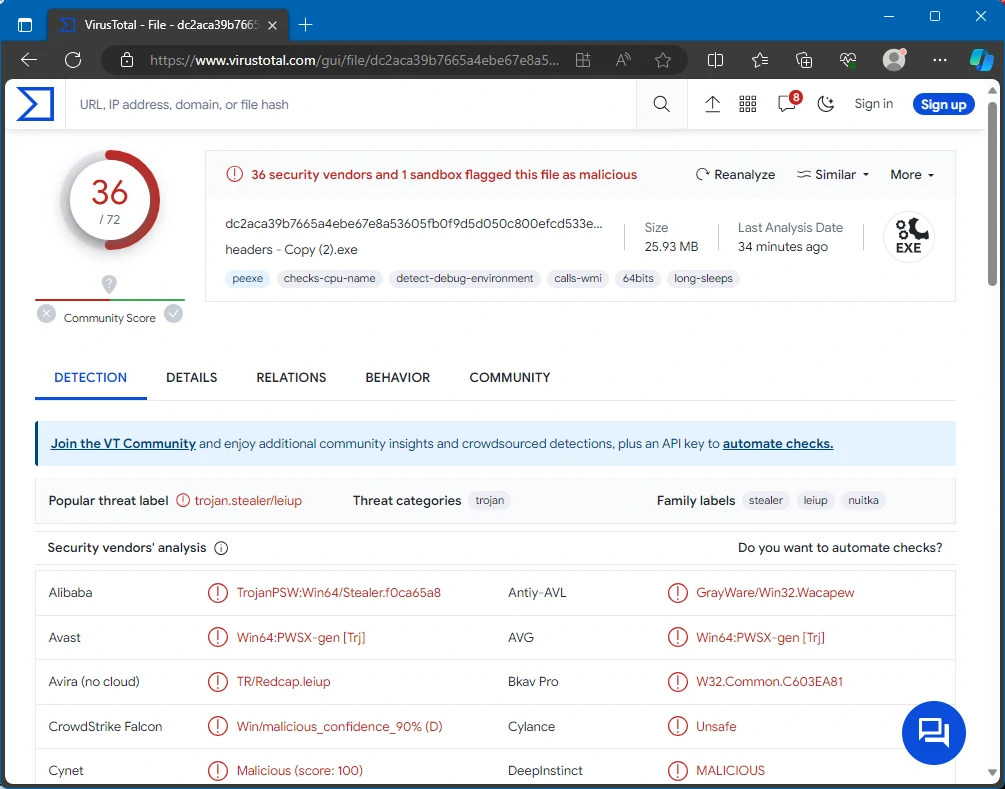
Prysmax detectings result on VirusTotal
| Name | Prysmax RAT and stealer |
| Detection | Trojan.Win64.Packed.sa, Program:Win32/Wacapew.C!ml (Microsoft) |
| Threat Type | Stealer, Remote Administration Trojan (RAT) |
| Damage | Stolen passwords and banking information, identity theft, the victim’s computer added to a botnet, additional infections, compromised online accounts, and more. |
| Similar Behavitor | PySilon, JanelaRAT |
Technical Analysis
The Remote Administration Trojan (RAT) from Prysmax allows complete control over a victim’s computer. This powerful tool enables attackers to gain unrestricted access, facilitating the installation of additional programs (including malware), exfiltration of files and passwords, and alteration of network settings. The Prysmax RAT’s level of control enables malicious actors to monitor and actively intervene in the victim’s activities, using the compromised system for illicit purposes like deploying ransomware.
Spreading Methods
Prysmax malware often infiltrates computers through deceptive methods. Users might receive emails that seem legitimate but contain malicious attachments or links. The malware infects the computer when these links are clicked or the attachments are opened. Additionally, visiting compromised or malicious websites can lead to harmful drive-by downloads.
Moreover, cybercriminals distribute malware using fake pop-ups or notifications that trick users into believing they need a software update through malicious advertisements, exploiting software vulnerabilities, P2P networks, pirated software, third-party downloaders, and similar methods. Often, these tactics rely on users inadvertently downloading and executing the malware themselves.
Specifically, Prysmax malware is known to exploit vulnerabilities in PDF and Excel file formats. When a user opens a compromised PDF or Excel file, its embedded script is activated, enabling the malware to take advantage of the system’s vulnerabilities.


Leave a Comment