
The “Google – Sign-in Attempt Was Blocked” pop-up scam is a pop-up that spreads through deceptive emails, messages, and rogue online ads. It mimics a Google security alert, falsely claiming an unauthorized login attempt.
The scam induces urgency and fear, tricking users into clicking a link that redirects to a fake McAfee scan page. Eventually, its primary goal is to lead users to an affiliate link, capitalizing on the fear of security breaches and the trust in well-known brands.
“Google – Sign-in Attempt Was Blocked” Scam Overview
The “Google – Sign-in Attempt Was Blocked” scam involves a fake notification about an unexpected login. An investigation revealed that this scam aims to promote a legitimate software product. However, the methods used for its promotion are misleading and unethical. Then users are encouraged to click a link leading to a deceptive page, resembling a McAfee antivirus scan. This scam primarily promotes a product through an affiliate link, deceiving users by exploiting the trust in reputable brands and the fear of a security breach.
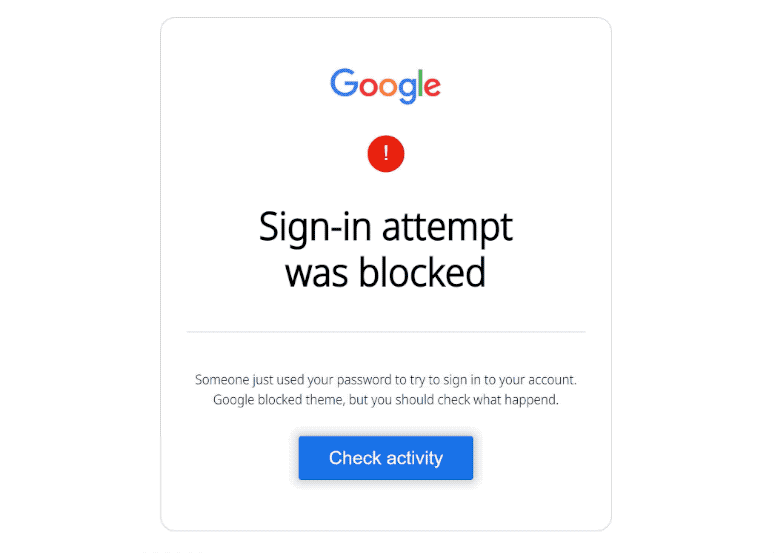
Appearance of “Google” pop-up scam
| Name | “Google – Sign-in Attempt Was Blocked” |
| Threat Type | Phishing, Scam, Social Engineering, Fraud |
| Related Domain | simpleperch[.]com |
| Symptoms | Fake error messages, fake system warnings, pop-up errors, hoax computer scan. |
| Distribution methods | Compromised websites, rogue online pop-up ads, potentially unwanted applications. |
| Damage | Loss of sensitive private information, monetary loss, identity theft, possible malware infections. |
| Similar Behavior | “Virus Has Been Detected On Your Device”, “Your Windows 10 is infected with viruses”, “Avast – Your PC Is Infected With 5 Viruses!” |
How does “Google – Sign-in Attempt Was Blocked” scam work?
“Google – Sign-in Attempt Was Blocked” scam uses a message pretending to be a Google security alert to create urgency and fear. It falsely claims that a login attempt with the user’s password was blocked, hinting at unauthorized account access. Also, he message urges immediate action, directing users to a “Check activity” link. Clicking this link takes users to a fake webpage that looks like a McAfee antivirus scan, simulating a real security check. Also, the aim is to guide users to an affiliate link, where the scammers earn a commission for each purchase made.
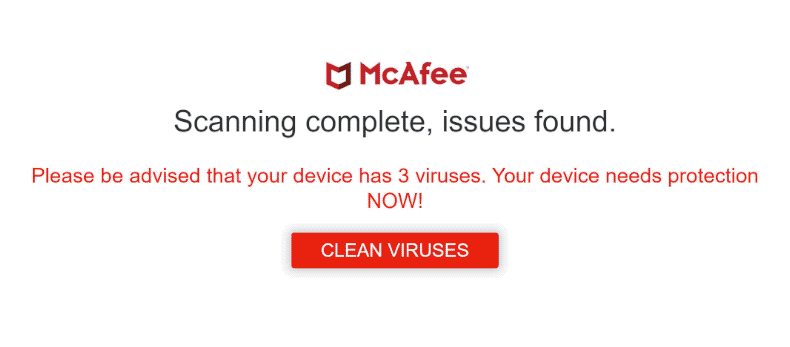
Webpage that mimics a McAfee antivirus scan
The scam’s strategy is to deceive by using the trust in brands like McAfee and exploiting fears of a security breach. People should be cautious and confirm the legitimacy of such messages before reacting.
Scams like this are often crafted to gather various sensitive data, including personal information such as names, addresses, and phone numbers, as well as login details like usernames and passwords. They may also aim to acquire financial information, including credit card numbers and bank account details, creating a risk of identity theft or unauthorized transactions.

