
The “I Want to Inform You About a Very Bad Situation for You” email scam is a highly effective cybercrime, spreading through mass emails using data from previous breaches.
Scammers, craft threatening emails about non-existent compromising videos, instilling fear and urgency. Demanding ransoms in Bitcoin for anonymity, they exploit victims’ panic for financial gain. The scam’s psychological manipulation and use of personal data make it particularly insidious, highlighting the evolving threats in digital security.
“I Want to Inform You About a Very Bad Situation” Email Scam Overview
“I Want to Inform You About a Very Bad Situation for You” extortion email scam, exploiting people’s fear of being exposed for viewing questionable online content, is currently circulating. This scam, it involves a fraudulent email. This email blackmails victims, threatening to send compromising videos to their contacts unless they pay a ransom.
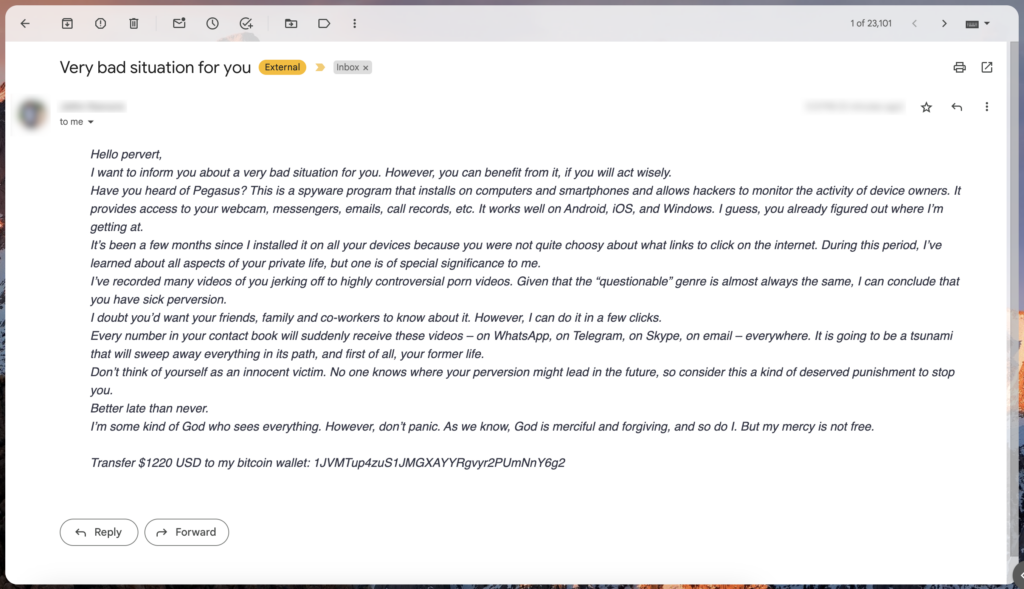
Screen of Scam email
The email graphically details these non-existent videos, accusing the victim of disturbing behavior and threatening to share these videos with their contacts – family, friends, and co-workers – unless they pay a ransom within 48 hours. Crafted to provoke fear and panic, the email accuses the victim of immorality, warning that their “former life” will end once the videos are leaked. The scammer urges quick payment to prevent this reputation-destroying “tsunami.”
| Name | “I Want to Inform You About a Very Bad Situation” Email Scam |
| Threat Type | Phishing, Scam, Social Engineering |
| Distribution methods | Deceptive emails, rogue online pop-up ads, search engine poisoning techniques, misspelled domains. |
| Similar Behavitor | “Some Bad News That You Are About To Hear” Email Scam, “Password Was Compromised Through A Legitimate Website” Email Scam |
| Damage | Loss of sensitive private information, monetary loss, identity theft. |
How the “I Want to Inform You About a Very Bad Situation for You” Scam Works
The “I Want to Inform You About a Very Bad Situation for You” scam unfolds in several key stages:
- Acquisition of Email Addresses and Passwords. Scammers buy lists of leaked email addresses and passwords from data breaches available on the dark web. This provides them with targets’ email addresses and associated passwords.
- Sending Mass Blackmail Emails. Utilizing these lists, scammers mass-send emails with similar threatening content. These emails contain the recipient’s email address and a password, aiming to shock and scare them with false accusations of recorded inappropriate online activities. The goal is to drive the victim to irrational, desperate actions.
- Bitcoin Ransom Demands. The scam emails demand a ransom, typically between $500 and $1000 in Bitcoin, to be sent within 48 hours to a specific Bitcoin wallet. Bitcoin is chosen for its relative anonymity, complicating tracking and recovery efforts by authorities.
- Scammers Vanish Post-Ransom. If victims send the Bitcoin ransom, scammers usually cease communication. They never possessed any compromising videos; their threats were entirely fabricated to secure quick payments. Once the ransom is paid, they disappear with the money.
- Consequences for Victims. Victims who pay the ransom endure financial loss and emotional turmoil. They face the distress of having been duped, and the fear and shame it brings. Additionally, they risk further extortion, as scammers might target them again for larger sums over time. In reality, there were never any videos; the scammers’ power lies solely in their deceptive initial email, but they may continue to extort compliant victims.


Leave a Comment