
The “CCleaner Total Protection” pop-up scam employs deceitful tactics through deceptive messages to trick users into believing their computers are infected. This scam spreads through online advertisements, phishing emails, and manipulated search engine results.
The fake warning urges immediate action and attempts to lure users into renewing their CCleaner subscription. Its primary goal is to deceive users into purchasing software through affiliate links, generating dishonest commissions. The scam also aims to push notifications, potentially leading to disruptive and unwanted messages. Users should remain vigilant to avoid falling for such deceptive schemes.
“CCleaner Total Protection” Pop-up Scam Overview
The “CCleaner Total Protection” pop-up scam employs deceptive strategies to mislead visitors, falsely suggesting the need for immediate actions to address supposed virus detections. The website displays counterfeit messages and content to deceive users, falling under the category of fraudulent pop-up scams.
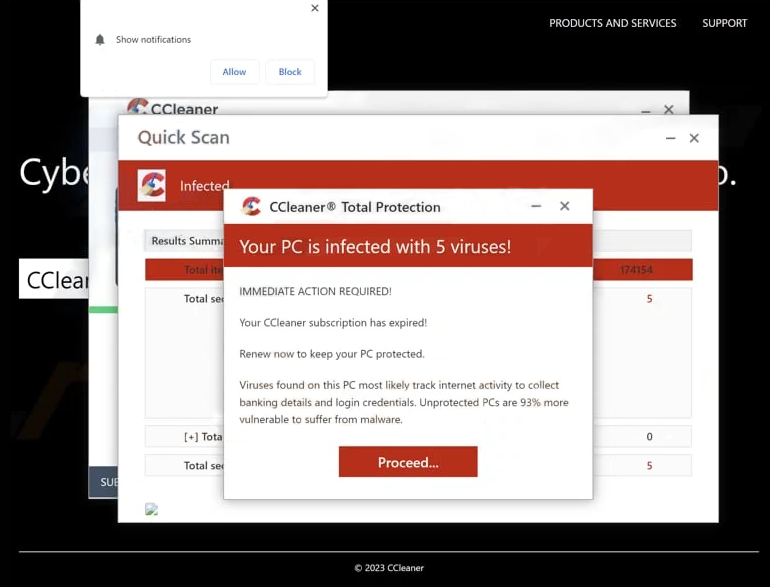
CCleaner Total Protection Scam
| Name | CCleaner Total Protection scam |
| Threat Type | Phishing, Scam, Social Engineering |
| Damage | Loss of sensitive private information, monetary loss, identity theft, possible malware infections. |
| Similar Behavitor | “Virus Has Been Detected On Your Device”, “Your Windows 10 is infected with viruses” |
Technical Analysis
The message provides a “Proceed…” button as a call to action, redirecting visitors to a website promoting the legitimate CCleaner software. This scam appears to be orchestrated by affiliate marketers aiming to earn commissions by convincing users to purchase software through their affiliate links, resorting to deceptive tactics.
Additionally, the scam attempts to get users to allow notifications, which can lead to a barrage of unwanted and often misleading messages or ads. These notifications may guide users to clickbait links to potentially harmful websites or encourage them to buy products or services they may not need. Users must exercise caution, especially when encountering questionable websites, and carefully consider the consequences of allowing notifications from such sources.
Spreading Methods
Users can inadvertently stumble upon deceptive pages through various channels. One common avenue is through enticing online advertisements, pop-ups, or banners on dubious websites. These advertisements, designed to grab attention, often lead users to scam websites.
Another way is through phishing emails that contain links directing recipients to fraudulent sites. Scammers often employ this method to deceive users. Scam websites can sometimes manipulate search engine results, making them appear as legitimate web pages. This can mislead users who are searching for specific information or services.
Moreover, certain websites like torrent platforms, pages offering YouTube video downloads, unauthorized movie streaming sites, and notifications from untrustworthy sources can all lead users to these scam websites. It’s essential to exercise caution and adopt safe browsing practices to minimize the risk of encountering such deceptive sites.


Leave a Comment