
Scam notification “Virus Has Been Detected On Your Device” on websites, often masquerading as reputable sources, to propagate.
Then running a fake system scan and falsely claims the presence of a virus, demanding the victim to contact a phony support line. Cybercriminals, posing as technicians, gain unauthorized remote access, leading to disabling security software, implanting counterfeit antivirus tools, extracting sensitive data, and introducing genuine malware like trojans and ransomware.
“Virus Has Been Detected On Your Device” Scam Overview
During our investigation of fraudulent websites, we came across the technical support scam labeled as “Virus Has Been Detected On Your Device.” This scam fabricates infection reports on the user’s device and asserts that it has been obstructed due to illicit actions. The primary aim is to deceive targets into dialing the counterfeit helpline supplied, thereby ensnaring them in the scam.
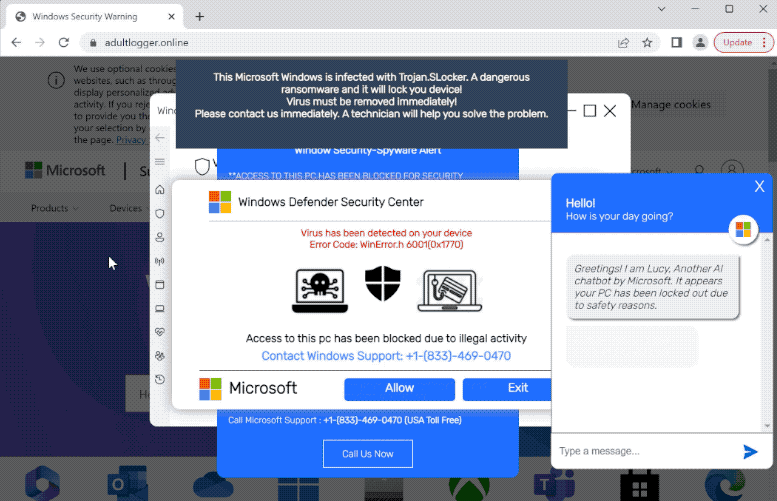
Screen of scam notification
| Name | “Virus Has Been Detected On Your Device” tech support scam |
| Threat Type | Phishing, Scam, Social Engineering, Fraud |
| Disguise | Microsoft |
| Tech Support Scammer Phone Number | +1-(833)-469-0470 |
| Symptoms | Fake error messages, fake system warnings, pop-up errors, hoax computer scan. |
| Damage | Loss of sensitive private information, monetary loss, identity theft, possible malware infections. |
| Distribution methods | Compromised websites, rogue online pop-up ads, potentially unwanted applications. |
How does “Virus Has Been Detected On Your Device” scam work?
Throughout the fraudulent activity, the visitor was persistently coerced into dialing the “Microsoft” support line, despite the fact that this scheme has no affiliation with the legitimate Microsoft Corporation.
Typically, once a victim contacts the numbers promoted by such tech support scams. The scammers (posing as “support” or “expert technicians,” etc.) immediately seek permission to gain remote access to the supposed “infected” device. Therefore, they often exploit genuine software tools like AnyDesk, TeamViewer, UltraViewer, or similar applications to establish this unauthorized access.
How serious is this?
The frequent appearance of this Pop-Up is often caused by Adware, which distributes deceptive alerts. Adware’s intrusive nature triggers misleading messages, urging users to take false actions and leading to potential security risks.
The progression of the scam “Virus Has Been Detected On Your Device” can take various routes. Under the guise of providing malware removal or other security support services, the cybercriminals can unleash a diverse range of malicious actions. These actions may involve disabling or erasing authentic security programs, introducing counterfeit anti-virus software or Unwanted programs, extracting sensitive data, and implanting the device with actual malware such as trojans or ransomware.
The information sought by these malicious actors generally encompasses personally identifiable particulars, account login credentials (e.g., email, social media, messaging, streaming, gaming, FTP, cloud storage, e-commerce, cryptocurrency wallets, money transfer services, online banking, etc.), credit card numbers, and other financially-related data.

