
“Avast – Your PC Is Infected With 5 Viruses!” scam operates by exploiting users through deceptive means, primarily spreading via malicious ads, pop-ups, and phishing emails.
“Avast – Your PC Is Infected With 5 Viruses!” scam falsely claims PC infections, urging immediate action to renew Avast subscriptions. Key actions involve coercing users into renewing subscriptions to allegedly safeguard their PCs from non-existent threats, potentially leading to unwarranted payments and diminished online security. Stay vigilant to avoid falling victim to this scam.
“Avast – Your PC Is Infected With 5 Viruses!” Scam Overview
Our analysis of this webpage revealed its deployment of deceptive messages. These messages like “Avast – Your PC Is Infected With 5 Viruses!” aim to mislead visitors into believing their computers suffer from infections. Therefore it is crucial to steer clear of such sites, as they are meticulously constructed with the intent to extort funds, harvest personal data, or pursue malicious objectives. Typically, users encounter these websites inadvertently.
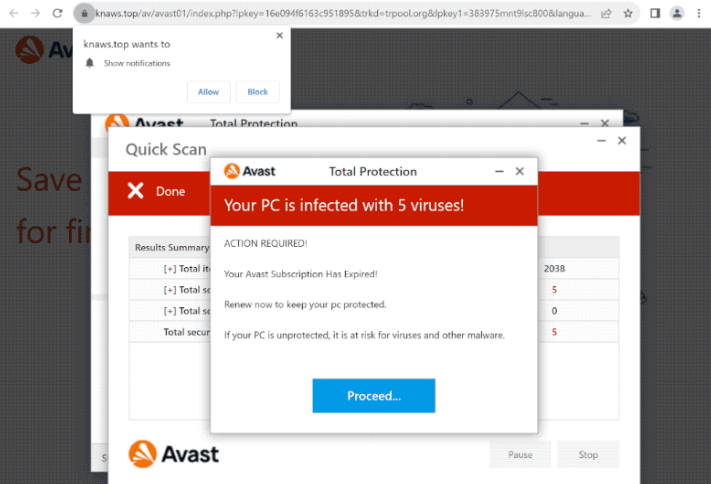
Screen of scam notification
| Name | “Avast – Your PC Is Infected With 5 Viruses!” |
| Threat Type | Phishing, Pop-up Scam, Social Engineering, Fraud |
| Detection | “Avast – Your PC Is Infected With 5 Viruses!” Scam |
| Related Domains | knaws[.]top, avprotectionplus[.]com |
| Symptoms | Fake error messages, fake system warnings, pop-up errors, hoax computer scan. |
| Distribution methods | Compromised websites, rogue online pop-up ads, potentially unwanted applications. |
| Similar Behavior | “Virus Has Been Detected On Your Device”, “Your Account Is Successfully Debited”, “Your Windows 10 is infected with viruses”, “Your computer is disabled. Please call Microsoft” |
| Damage | Loss of sensitive private information, monetary loss, identity theft, possible malware infections. |
How does “Avast – Your PC Is Infected With 5 Viruses!” scam work?
The misleading webpage appears to serve as a platform for affiliates to endorse genuine software, such as Avast antivirus. However, the legitimacy of the connection between the deceptive webpage and Avast may be questionable, potentially causing users to unintentionally pay for unnecessary or subpar security services.
How serious is this?
Their primary objective is to exploit users’ trust and manipulate them into making hasty decisions, whether it’s purchasing products, sharing personal information, or downloading software. Also, these impulsive actions can lead to financial losses, breaches of privacy, or infections by malicious software. This underscores the significant risks associated with succumbing to their deceptive tactics.
Furthermore, these deceptive actors may harbor malicious intentions, seeking to steal financial resources or sensitive information like credit card details and passwords. This highlights the utmost importance of exercising caution and promptly exiting such situations.
Frequently Asked Questions (FAQ)
Avast Detections
- FileRepPup: What Avast/AVG Detection Means and How to Remove It
- IDP.HEUR.26: What It Means and How to Check If It Is Safe
- URL:Scam: Avast/AVG Web Shield Detection Explained
- IDP.Generic: Avast/AVG Detection Explained
- IDP.ALEXA.54 Dangerous or Avast (AVG) False Positive?
- Win32:BogEnt Virus (Avast Detection)
- Win32:Trojan-gen Avast Virus
- URL:Phishing Avast Virus Detection: What Is It?
- URL:TechScam Avast Virus (TechScam Detection)
- URL:Blacklist (Blacklisted URL) Avast Detection


Leave a Comment