
The PUABundler:Win32/Startfenster alert, is a sign that your PC has a problem. Allowing it to keep running may end up with some really bad consequences. Unwanted apps are not as dangerous as regular viruses, but still can mischief and lead to system instability.
Startfenster unwanted application can not be named full-fledged malware. Nonetheless, it has plenty of signs to say that you will not love the changes this thing brings to your PC. PUAs like that may be just a pesky thing, as well as lead to a severe influence on your system’s functionality. Additionally, there are several situations when users report that this application collects user information or other sensitive stuff.
PUABundler Startfenster Detection Overview
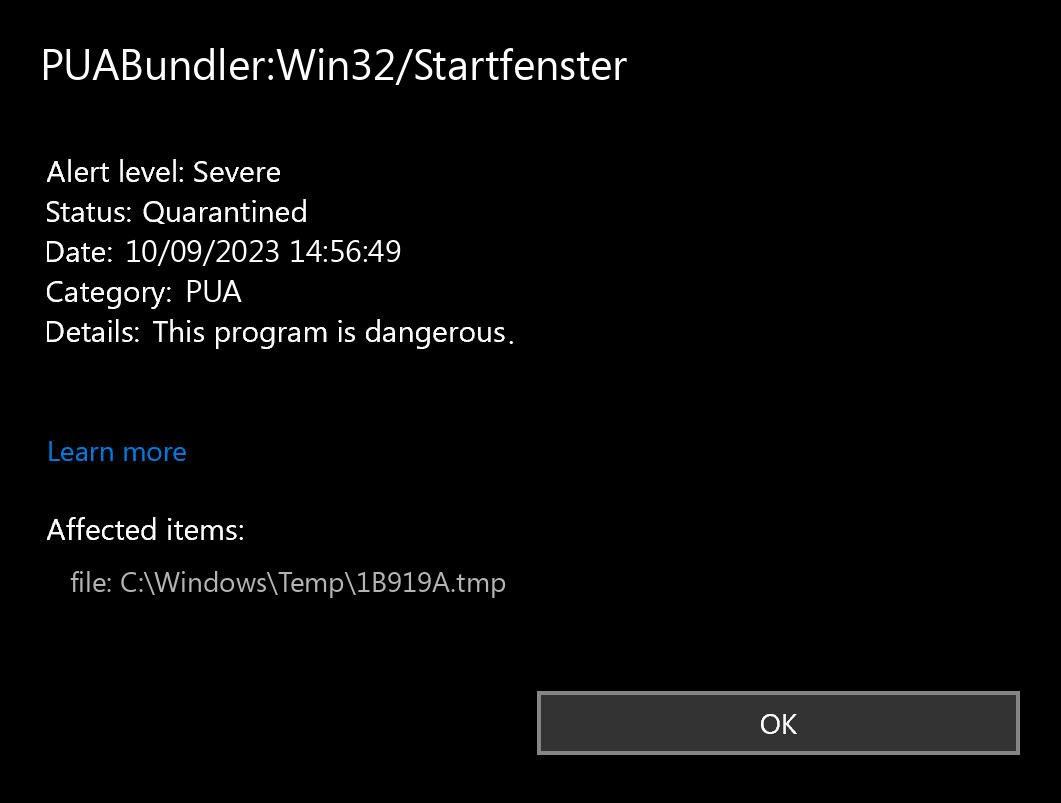
Microsoft Defender: “PUABundler:Win32/Startfenster”
The Startfenster unwanted program is a case in point of PUA, which is pretty common nowadays. Being free to use, it may offer you “the extended capabilities” for the additional payment. Some examples of this program type can have no useful performance at all – just the shell with the colorful interface. You can see it promoted as a system optimization tool, driver updater, or torrent downloading tracker. This or another way does not grant you any kind of true functionality, exposing you to risk instead.
Unwanted Program Summary:
| Name | Startfenster PUA |
| Detection | PUABundler:Win32/Startfenster |
| Damage | Startfenster is at least useless or can perform various malicious actions on your PC. |
| Fix Tool | See If Your System Has Been Affected by Startfenster exploit |
Is Startfenster dangerous?
I have detailed that PUABundler:Win32/Startfenster PUA is not as safe as it claims to be. The “legit and helpful” tool can suddenly unveil itself as a downloader trojan, spyware, backdoor, or coin miner virus. And you can never figure out what to look for even from separate variants of the unwanted program. That still does not imply that you need to panic – possibly, this nasty thing has not succeeded in doing bad things to your computer.
The exact damage to your system can be created not only as a result of the malware injection. A considerable share of doubtful programs, like the Startfenster application, is just poorly designed. Potentially, their actions are more effective than useless if done on specific system setups, but not on each one. That’s how a basic system optimization tool may trigger chaos with constant BSODs on your system. Any interruptions to the system registry are not very safe, and they are a lot more unsafe if performed with such programs.
How did I get this virus?
It is not easy to line the origins of malware on your computer. Nowadays, things are mixed, and spreading tactics utilized by adware 5 years ago may be utilized by spyware these days. However, if we abstract from the exact distribution tactic and think of why it works, the explanation will be really simple – low level of cybersecurity awareness. Individuals click on advertisements on weird sites, click the pop-ups they receive in their browsers, and call the “Microsoft tech support” believing that the scary banner that says about malware is true. It is very important to know what is legitimate – to avoid misunderstandings when trying to determine a virus.
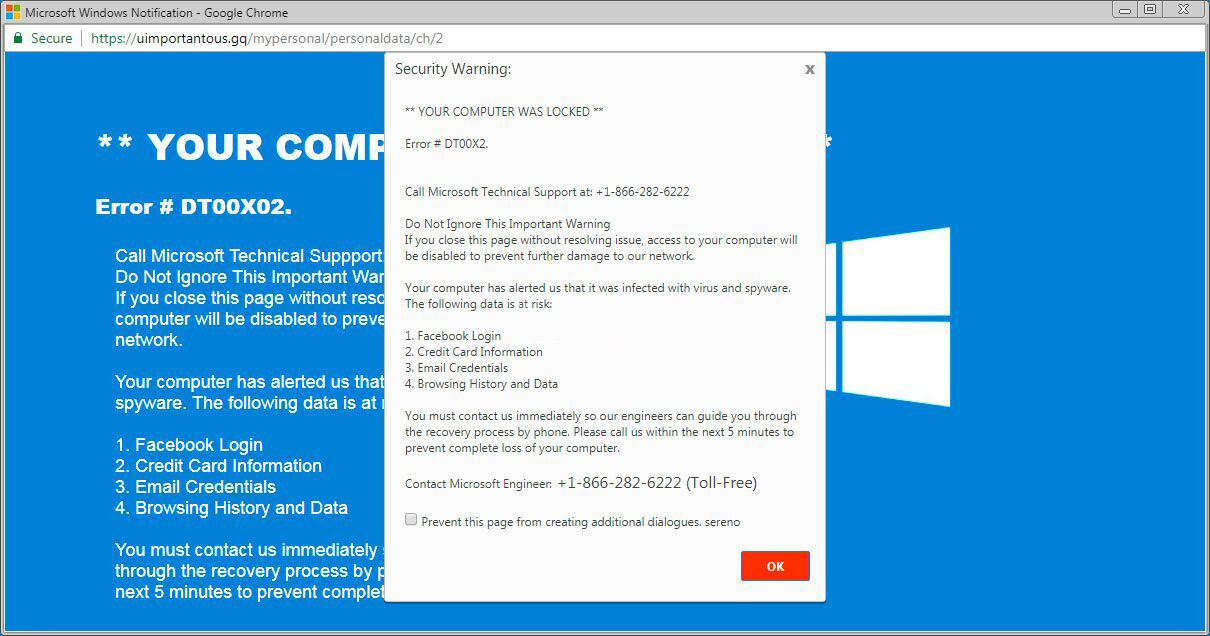
The example of Microsoft Tech support scam banner
Nowadays, there are two of the most common tactics of malware spreading – bait e-mails and also injection into a hacked program. While the first one is not so easy to avoid – you should know a lot to understand a fake – the second one is very easy to solve: just don’t utilize hacked programs. Torrent trackers and various other sources of “free” applications (which are paid, but with a disabled license checking) are just a giveaway place of malware. And Startfenster is just amongst them.



Leave a Comment