
Seeing the VirTool:Win32/Rekcap.B detection usually means that your computer is in big danger. This virus can correctly be named as ransomware – virus which encrypts your files and forces you to pay for their decryption. Deleteing it requires some specific steps that must be done as soon as possible.
VirTool:Win32/Rekcap.B detection is a virus detection you can spectate in your computer. It frequently shows up after the preliminary actions on your PC – opening the suspicious email, clicking the advertisement in the Internet or mounting the program from untrustworthy sources. From the second it appears, you have a short time to take action before it starts its malicious activity. And be sure – it is much better not to wait for these harmful things.
What is VirTool:Win32/Rekcap.B virus?
VirTool:Win32/Rekcap.B is ransomware-type malware. It looks for the files on your disks, ciphers it, and then asks you to pay the ransom for receiving the decryption key. Besides making your documents locked, this malware additionally does a lot of harm to your system. It alters the networking settings in order to stop you from reading the removal articles or downloading the anti-malware program. In some cases, VirTool:Win32/Rekcap.B can even block the setup of anti-malware programs.
VirTool:Win32/Rekcap.B Summary
Summarizingly, VirTool:Win32/Rekcap.B ransomware activities in the infected computer are next:
- SetUnhandledExceptionFilter detected (possible anti-debug);
- Behavioural detection: Executable code extraction – unpacking;
- Yara rule detections observed from a process memory dump/dropped files/CAPE;
- Creates RWX memory;
- Anomalous file deletion behavior detected (10+);
- A process attempted to delay the analysis task.;
- Dynamic (imported) function loading detected;
- Performs HTTP requests potentially not found in PCAP.;
- Enumerates running processes;
- CAPE extracted potentially suspicious content;
- Authenticode signature is invalid;
- Steals private information from local Internet browsers;
- Collects information about installed applications;
- Checks the CPU name from registry, possibly for anti-virtualization;
- Attempts to modify proxy settings;
- Harvests cookies for information gathering;
- Harvests credentials from local FTP client softwares;
- Harvests information related to installed instant messenger clients;
- Harvests information related to installed mail clients;
- Collects information to fingerprint the system;
- Ciphering the documents located on the victim’s disks — so the victim cannot use these files;
- Blocking the launching of .exe files of anti-virus programs
- Blocking the launching of installation files of security tools
Ransomware has actually been a major problem for the last 4 years. It is difficult to picture a more harmful malware for both individual users and organizations. The algorithms used in VirTool:Win32/Rekcap.B (generally, RHA-1028 or AES-256) are not hackable – with minor exclusions. To hack it with a brute force, you need to have more time than our galaxy actually exists, and possibly will exist. But that virus does not do all these bad things immediately – it can require up to several hours to cipher all of your documents. Thus, seeing the VirTool:Win32/Rekcap.B detection is a clear signal that you must start the elimination procedure.
Where did I get the VirTool:Win32/Rekcap.B?
Ordinary tactics of VirTool:Win32/Rekcap.B spreading are usual for all other ransomware variants. Those are one-day landing sites where victims are offered to download and install the free app, so-called bait e-mails and hacktools. Bait emails are a quite modern method in malware distribution – you get the e-mail that simulates some standard notifications about shipments or bank service conditions updates. Inside of the email, there is a malicious MS Office file, or a web link which leads to the exploit landing page.
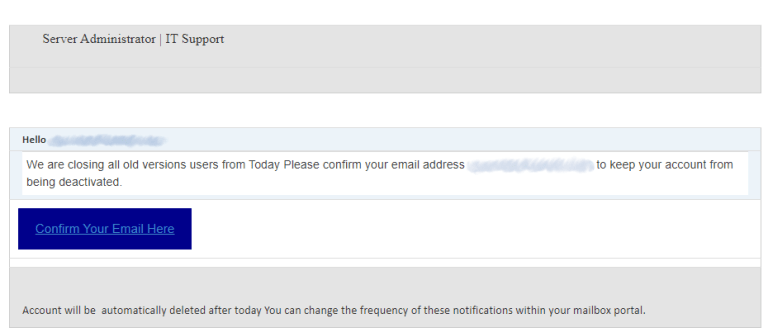
Malicious email message. This one tricks you to open the phishing website.
Preventing it looks pretty uncomplicated, however, still demands tons of awareness. Malware can hide in different spots, and it is far better to stop it even before it goes into your PC than to rely upon an anti-malware program. Basic cybersecurity knowledge is just an essential thing in the modern-day world, even if your interaction with a computer remains on YouTube videos. That can save you a lot of money and time which you would certainly spend while trying to find a fixing guide.
VirTool:Win32/Rekcap.B malware technical details
File Info:
name: 3B97CEC418E3FC69937C.mlwpath: /opt/CAPEv2/storage/binaries/ad0fc8c3871a75de6069ce9c2fb8cbe63218e219234849fc9032dd79363f9d3bcrc32: B6CFF80Dmd5: 3b97cec418e3fc69937c79705d7df57dsha1: 617e8c03cdda097526a8ca6bd5e39c3205d2fcb9sha256: ad0fc8c3871a75de6069ce9c2fb8cbe63218e219234849fc9032dd79363f9d3bsha512: 1a7b41b64a53753a26997db896dd147f4f249fbcaabe985e74c4bb478395d1c8afaa8971274688e41246e3f79fc07c47718aa7f6191064be1ab0fc1de9224c3essdeep: 12288:1N+O33C9P1Vk3S7OqYxKI0XmtcKJTYoFdsvhLVYhTSJ:1YO33SQSqq7I02tcKJTYqdU6Etype: PE32 executable (GUI) Intel 80386, for MS Windowstlsh: T162D4122235A6C07AE7B2157A2594A7650E6F7C931F7082CB6BC51FAC8E167E18F31307sha3_384: 7237bac8d5a8482b03135589bfb9cb46a392527bb6e00c7ebf9baacbdc5a177255d8aa7ea127ca2e6b851fdcaea45b59ep_bytes: e8a15e0000e979feffff8bff558bec8btimestamp: 2017-11-22 04:17:11Version Info:
FileVersion: 1.0.0.11InternalName: tyuwie6o.ukeLegalCopyright: Copyright (C) 2019, sfgdnfProductVersion: 1.0.0.13Translation: 0x00c9 0x0042
VirTool:Win32/Rekcap.B also known as:
| Bkav | W32.AIDetect.malware1 |
| Lionic | Trojan.Win32.Chapak.4!c |
| Elastic | malicious (high confidence) |
| MicroWorld-eScan | Trojan.Brsecmon.1 |
| FireEye | Generic.mg.3b97cec418e3fc69 |
| CAT-QuickHeal | Ransom.Stop.P5 |
| McAfee | Sodinokibi!3B97CEC418E3 |
| Cylance | Unsafe |
| Sangfor | Trojan.Win32.VidarStealer.ykqah |
| K7AntiVirus | Trojan ( 0054e43b1 ) |
| Alibaba | Trojan:Win32/Kryptik.85fe6b4c |
| K7GW | Trojan ( 0054e43b1 ) |
| Cybereason | malicious.418e3f |
| BitDefenderTheta | Gen:NN.ZexaF.34114.Lu0@aucjXxm |
| Symantec | Packed.Generic.525 |
| ESET-NOD32 | a variant of Win32/Kryptik.GTDM |
| APEX | Malicious |
| Paloalto | generic.ml |
| ClamAV | Win.Packed.Os40444-7361867-0 |
| Kaspersky | HEUR:Trojan.Win32.Generic |
| BitDefender | Trojan.Brsecmon.1 |
| NANO-Antivirus | Trojan.Win32.Chapak.fqhcni |
| Avast | Win32:Malware-gen |
| Tencent | Win32.Trojan.Generic.Lmlb |
| Ad-Aware | Trojan.Brsecmon.1 |
| Emsisoft | Trojan.Brsecmon.1 (B) |
| Comodo | Malware@#3bqmw7y75l2s3 |
| VIPRE | Trojan.Win32.Generic!BT |
| TrendMicro | Trojan.Win32.SODINOK.SM.hp |
| McAfee-GW-Edition | BehavesLike.Win32.Generic.hh |
| Sophos | Mal/Generic-S |
| Ikarus | Trojan.Win32.Crypt |
| GData | Trojan.Brsecmon.1 |
| Jiangmin | Trojan.PSW.Fareit.yxi |
| Avira | HEUR/AGEN.1102735 |
| MAX | malware (ai score=100) |
| Antiy-AVL | Trojan/Win32.Chapak |
| Microsoft | VirTool:Win32/Rekcap.B |
| Cynet | Malicious (score: 100) |
| AhnLab-V3 | Trojan/Win32.Ransomcrypt.R272328 |
| VBA32 | Malware-Cryptor.Grygoryi.3 |
| ALYac | Trojan.Brsecmon.1 |
| Malwarebytes | Trojan.MalPack.GS.Generic |
| TrendMicro-HouseCall | Trojan.Win32.SODINOK.SM.hp |
| Rising | [email protected] (RDML:FNM7NmZWYeGFSZcT2sLygg) |
| Yandex | Trojan.Kryptik!oTMZmTAlT9k |
| SentinelOne | Static AI – Malicious PE |
| eGambit | Unsafe.AI_Score_95% |
| Fortinet | W32/GenKryptik.DQHN!tr |
| AVG | Win32:Malware-gen |
| Panda | Trj/GdSda.A |
| CrowdStrike | win/malicious_confidence_100% (W) |


Leave a Comment