
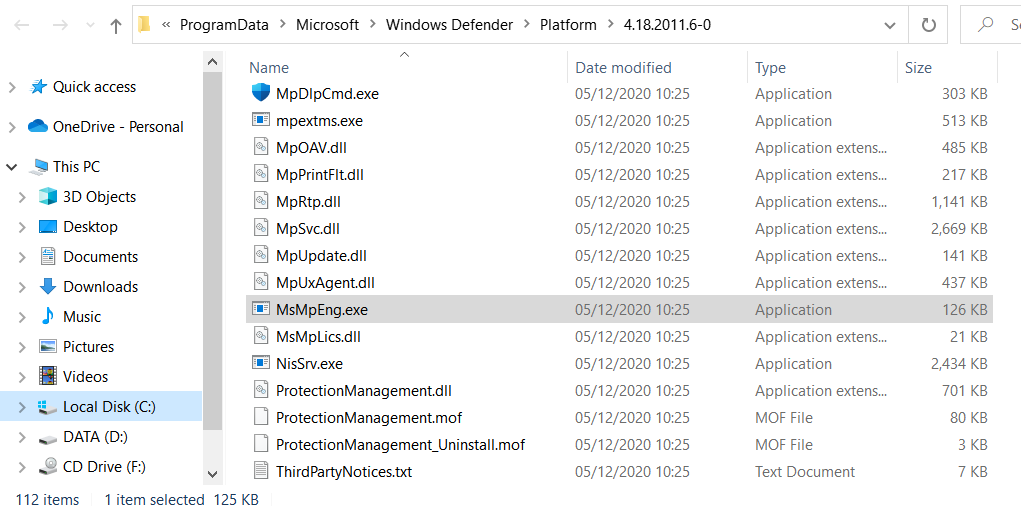
MsMpEng.exe is the Microsoft Defender Antimalware Service Executable. On a clean Windows system it is a legitimate security component, not a virus. Its job is to scan files, monitor running programs, check downloads, and help protect the computer from malware. The problem is that it can sometimes use noticeable CPU, memory, or disk resources, especially during scans or after updates.
What is MsMpEng.exe?
MsMpEng.exe belongs to Microsoft Defender Antivirus. It usually runs in the background and becomes more active when Windows downloads new security intelligence, scans recently changed files, checks archives, or performs a scheduled scan. If Defender is the main antivirus on the PC, seeing this process in Task Manager is expected.
A fake copy can still exist. Malware sometimes uses familiar Windows process names to reduce suspicion. The path and signature decide whether the file is safe, not the process name alone.
Safe vs suspicious signs
| Usually legitimate | Suspicious |
| Located in a Microsoft Defender or Windows Defender folder. | Runs from AppData, Temp, Downloads, Startup, or a random folder. |
| Signed by Microsoft. | No signature or unknown publisher. |
| CPU rises during scans, updates, downloads, or unpacking archives. | High CPU continues constantly with Defender disabled or another path is shown. |
| Windows Security opens normally. | Security settings are disabled, hidden, or changed without permission. |
Why MsMpEng.exe uses high CPU
The most common reason is a scan. Defender may scan a new installer, a compressed archive, a development folder with many changing files, a virtual-machine disk, browser caches, or a folder synchronized by cloud storage. It can also become busy after a Windows update or when security intelligence updates are applied.
Another common cause is overlap with a second antivirus. Running two real-time antivirus engines can cause repeated rescanning and slowdowns. Development projects, node_modules folders, VM images, and large backup folders can also create heavy Defender activity.
How to fix high CPU safely
- Wait a few minutes and confirm whether the spike ends after a scan.
- Open Windows Security and check whether a scan or update is running.
- Install pending Windows updates and reboot.
- Schedule full scans for a time when you are not using the PC.
- If you have another antivirus, check whether Defender is still doing real-time scanning unnecessarily.
- Add narrow exclusions only for trusted developer/build folders, not for Downloads or the whole user profile.
- Run an offline scan if Defender detects threats or the system behaves suspiciously.
How to verify the file
Open Task Manager, right-click MsMpEng.exe, and choose Open file location. The legitimate process should live in a Microsoft Defender-related directory and be signed by Microsoft. If the file is elsewhere, scan it and review startup entries, services, and scheduled tasks.
What not to do
Do not permanently disable Defender just because of one CPU spike. Do not download replacement files from EXE sites. Do not create broad antivirus exclusions for folders where malware commonly arrives. A narrow, documented exclusion for a trusted build folder can be reasonable; a broad exclusion for Downloads is not.
Decision tree: normal Defender work or a problem?
If the spike started right after Windows boot, a definition update, a large download, or plugging in an external drive, it is probably normal scanning. Wait a few minutes and check whether CPU drops. If the spike starts at the same time every day, check scheduled scan settings. If it happens only when opening one folder, that folder may contain many archives, installers, source files, or disk images.
If CPU remains high for a long time while Defender shows no scan, inspect protection history and Event Viewer. Repeated detections, failed remediation, or a file that keeps reappearing can keep Defender busy. In that case, the problem is not MsMpEng.exe itself; it is the item Defender is trying to scan or remove.
Common folders that trigger heavy scanning
Large development directories, package caches, virtual machine images, backup folders, ISO files, email archives, and browser download folders can all trigger repeated scanning. Developers often notice MsMpEng.exe while compiling projects because many temporary files are created quickly. Gamers may notice it when installing large games or mods.
Use exclusions carefully. Excluding a trusted build output folder can reduce overhead. Excluding Downloads, Desktop, the whole user profile, or a game-mod folder full of unknown downloads can reduce security dramatically.
How to handle repeated detections
If Defender repeatedly detects the same threat, open the alert and note the exact path. If the path is a browser cache or compressed archive, remove the source file. If it is a startup folder, AppData, or ProgramData, check persistence points. Run Microsoft Defender Offline if the same item returns after quarantine.
After fixing high CPU
After updates, exclusions, or cleanup, reboot and watch Task Manager for several minutes. Open Windows Security and confirm real-time protection is on, protection history is clean, and security intelligence is current. A good fix should reduce CPU usage without weakening protection across broad folders.
FAQ
Is MsMpEng.exe malware?
The real Microsoft-signed file is not malware. A fake file using the same name can be malicious.
Can I end the process?
You can sometimes stop a scan, but Windows will restart Defender protection. Fix the cause of heavy scanning instead.
Why does it scan my project folder repeatedly?
Build tools create and modify many files. Use a narrow exclusion only if you trust the folder and understand the risk.


Leave a Comment