
DumpLsass is a tool that is typically used by security researchers, system administrators, or individuals with advanced technical knowledge for analyzing the memory contents of the lsass.exe process on Windows systems. The Local Security Authority Subsystem Service (lsass.exe) is a crucial Windows component responsible for various security-related functions, such as authentication and password management.
DumpLsass works by exploiting a vulnerability or weakness in the lsass.exe process to extract its memory contents. By accessing the memory of lsass.exe, DumpLsass can retrieve sensitive information stored in the process, such as credentials, password hashes, and security tokens.
The tool takes advantage of the way lsass.exe handles memory to read and extract data that would otherwise be inaccessible or protected. DumpLsass can create a memory dump, which is a snapshot of the lsass.exe process’s memory at a specific point in time. This memory dump can then be analyzed offline using specialized tools to extract valuable information for security research or investigation purposes.
It’s worth noting that while DumpLsass itself is not inherently malicious, it can be classified as a potentially unwanted program (PUP) or a hacking tool by security software due to its potential misuse by individuals with malicious intent. Therefore, it is important to exercise caution when using or encountering tools like DumpLsass and ensure they are used responsibly and legally, with proper authorization and in accordance with applicable laws and regulations.
What does the notification with HackTool:Win32/DumpLsass.H detection mean?
The HackTool:Win32/DumpLsass.H detection you can see in the lower right side is demonstrated to you by Microsoft Defender. That anti-malware application is pretty good at scanning, but prone to be generally unstable. It is vulnerable to malware attacks, it has a glitchy interface and bugged malware removal features. Therefore, the pop-up which states about the DumpLsass is rather just a notification that Defender has actually identified it. To remove it, you will likely need to use a separate anti-malware program.
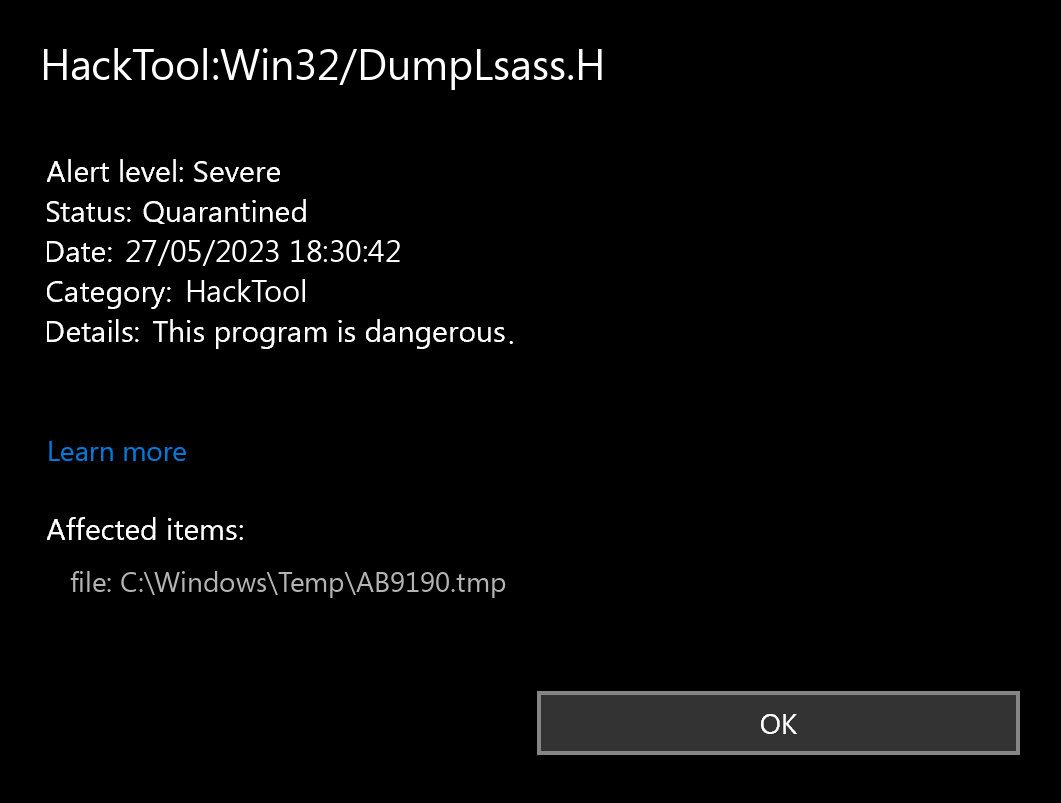
Microsoft Defender: “HackTool:Win32/DumpLsass.H”
The exact HackTool:Win32/DumpLsass.H virus is a really unpleasant thing. It sits inside of your system disguised as a part of something legitimate, or as a part of the program you have got on a forum. After that, it makes everything to weaken your system. At the end of this “party”, it downloads other viruses – ones which are choosen by crooks who control this malware. Hence, it is impossible to predict the effects from DumpLsass actions. And the unpredictability is one of the most upleasant things when we are talking about malware. That’s why it is better not to choose at all, and don’t let the malware to complete its task.
Threat Summary:
| Name | DumpLsass HackTool |
| Detection | HackTool:Win32/DumpLsass.H |
| Details | DumpLsass is used to extract sensitive information from the Local Security Authority Subsystem Service (lsass.exe) process on Windows systems. |
Is HackTool:Win32/DumpLsass.H dangerous?
As I have stated previously, non-harmful malware does not exist. And HackTool:Win32/DumpLsass.H is not an exclusion. This malware modifies the system setups, modifies the Group Policies and Windows registry. All of these components are crucial for correct system operating, even when we are not talking about Windows security. Therefore, the virus which DumpLsass contains, or which it will inject after some time, will squeeze out maximum revenue from you. Cyber burglars can grab your personal data, and then push it on the Darknet. Using adware and browser hijacker functionality, built in HackTool:Win32/DumpLsass.H malware, they can make profit by showing you the banners. Each view gives them a penny, but 100 views per day = $1. 1000 victims who watch 100 banners per day – $1000. Easy math, but sad conclusions. It is a bad choice to be a donkey for crooks.
How did I get this virus?
It is hard to line the origins of malware on your computer. Nowadays, things are mixed up, and distribution methods used by adware 5 years ago may be utilized by spyware these days. However, if we abstract from the exact distribution method and will think about why it has success, the reply will be very simple – low level of cybersecurity awareness. Individuals press on promotions on weird websites, open the pop-ups they get in their web browsers, call the “Microsoft tech support” believing that the odd banner that says about malware is true. It is very important to understand what is legit – to prevent misunderstandings when trying to figure out a virus.
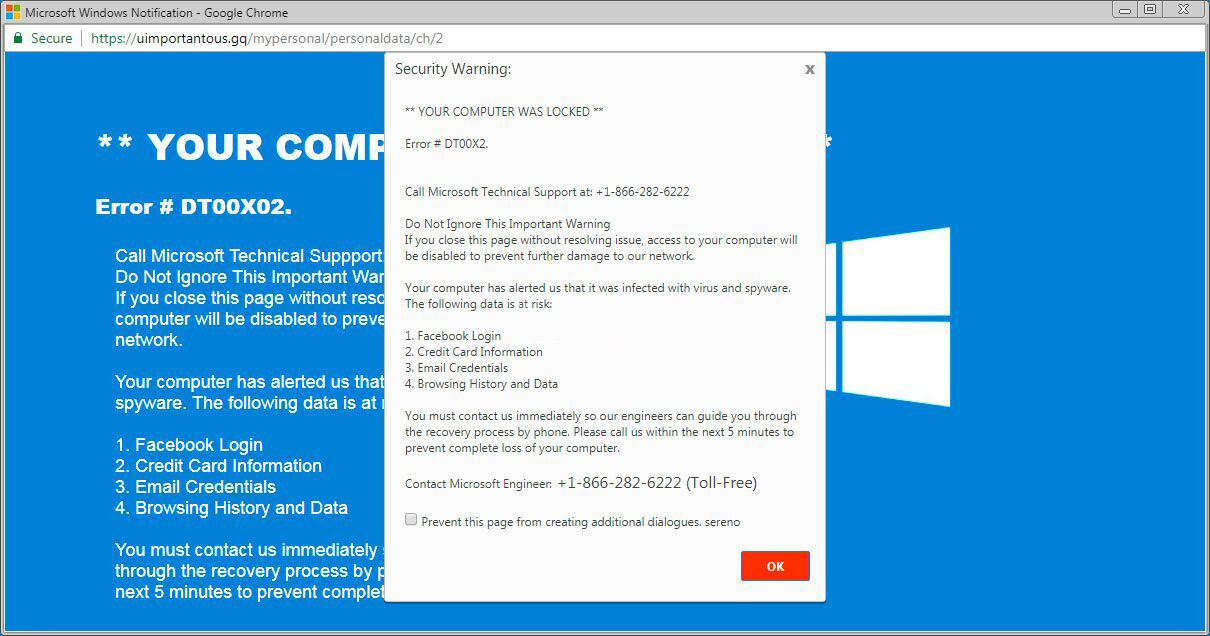
The example of Microsoft Tech support scam banner
Nowadays, there are two of the most common ways of malware distribution – lure emails and also injection into a hacked program. While the first one is not so easy to evade – you must know a lot to recognize a counterfeit – the 2nd one is easy to handle: just don’t utilize hacked apps. Torrent-trackers and other sources of “free” applications (which are, actually, paid, but with a disabled license checking) are just a giveaway point of malware. And HackTool:Win32/DumpLsass.H is simply amongst them.



Leave a Comment