
FakeBat, or EugenLoader, is a malware loader and dropper that leverages deceptive tactics. It infiltrates computers through a malicious Google Ads campaign, masquerading as legitimate software downloads, mainly targeting the popular KeePass password manager.
This underhanded tactic, known as a “homograph attack,” disguises the fake site’s URL as real, making it difficult for users to identify. Once installed, FakeBat is known to drop various information stealers, posing a severe risk by exfiltrating sensitive data like login credentials, financial information, and personal documents. Users should exercise extreme caution to avoid falling victim to this insidious threat.
FakeBat Overview
FakeBat, also recognized as EugenLoader is a notorious malware loader and dropper that poses a substantial threat to cybersecurity. It has been linked to malvertising campaigns dating back to November 2022. While the precise payload dispersed by FakeBat in these campaigns remains undisclosed, it has garnered attention for distributing notorious infostealers such as Redline, Ursnif, and Rhadamathys. This versatile loader plays a central role in proliferating sophisticated cyber threats.
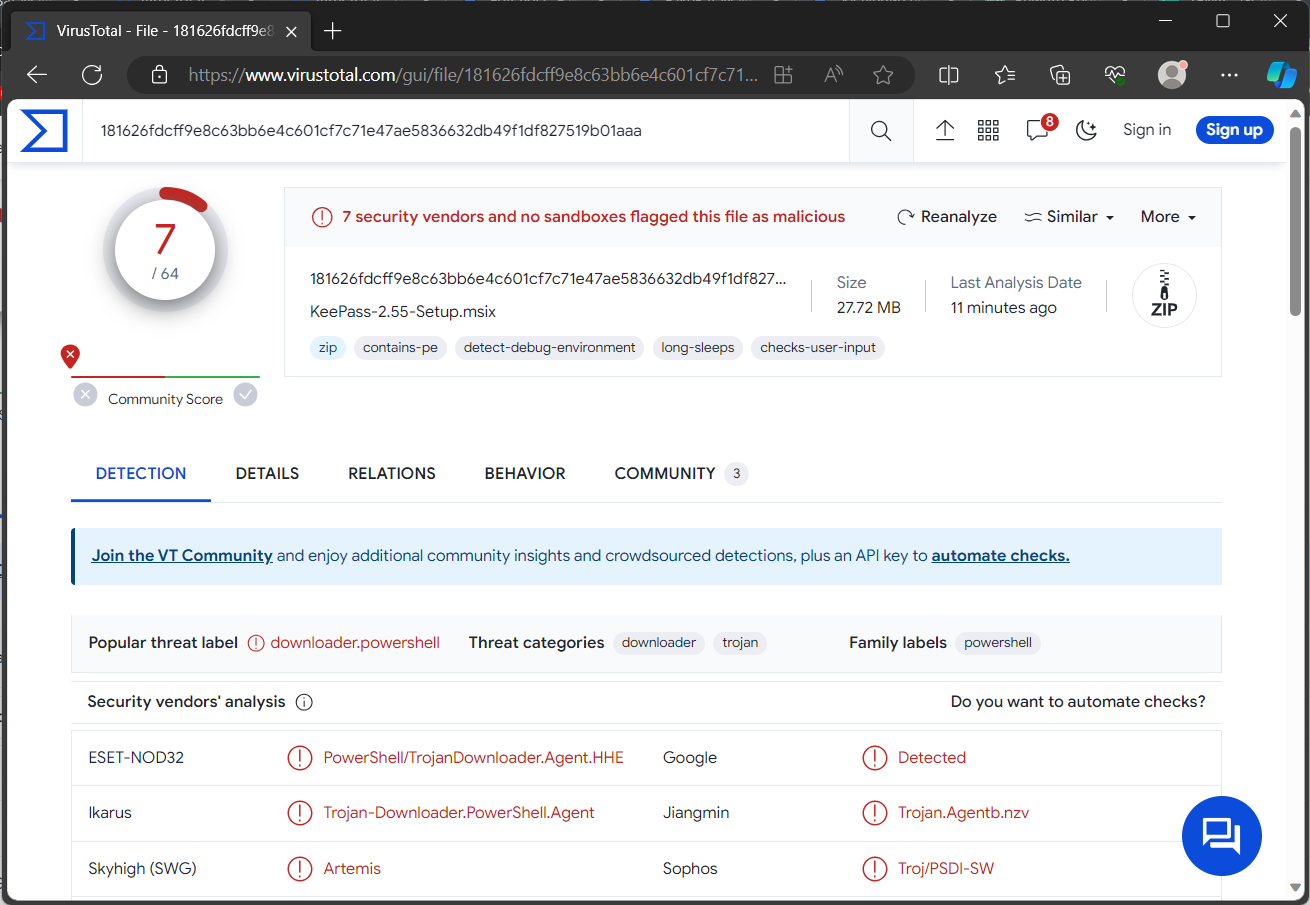
VirusTotal detections results
| Name | FakeBat |
| Detection | FakeBat |
| Symptoms | Loaders/droppers are designed to stealthily infiltrate the victim’s computer and remain silent, and thus no particular symptoms are clearly visible on an infected machine. |
| Damage | Stolen passwords and banking information, identity theft, the victim’s computer added to a botnet. |
| Similar Behavior | WikiLoader, DBatLoader, HijackLoader |
Technical Analysis
A Google Ads campaign has been identified as a primary vector for disseminating FakeBat, exploiting deceptive tactics to mimic legitimate software download sites like KeePass, WinSCP, and PyCharm Professional. Using Punycode, cybercriminals create web addresses that closely resemble authentic domains, a tactic known as a “homograph attack.” For example, xn—eepass-vbb[.]info is made to look like ķeepass[.]info, with only subtle variations that often go unnoticed by users. When visitors click on download links from these deceptive sites, they inadvertently introduce harmful software onto their systems.
This campaign’s primary goal is to distribute FakeBat. This versatile malware loader delivers various information stealers like Redline, Ursnif, Rhadamathys, and potentially more. Information stealers are crafted to pilfer a wide array of data, including login credentials, financial records, personal documents, browsing history, and other sensitive information. This stolen data is then transmitted to remote servers controlled by cybercriminals, enabling them to exploit it for nefarious purposes, such as identity theft and financial fraud. This campaign exemplifies the increasing sophistication of cybercriminal tactics, emphasizing the importance of vigilant online practices and robust cybersecurity measures.
Spreading Methods
Users who click on the malicious link are redirected to the fake KeePass site with a Punycode URL. Clicking on download links leads to installing a seemingly legitimate software called KeePass-2.55-Setup. mix, which is digitally signed. However, this installer harbors a hidden threat – it contains the FakeBat malware loader. Once installed, FakeBat can access the user’s computer and initiate its malicious activities. This method exemplifies the importance of verifying the authenticity of websites and downloads to safeguard against such deceptive infiltration techniques.


Leave a Comment