
HijackLoader is a versatile loader-type malware that specializes in causing chain infections. While relatively basic, it deploys numerous modules to enhance its capabilities.
It employs various anti-detection techniques and adapts its behavior based on the presence of security software. HijackLoader has been observed delivering malware like DanaBot, RedLine, and SystemBC, potentially causing multiple system infections, data loss, privacy breaches, and severe financial consequences. Its precise distribution method remains unknown.
HijackLoader Overview
HijackLoader is a type of loader malware. Its primary function is to facilitate chain infections by downloading and installing additional malware onto compromised machines. While HijackLoader may have limited functionality, it relies on various modules to expand its capabilities. This malware has been active since at least the summer of 2023. It has been associated with infecting DanaBot, RedLine, and SystemBC systems, among others.
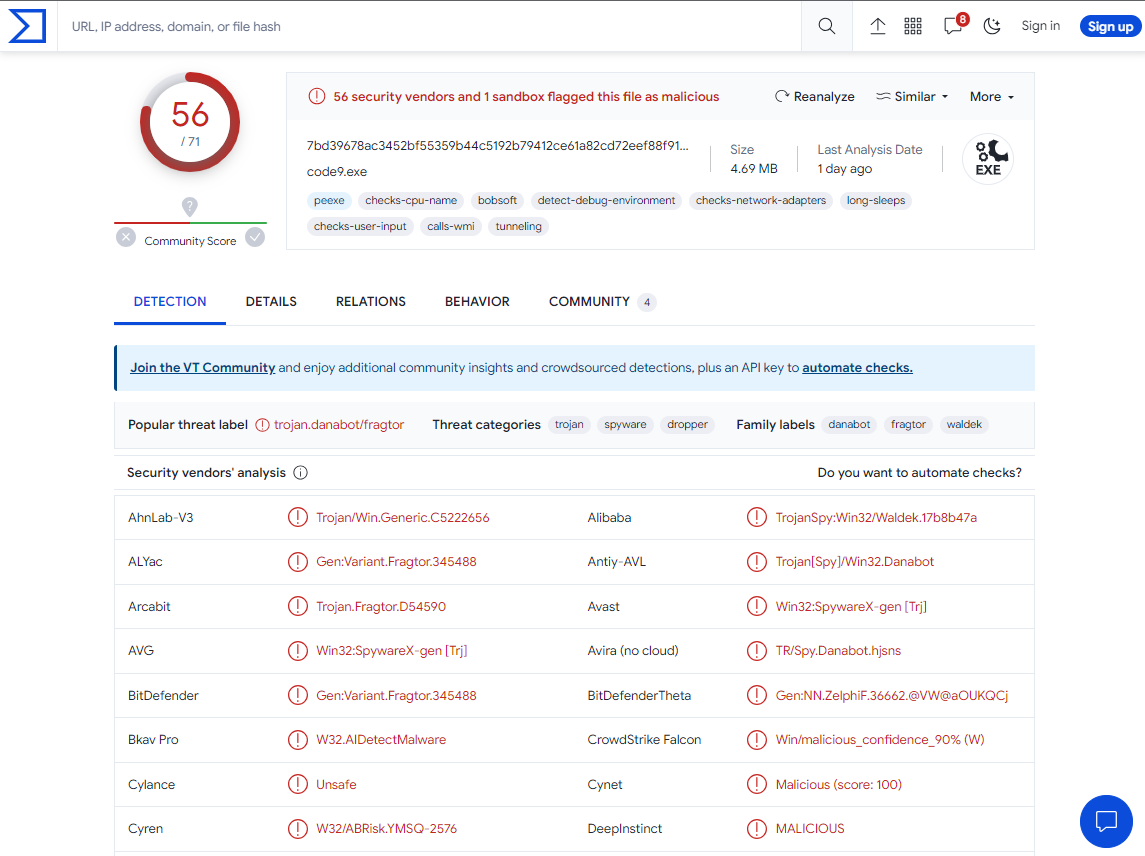
VT result
| Name | HijackLoader |
| Threat Type | Trojan, loader, injector. |
| Detection | Trojan.Win32.Danabot.bot, Trojan:Win32/Casdet!rfn (Microsoft) |
| Similar Behavitor | Trojan:BAT/FakeBardExtLoad.GA!MSR, WikiLoader |
| Damage | Stolen passwords and banking information, identity theft, the victim’s computer added to a botnet. |
Technical analysis
HijackLoader is a malware that specializes in causing chain infections on compromised systems. Although it has limited capabilities on its own, it relies on a set of nearly twenty downloadable modules to enhance its functionality. To evade detection, HijackLoader employs various anti-detection techniques. It includes a module that identifies security tools on the target system and adjusts its behavior accordingly. Depending on the security software detected, the malware may delay execution or skip specific connectivity tests.
Spreading Methods
The specific method of HijackLoader’s infiltration into your computer is currently unknown. However, malware like HijackLoader is distributed through phishing and social engineering techniques. Malicious programs are often disguised or bundled with legitimate software or media files. These infectious files can take various forms, including archives (ZIP, RAR), executables (.exe, .run), documents (Microsoft Office, PDF), JavaScript, and more. The most common distribution methods include drive-by downloads, online scams, malvertising, malicious attachments and links in spam emails, untrustworthy download sources (freeware websites, Peer-to-Peer networks), illegal software activation tools (cracks), and fake software updates. Additionally, some malware can self-propagate through local networks and removable storage devices like external hard drives and USB flash drives.


Leave a Comment