
WikiLoader malware is a highly-sophisticated loader threat that uses numerous detection evasion tricks and aims at delivering other malware. Its key spreading way is spear phishing emails. Most often, Wikiloader spreads ransomware and stealers of different families.
What is WikiLoader Malware?
WikiLoader is a sophisticated loader-type malware. This category of malicious programs is designed to cause chain infections, meaning it downloads and installs additional malware.
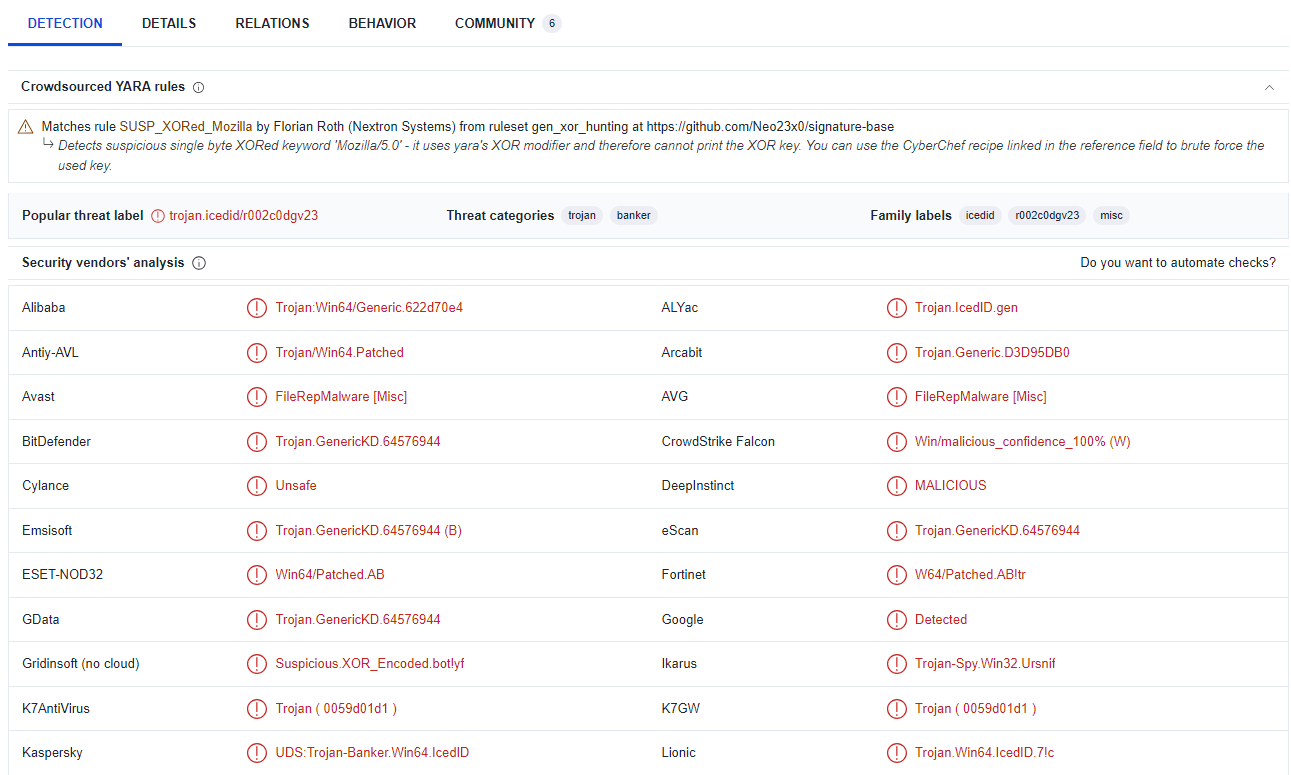
Results of WikiLoader analysis on VirusTotal
Since at least December 2022, WikiLoader has existed, and there are several versions of this program. Multiple campaigns have noted this loader, with the majority targeting various organizations based in Italy. Some evidence suggests that threat actors may offer WikiLoader for sale, as a couple of different threat actors have used it. Large-scale email spam campaigns have been observed distributing this malware.
Wikiloader Malware – Threat Description
The appearance of WikiLoader malware has raised significant concerns among cybersecurity experts. With multiple variants in existence, it is evident that this malicious program is actively under development even at the time of writing. The developers of WikiLoader have employed a range of cunning techniques to evade detection and complicate analysis. These tactics include robust obfuscation, intricate looping scripts, and the ability to detect and avoid sandboxes. Furthermore, the malware cleverly erases any traces of file download artifacts to further cover its tracks.

WikiLoader analysis on FileScan.io sandbox. The result says about extensive software packing
A distinguishing feature of WikiLoader is its unique method of verifying the target system’s connectivity to the Internet. By making an encrypted HTTPS request to Wikipedia and checking for the presence of specific strings, such as “The Free” found on Wikipedia’s homepage, the malware can ascertain whether it has infiltrated a genuine system or a virtual machine. Hence, the moniker “WikiLoader” aptly describes this loader’s behavior, though it is important to note that the malware can adapt and send requests to other URLs for the same purpose.
| Name | WikiLoader |
| Detection | WikiLoader |
| Similar behavior | Trojan, Trojan, Trojan |
| Damage | Exploits your hardware to mine cryptocurrencies without your permission. |
Infection stages
The infection process of WikiLoader unfolds in multiple stages, typically taking up to an hour to complete. In past observations, the final payload of these infections was often the notorious Ursnif information-stealing malware. However, the loader’s capabilities extend beyond this, as it has the potential to introduce various other malicious programs into compromised systems.
While theoretically, WikiLoader can download and install any type of malware, it appears to operate within specific boundaries. It has such behavior to ensure its successful execution without drawing undue attention. As with any sophisticated malware, developers continually refine and enhance their creations. Therefore, it is reasonable to expect that future releases of WikiLoader could introduce additional or different functionalities.
In conclusion, the menace posed by WikiLoader and its ilk cannot be underestimated. The potential consequences of infections include severe system compromise, data loss, privacy breaches, financial losses, and even identity theft. As cybersecurity measures evolve, so does the complexity and risk of modern malware, making it crucial for organizations and individuals alike to remain vigilant against these persistent threats.
How did I get WikiLoader in my system?
WikiLoader has been observed being spread in mass-scale spam campaigns. In one of them, over 150,000 emails were sent. These letters included Microsoft Excel, Microsoft OneNote, or PDF documents attached to them. The emails distributing malicious Excel documents were disguised as messages from the local tax authorities. These files relied on malicious macro commands to infect systems.
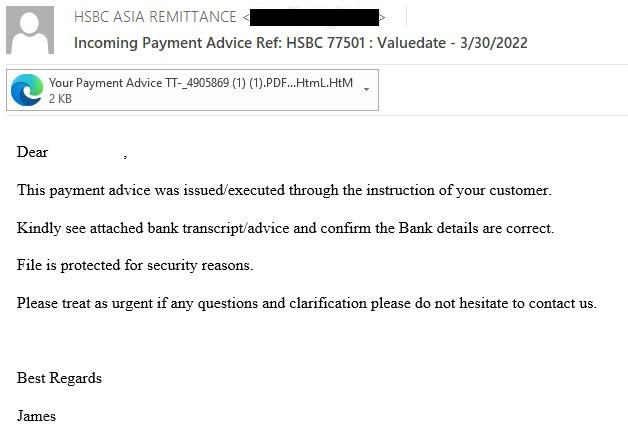
The example of email spam
The OneNote documents had malicious executables embedded into them. While the PDFs contained links leading to the download of an archived JavaScript file. However, other disguises, file formats, and techniques could be used in WikiLoader’s proliferation. The most widely used distribution methods include malicious attachments/links in spam mail, illegal software activation tools, and fake updates.


Leave a Comment