
Seeing the BScope.TrojanDropper.Convagent detection name usually means that your PC is in big danger. This virus can correctly be identified as ransomware – virus which encrypts your files and forces you to pay for their decryption. Stopping it requires some peculiar steps that must be taken as soon as possible.
BScope.TrojanDropper.Convagent detection is a malware detection you can spectate in your system. It generally appears after the provoking actions on your computer – opening the untrustworthy e-mail, clicking the banner in the Web or setting up the program from suspicious resources. From the moment it appears, you have a short time to take action before it starts its destructive activity. And be sure – it is better not to await these malicious things.
What is BScope.TrojanDropper.Convagent virus?
BScope.TrojanDropper.Convagent Summary
In total, BScope.TrojanDropper.Convagent ransomware actions in the infected system are next:
- Behavioural detection: Executable code extraction – unpacking;
- Yara rule detections observed from a process memory dump/dropped files/CAPE;
- Creates RWX memory;
- Dynamic (imported) function loading detected;
- CAPE extracted potentially suspicious content;
- The binary contains an unknown PE section name indicative of packing;
- The binary likely contains encrypted or compressed data.;
- Authenticode signature is invalid;
- Anomalous binary characteristics;
- Ciphering the files located on the target’s drives — so the victim cannot use these documents;
- Blocking the launching of .exe files of anti-virus programs
- Blocking the launching of installation files of security tools
Ransomware has actually been a nightmare for the last 4 years. It is hard to realize a more damaging virus for both individual users and companies. The algorithms used in BScope.TrojanDropper.Convagent (typically, RHA-1028 or AES-256) are not hackable – with minor exclusions. To hack it with a brute force, you need to have more time than our galaxy actually exists, and possibly will exist. But that malware does not do all these unpleasant things instantly – it may take up to a few hours to cipher all of your documents. Therefore, seeing the BScope.TrojanDropper.Convagent detection is a clear signal that you should start the removal process.
Where did I get the BScope.TrojanDropper.Convagent?
Standard tactics of BScope.TrojanDropper.Convagent spreading are typical for all other ransomware examples. Those are one-day landing web pages where victims are offered to download the free program, so-called bait emails and hacktools. Bait e-mails are a relatively modern method in malware spreading – you get the email that simulates some regular notifications about deliveries or bank service conditions changes. Inside of the e-mail, there is a corrupted MS Office file, or a link which leads to the exploit landing page.
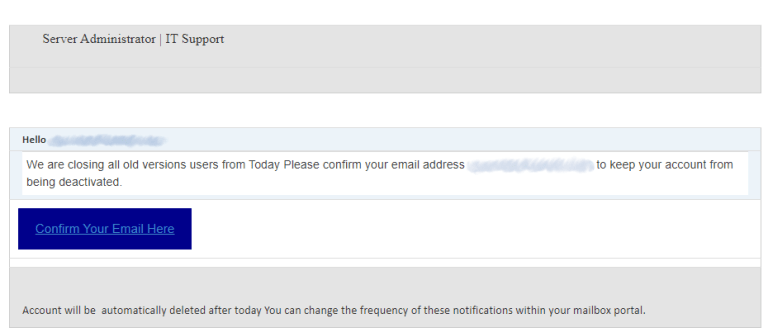
Malicious email message. This one tricks you to open the phishing website.
Preventing it looks fairly uncomplicated, however, still requires a lot of recognition. Malware can hide in various spots, and it is far better to prevent it even before it invades your PC than to rely on an anti-malware program. Essential cybersecurity knowledge is just an important thing in the modern-day world, even if your interaction with a computer remains on YouTube videos. That may save you a lot of time and money which you would certainly spend while trying to find a fixing guide.
BScope.TrojanDropper.Convagent malware technical details
File Info:
name: BEFFC8BA6C10958C0DDB.mlwpath: /opt/CAPEv2/storage/binaries/cf5b664490529980255ce94d7f2b558646c8571d9320d9ca84335cd9d026d6cfcrc32: 75320521md5: beffc8ba6c10958c0ddbb82d80d9bc30sha1: 526537bc556e86ab4d5779dd03ebd665ed6179cesha256: cf5b664490529980255ce94d7f2b558646c8571d9320d9ca84335cd9d026d6cfsha512: 839c715ad6fd0ff49691cc5a3f0356966aff62d9a768ae888626c7a707bcfd8cb59ca3f54585550587a30f2b1c86758767e5617b59dd4e9de08d893a8f11e5ccssdeep: 3072:12HhdwKY+dGviikUTbSYB124HwifvvE3:gXwKAai9SGxjtype: PE32 executable (GUI) Intel 80386, for MS Windowstlsh: T1E8B3D023FBD1D871D5164A380D257E34E73BFC606E22185BAB7C94CE0E28E815A697D3sha3_384: 76f50b28637b1b4631deefbe5bbed722836a1f9b030911f0af2d8ee965af45b3a55e7f0f3c77822cea11ab58b3b1cadfep_bytes: 558bec83c4f0b844a54000e8c09ffffftimestamp: 1992-06-19 22:22:17Version Info:
0: [No Data]
BScope.TrojanDropper.Convagent also known as:
| Lionic | Trojan.Win32.Delf.lEHx |
| Elastic | malicious (high confidence) |
| MicroWorld-eScan | Trojan.GenericKD.38788782 |
| FireEye | Generic.mg.beffc8ba6c10958c |
| ALYac | Trojan.GenericKD.38788782 |
| Sangfor | Trojan.Win32.Sabsik.FL |
| K7AntiVirus | Trojan ( 0058d6bb1 ) |
| BitDefender | Trojan.GenericKD.38788782 |
| K7GW | Trojan ( 0058d6bb1 ) |
| Cybereason | malicious.c556e8 |
| Arcabit | Trojan.Generic.D24FDEAE |
| Symantec | ML.Attribute.HighConfidence |
| ESET-NOD32 | a variant of Win32/Filecoder.OJV |
| TrendMicro-HouseCall | TROJ_GEN.R002H0AAS22 |
| Rising | Trojan.Filecoder!8.68 (CLOUD) |
| Ad-Aware | Trojan.GenericKD.38788782 |
| Zillya | Trojan.Filecoder.Win32.22197 |
| McAfee-GW-Edition | BehavesLike.Win32.Worm.cc |
| SentinelOne | Static AI – Malicious PE |
| Emsisoft | Trojan.GenericKD.38788782 (B) |
| APEX | Malicious |
| MaxSecure | Trojan.Malware.300983.susgen |
| Avira | TR/Crypt.XDR.Gen |
| MAX | malware (ai score=87) |
| Antiy-AVL | Trojan/Generic.ASMalwS.3518CCB |
| Microsoft | Trojan:Win32/Sabsik.FL.B!ml |
| GData | Trojan.GenericKD.38788782 |
| Cynet | Malicious (score: 100) |
| AhnLab-V3 | Trojan/Win.Generic.C4944386 |
| McAfee | GenericRXAA-FA!BEFFC8BA6C10 |
| VBA32 | BScope.TrojanDropper.Convagent |
| Malwarebytes | Trojan.Downloader |
| Panda | Trj/GdSda.A |
| Tencent | Win32.Trojan.Filecoder.Plkx |
| Ikarus | Trojan-Downloader.Win32.Dadobra |
| Fortinet | W32/Filecoder.OJV!tr |
| AVG | Win32:RansomX-gen [Ransom] |
| Avast | Win32:RansomX-gen [Ransom] |
| CrowdStrike | win/malicious_confidence_70% (W) |


Leave a Comment