
The “A Malicious Item Has Been Detected!” pop-up is a fraud that spreads through malicious ads, compromised websites, and phishing emails. It manipulates users with fake antivirus alerts, urging them to call a bogus support number.
Key actions include scare tactics to create urgency, potentially leading to unauthorized remote access, malware installation, and data theft. It’s a multifaceted scam that exploits user trust and manipulates search engine results for wider reach.
A Malicious Item Has Been Detected! Scam Overview
The “A Malicious Item Has Been Detected!” scam is a deceptive pop-up scheme designed to mislead users. Through our detailed analysis, we classify it as a pop-up scam. These scams use misleading messages in pop-ups to trick users into actions that could threaten their security or cause financial harm. To protect your online safety, it’s crucial to avoid engaging with any prompts related to this scam.
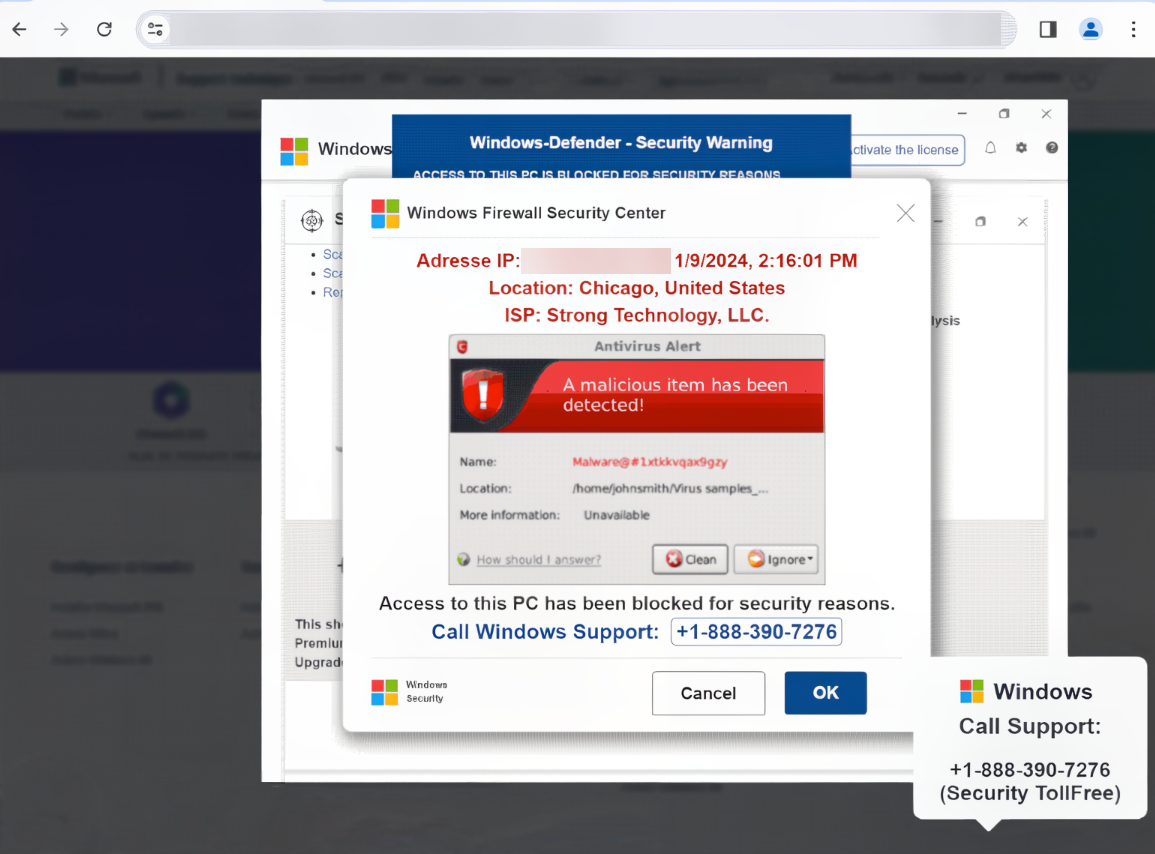
A Malicious Item Has Been Detected! Pop-up Scam
| Name | A Malicious Item Has Been Detected! technical support scam |
| Threat Type | Phishing, Scam, Social Engineering, Fraud |
| Damage | Loss of sensitive private information, monetary loss, identity theft, possible malware infections. |
| Similar Behavitor | “WARNING!(1)” Pop-up Scam, “TotalAV Security – Your PC Is Infected With 5 Viruses!” Pop-up Scam |
Technical Analysis
The “A Malicious Item Has Been Detected!” scam operates by displaying a counterfeit antivirus alert, masquerading as a Windows Firewall Security Center notification. It falsely alerts users about a supposedly detected malicious item named “Malware@1xtkkvqax9gzy,” claiming its location in a specific directory while deliberately withholding detailed information.
When victims call this bogus support number, the scammer often employs various strategies. They may feign assistance by seeking remote access to the victim’s computer, ostensibly for troubleshooting. This access could lead to the installation of malware, theft of sensitive data, or demands for payment for unnecessary services.
How did I open this website?
You might have ended up on a scam website through various means. Often, clicking on malicious advertisements, accidentally visiting compromised websites, or being redirected by phishing emails to fraudulent pages are common causes. Scammers also manipulate search engine optimization to reroute users searching for specific keywords to their malicious sites.
Additionally, scam websites can be opened through notifications from dubious sources, such as torrent sites, illegal movie streaming platforms, or sites that use rogue advertising networks. Adware, which aggressively promotes technical support and other scams, is another method scammers employ to lure users to these websites.
How To Remove Malware?
Manual removal of malware is another option, but it’s not recommended. Malware often creates multiple instances of itself to ensure persistence, making it challenging to locate and remove all components. Consequently, manual removal can be time-consuming and ineffective. For best practices in removing malware, refer to the guide I’ve compiled below.


Leave a Comment