
The “Windows EROOR CODE 0X02333” scam employs social engineering tactics, masquerading as Microsoft, to deceive users. Spread through alarming pop-up messages or malicious redirects, it falsely claims illegal activities on the user’s IP address, prompting them to call a provided number urgently.
The deceptive content warns of spyware infection, urging against restarting the PC. In reality, it’s a classic technical support scam aiming to exploit users’ panic. They coerce them into contacting the fraudulent support number, putting them at risk of further scams or financial losses.
“Windows EROOR CODE 0X02333” Pop-up Scam Overview
“Windows EROOR CODE 0X02333” is a classic example of a technical support scam. It employing deceptive tactics to mislead visitors into performing specific actions. These scams often aim to extract money, gather sensitive information, or distribute malware. So, caution is advised, and users should avoid trusting such websites to ensure their online safety.
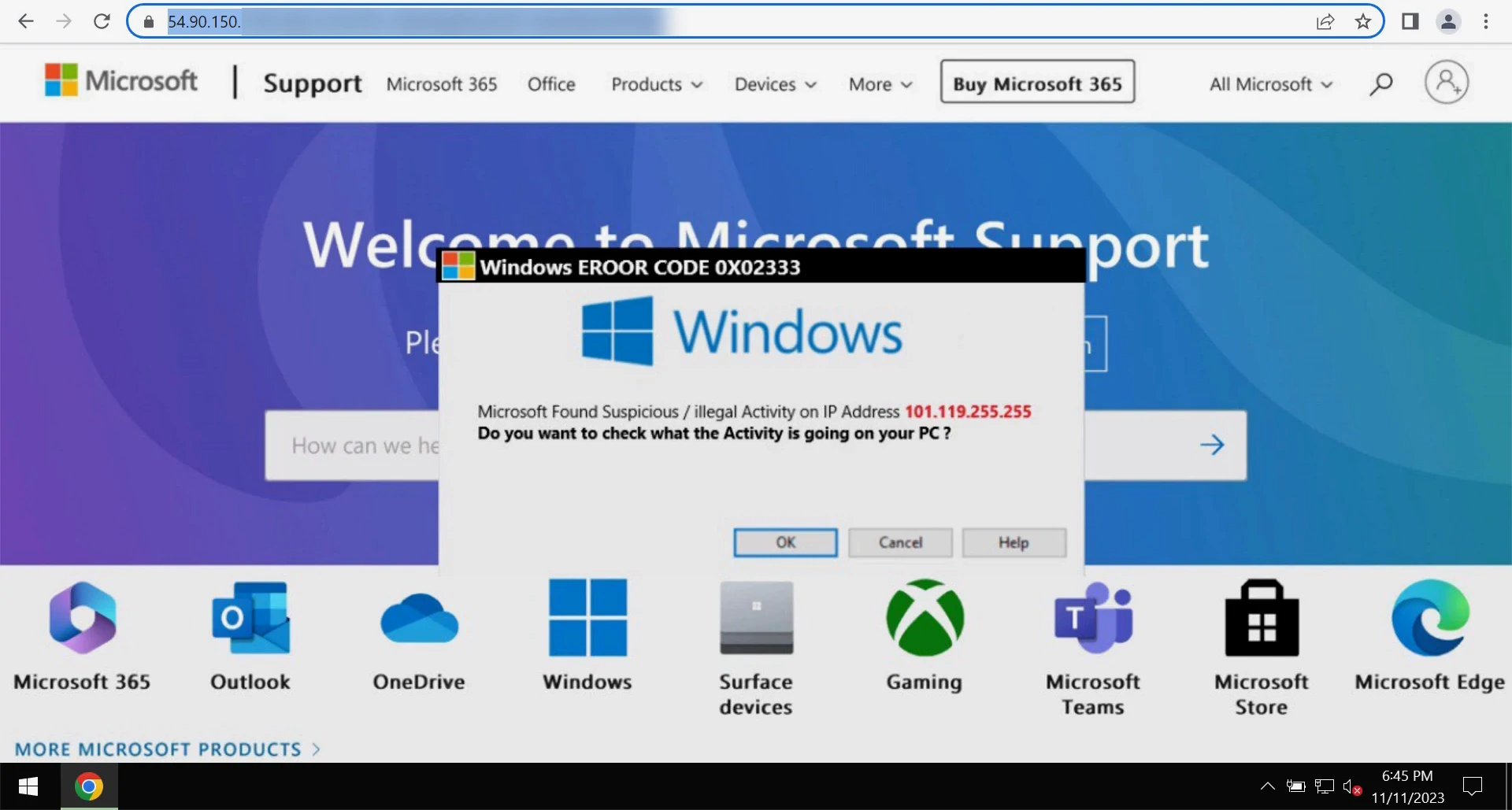
“Windows EROOR CODE 0X02333” Pop-up on fake website
| Name | “Windows EROOR CODE 0X02333” Pop-up |
| Threat Type | Phishing, Scam, Social Engineering |
| Damage | Loss of sensitive private information, monetary loss, identity theft, possible malware infections. |
| Similar Behavitor | “Your Security Is Not Up-To-Date” Popup, “Google Safe Browser Total Protection” Popup |
Technical Analysis
The fraudulent content warns users that their computer is infected with spyware, which puts various types of data at risk. For example, it can be Facebook and email correspondence, credit card details, bank account information, and other confidential files. To make users believe this message, the page employs fear tactics, advising against restarting the PC and emphasizing the need to contact technical support urgently to prevent potential data theft or misuse. The page also provides a stop code, SPYWARE_0x789346, for users to convey to the supposed support personnel when calling.
How did I get to this site?
Scam websites are often accessed inadvertently through malicious advertisements, pop-ups, or notifications while browsing. Users may also be redirected to such sites via compromised or malicious links on social media or other online platforms. Rogue advertising networks and advertising-supported apps can further contribute to landing on scam websites. In most instances, users unknowingly open these deceptive sites due to various online interactions. Vigilance and caution are crucial to avoid falling prey to scams.


Leave a Comment