
Atom logger, a budget-friendly malware, spreads through deceptive emails, infected websites, and fake software updates. It discreetly captures keystrokes, visited sites, chats, and more, transmitting logs via SMTP.
Atom provides real-time notifications for swift activation alerts. With advanced features like process termination, IP tracking, and the execution of external applications, Keylogger facilitates extensive, unauthorized system monitoring and data extraction. Despite being referred to as a keylogger, it is in fact a multi-purpose threat with capabilities that go far beyond keylogging.
Atom Overview
Atom serves as a cost-effective keylogging solution crafted for novice hackers and criminals. It prides itself on capturing a range of data, including keystrokes, visited websites, chats, instant messages, emails, screenshots, and more. This keylogger finds promotion and is up for sale on clandestine cybercrime forums frequented by hackers and scammers. Priced at a mere $15, Atom logger offers an economical choice, making it accessible for criminals working within budget constraints.
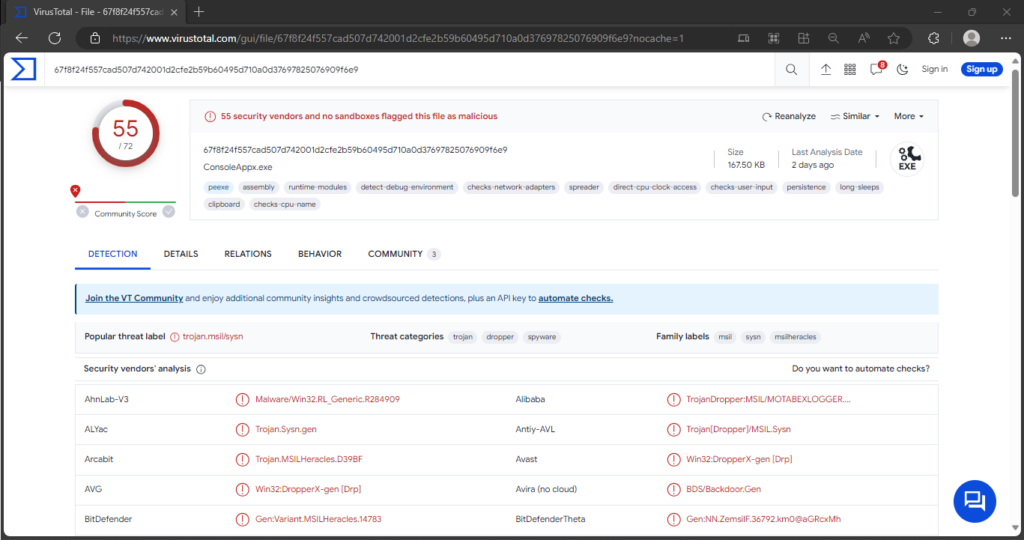
Atom Keylogger on Virus Total site
| Name | Atom |
| Threat Type | Keylogger, Information Stealer |
| Symptoms | Atom logger is designed to stealthily infiltrate the victim’s computer and remain silent, and thus no particular symptoms are clearly visible on an infected machine. |
| Detection | Microsoft (TrojanDownloader:Win32/Upatre) |
| Similar Behavior | Luca, S1deload, WhiskerSpy |
| Damage | Stolen passwords and banking information, identity theft, monetary loss, system instability, |
Technical Analysis of Atom Keylogger

Screen of Atom logger promotion
Beyond basic keystroke recording, Atom logger incorporates advanced functions like process termination, allowing attackers to halt specific processes such as taskmgr.exe. This control element provides manipulation over the target system, underscoring the tool’s versatility in the hands of cybercriminals. Moreover, this keylogger facilitates tracking target IP addresses, blacklisting specific keywords for immediate notifications, and executing external applications through the “RUN EXECUTABLE” feature. This variety of tools enables discreet data extraction and system manipulation.
Spreading methods
To disseminate malware, cybercriminals frequently resort to deceptive tactics. They send misleading emails, masquerading as trustworthy sources, luring users to click on malicious links or download infected attachments. Malware can also infiltrate systems when users visit infected websites or engage with content hosting malicious ads.
Moreover, cybercriminals exploit unsuspecting users by generating fake prompts for software updates, tricking them into downloading malware disguised as legitimate updates. Hidden malware often accompanies free software or files shared on peer-to-peer networks and similar platforms. Additionally, threat actors employ pirated software, cracking tools, or key generators as conduits for malware distribution.
How to remove the Atom Keylogger from my PC?
While manual removal of the threat is technically possible, I strongly discourage this method. In its pursuit of establishing persistence, Malware generates numerous instances of itself, making it exceedingly difficult to trace all its components manually. Consequently, manual removal can be time-consuming and often yield minimal to no results. Below, I have assembled a guide outlining the most effective removal practices for Atom.


Leave a Comment