
Seeing the Win32/LockScreen.GX malware detection means that your computer is in big danger. This virus can correctly be named as ransomware – sort of malware which encrypts your files and forces you to pay for their decryption. Deleteing it requires some peculiar steps that must be done as soon as possible.
Win32/LockScreen.GX detection is a malware detection you can spectate in your system. It usually shows up after the provoking actions on your PC – opening the dubious email messages, clicking the banner in the Internet or installing the program from untrustworthy resources. From the second it shows up, you have a short time to do something about it before it begins its malicious action. And be sure – it is much better not to await these malicious actions.
What is Win32/LockScreen.GX virus?
Win32/LockScreen.GX Summary
In total, Win32/LockScreen.GX ransomware activities in the infected system are next:
- Performs HTTP requests potentially not found in PCAP.;
- Authenticode signature is invalid;
- Attempts to modify proxy settings;
- Anomalous binary characteristics;
- Ciphering the files kept on the target’s disk drives — so the victim cannot use these files;
- Blocking the launching of .exe files of anti-virus programs
- Blocking the launching of installation files of anti-malware apps
Ransomware has actually been a headache for the last 4 years. It is hard to realize a more dangerous virus for both individual users and organizations. The algorithms utilized in Win32/LockScreen.GX (usually, RHA-1028 or AES-256) are not hackable – with minor exclusions. To hack it with a brute force, you need more time than our galaxy actually exists, and possibly will exist. But that malware does not do all these unpleasant things without delay – it may take up to several hours to cipher all of your files. Therefore, seeing the Win32/LockScreen.GX detection is a clear signal that you have to start the clearing process.
Where did I get the Win32/LockScreen.GX?
Common tactics of Win32/LockScreen.GX distribution are basic for all other ransomware examples. Those are one-day landing websites where victims are offered to download and install the free program, so-called bait emails and hacktools. Bait emails are a quite modern tactic in malware spreading – you get the e-mail that imitates some normal notifications about shippings or bank service conditions shifts. Inside of the email, there is a malicious MS Office file, or a link which opens the exploit landing page.
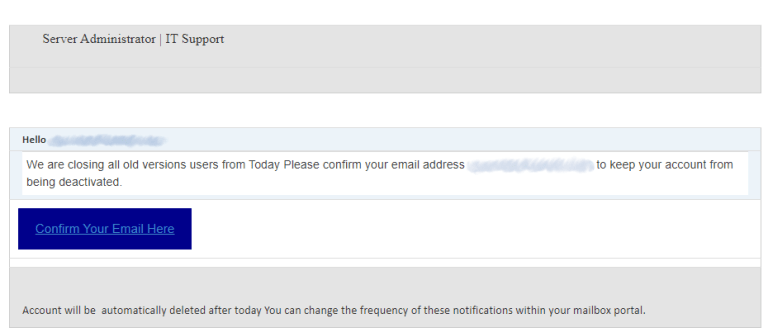
Malicious email message. This one tricks you to open the phishing website.
Avoiding it looks quite simple, however, still needs a lot of focus. Malware can hide in different places, and it is better to stop it even before it goes into your computer than to rely on an anti-malware program. Common cybersecurity knowledge is just an important item in the modern world, even if your relationship with a computer remains on YouTube videos. That may save you a lot of time and money which you would certainly spend while searching for a solution.
Win32/LockScreen.GX malware technical details
File Info:
name: 0AF9A7D5830046D04F25.mlwpath: /opt/CAPEv2/storage/binaries/4c510ea257ef3841f94f54e09257ed35c2a369ee9a62dde9318953b23726a21fcrc32: CF932B6Emd5: 0af9a7d5830046d04f25ce12e0ce97d9sha1: b32e865c55b2dd1568f9a96b080b6d7bf30f026bsha256: 4c510ea257ef3841f94f54e09257ed35c2a369ee9a62dde9318953b23726a21fsha512: 971e6ba4064a4c7f5278bbeec5baed5fb1a9c2bad9734ade552aa6515634d7e243e574039f96d0e759561b7fb2e964fb9c470010859e813d58ee55bc1a08687dssdeep: 6144:kwuc7Y+EiQ2zJnh0kKMfSko59xvzHJQEqxpllBeA6IKli8bQTBs4l7UAO+u49MRC:kwuc8+EL2zJh0nMfSjLJzHJQEqxHlBeRtype: PE32 executable (GUI) Intel 80386, for MS Windowstlsh: T14D849E32B8D0FA76E4774333E4CF46EA5A65BB240D325F53AA9C02B91718417D2353AEsha3_384: 94d6919a4065a9c7af3e11d20788d9669b299fba7f41c18fa7be7c607fd321101d8adde468685f5789780a70ab48432cep_bytes: e8fe30feffe96fe201006a1068d01a45timestamp: 2010-01-12 23:01:35Version Info:
0: [No Data]
Win32/LockScreen.GX also known as:
| Bkav | W32.AIDetectMalware |
| Lionic | Trojan.Win32.Agent2.4!c |
| Elastic | malicious (high confidence) |
| DrWeb | Trojan.Winlock.591 |
| MicroWorld-eScan | Trojan.Dropper.Agent.UUK |
| FireEye | Generic.mg.0af9a7d5830046d0 |
| Skyhigh | BehavesLike.Win32.Generic.fh |
| McAfee | GenericRXKS-SN!0AF9A7D58300 |
| Malwarebytes | MachineLearning/Anomalous.100% |
| VIPRE | Trojan.Dropper.Agent.UUK |
| Sangfor | Trojan.Win32.Save.a |
| BitDefender | Trojan.Dropper.Agent.UUK |
| Cybereason | malicious.c55b2d |
| BitDefenderTheta | Gen:NN.ZexaF.36792.xqW@aGE5Usk |
| VirIT | Trojan.Win32.SHeur2.CGCQ |
| Symantec | ML.Attribute.HighConfidence |
| ESET-NOD32 | a variant of Win32/LockScreen.GX |
| Cynet | Malicious (score: 100) |
| APEX | Malicious |
| Kaspersky | Trojan.Win32.Agent2.fmbb |
| Alibaba | Trojan:Win32/LockScreen.b1fb4780 |
| NANO-Antivirus | Trojan.Win32.PogBlock.deqdu |
| Rising | Trojan.Occamy!8.F1CD (TFE:5:mS0SeB2IMqK) |
| Sophos | Mal/Generic-S |
| F-Secure | Heuristic.HEUR/AGEN.1318994 |
| Zillya | Trojan.PogBlock.Win32.157 |
| TrendMicro | TROJ_RANSOM.SMM |
| Trapmine | malicious.high.ml.score |
| Emsisoft | Trojan.Dropper.Agent.UUK (B) |
| SentinelOne | Static AI – Malicious PE |
| Jiangmin | Trojan/PogBlock.iu |
| Webroot | W32.Malware.Gen |
| Varist | W32/Ransom.C.gen!Eldorado |
| Avira | HEUR/AGEN.1318994 |
| MAX | malware (ai score=100) |
| Antiy-AVL | Trojan/Win32.AGeneric |
| Kingsoft | Win32.Troj.Unknown.a |
| Microsoft | Trojan:Win32/Wacatac.B!ml |
| Xcitium | Suspicious@#ii4fc22kj9y2 |
| Arcabit | Trojan.Dropper.Agent.UUK |
| ZoneAlarm | Trojan.Win32.Agent2.fmbb |
| GData | Trojan.Dropper.Agent.UUK |
| Detected | |
| AhnLab-V3 | Trojan/Win32.Xema.C65537 |
| VBA32 | BScope.Trojan.Agent |
| ALYac | Trojan.Dropper.Agent.UUK |
| DeepInstinct | MALICIOUS |
| Cylance | unsafe |
| Panda | Generic Malware |
| TrendMicro-HouseCall | TROJ_RANSOM.SMM |
| Yandex | Trojan.GenAsa!PuchLIwrlmc |
| Ikarus | Trojan-Ransom.FileCrypter |
| MaxSecure | Trojan.Malware.3242373.susgen |
| Fortinet | W32/PogBlock.AKM!tr |
| AVG | Win32:Ransom-R [Trj] |
| Avast | Win32:Ransom-R [Trj] |
| CrowdStrike | win/malicious_confidence_90% (W) |


Leave a Comment