
Spectating the TrojanDownloader:Win32/Tiny.AO detection name usually means that your PC is in big danger. This malware can correctly be identified as ransomware – sort of malware which encrypts your files and forces you to pay for their decryption. Stopping it requires some peculiar steps that must be done as soon as possible.
TrojanDownloader:Win32/Tiny.AO detection is a malware detection you can spectate in your computer. It generally appears after the provoking actions on your computer – opening the dubious email, clicking the advertisement in the Internet or setting up the program from suspicious sources. From the moment it shows up, you have a short time to take action before it starts its destructive activity. And be sure – it is better not to await these harmful actions.
What is TrojanDownloader:Win32/Tiny.AO virus?
TrojanDownloader:Win32/Tiny.AO Summary
In summary, TrojanDownloader:Win32/Tiny.AO virus activities in the infected PC are next:
- Uses Windows utilities for basic functionality;
- Performs HTTP requests potentially not found in PCAP.;
- Authenticode signature is invalid;
- Attempts to modify proxy settings;
- Uses suspicious command line tools or Windows utilities;
- Ciphering the files located on the target’s disk — so the victim cannot check these files;
- Blocking the launching of .exe files of anti-malware programs
- Blocking the launching of installation files of anti-virus programs
Ransomware has been a nightmare for the last 4 years. It is difficult to picture a more damaging virus for both individual users and organizations. The algorithms used in TrojanDownloader:Win32/Tiny.AO (typically, RHA-1028 or AES-256) are not hackable – with minor exclusions. To hack it with a brute force, you need to have a lot more time than our galaxy currently exists, and possibly will exist. However, that malware does not do all these horrible things without delay – it may require up to several hours to cipher all of your files. Hence, seeing the TrojanDownloader:Win32/Tiny.AO detection is a clear signal that you should begin the removal process.
Where did I get the TrojanDownloader:Win32/Tiny.AO?
Common methods of TrojanDownloader:Win32/Tiny.AO spreading are usual for all other ransomware variants. Those are one-day landing web pages where victims are offered to download and install the free app, so-called bait emails and hacktools. Bait e-mails are a relatively modern tactic in malware distribution – you receive the email that mimics some standard notifications about shippings or bank service conditions changes. Inside of the email, there is a malicious MS Office file, or a link which opens the exploit landing page.
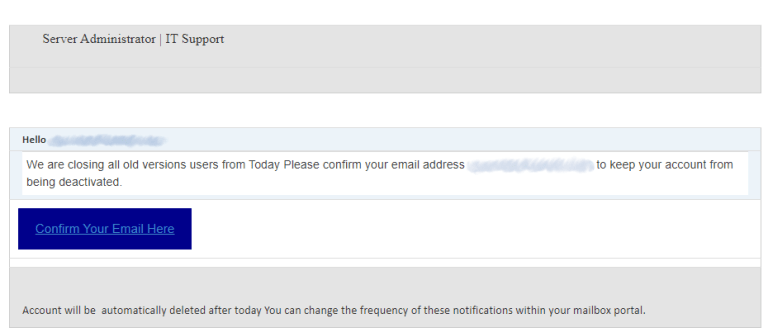
Malicious email message. This one tricks you to open the phishing website.
Preventing it looks quite uncomplicated, however, still requires a lot of recognition. Malware can hide in different places, and it is far better to stop it even before it gets into your computer than to depend on an anti-malware program. Standard cybersecurity awareness is just an important thing in the modern world, even if your interaction with a computer stays on YouTube videos. That may keep you a great deal of money and time which you would spend while trying to find a fix guide.
TrojanDownloader:Win32/Tiny.AO malware technical details
File Info:
name: 578EE30EF299E0D81222.mlwpath: /opt/CAPEv2/storage/binaries/4c7b23ec91df0a72beca850187c814d54e15c3523f338b6b9177c2e4d7763f11crc32: 7F9ECEBCmd5: 578ee30ef299e0d81222528172c68eb0sha1: a89440fbbc7e4e3f008dfc9141db10362832801asha256: 4c7b23ec91df0a72beca850187c814d54e15c3523f338b6b9177c2e4d7763f11sha512: 3a633fa5ed38137b9bb391d48a0b8645bf15737c806c8f060da574f2fb6997090e0ca4e7abb2122a33e47258d0fd573377d8d85c43dd5aac651a42db259af657ssdeep: 48:aVos4zbX9huEOAfOfn31FbG/B8mu6RwSv3Hr9/v7SYiHr9qbaKyEtIZblX:8Q7K/P3XbUu6tXrNTQryynlXtype: PE32 executable (GUI) Intel 80386, for MS Windowstlsh: T15C91975B97250032D9DD4370BA14903E5BFA4672235294F3DD3362C3E9FEAA27568300sha3_384: c8871e4a81c8989662694048213e1bacd547011f639c2e62e10987aa29c860189a0729a91855fddbb3170ffbe288e05dep_bytes: 558d6c249881ecf80000008d8570fffftimestamp: 2007-06-21 12:57:32Version Info:
0: [No Data]
TrojanDownloader:Win32/Tiny.AO also known as:
| Bkav | W32.AIDetectMalware |
| Lionic | Trojan.Win32.Tiny.to32 |
| FireEye | Generic.mg.578ee30ef299e0d8 |
| Skyhigh | BehavesLike.Win32.Generic.xt |
| McAfee | Downloader-BEA |
| Malwarebytes | Malware.AI.3236421791 |
| Zillya | Downloader.Tiny.Win32.684 |
| Sangfor | Trojan.Win32.Tiny.id |
| K7AntiVirus | Riskware ( 0040eff71 ) |
| K7GW | Riskware ( 0040eff71 ) |
| Cybereason | malicious.bbc7e4 |
| BitDefenderTheta | Gen:NN.ZexaF.36792.amW@aG4aDDm |
| VirIT | Trojan.Win32.Generic.ZQI |
| Symantec | Trojan.Vundo |
| Elastic | malicious (high confidence) |
| ESET-NOD32 | Win32/TrojanDownloader.Tiny.NSX |
| APEX | Malicious |
| ClamAV | Win.Downloader.10686-1 |
| Kaspersky | Trojan-Downloader.Win32.Tiny.id |
| Alibaba | TrojanDownloader:Win32/Dloadr.439dc3e9 |
| NANO-Antivirus | Trojan.Win32.Tiny.wmly |
| ViRobot | Trojan.Win32.Downloader.4608.Q |
| Rising | Trojan.DL.Win32.Tiny.id (CLASSIC) |
| TACHYON | Trojan/W32.Small.4608.FA |
| Sophos | Mal/Generic-R |
| F-Secure | Trojan.TR/Downloader.Gen |
| DrWeb | Trojan.Click.2799 |
| TrendMicro | TROJ_TINY.OT |
| Ikarus | Virus.Virut |
| Jiangmin | Adware/Clicker.aod |
| Webroot | W32.Malware.Downloader |
| Detected | |
| Avira | TR/Downloader.Gen |
| Varist | W32/Downloader.JLTF-9311 |
| Antiy-AVL | Trojan[Downloader]/Win32.Tiny |
| Kingsoft | malware.kb.a.1000 |
| Microsoft | TrojanDownloader:Win32/Tiny.AO |
| Xcitium | TrojWare.Win32.TrojanDownloader.Agent.~YER@93804 |
| SUPERAntiSpyware | Adware.Vundo/Traff-2 |
| ZoneAlarm | Trojan-Downloader.Win32.Tiny.id |
| Cynet | Malicious (score: 100) |
| AhnLab-V3 | Trojan/Win32.Xema.C68707 |
| VBA32 | suspected of Trojan.Downloader.gen |
| MAX | malware (ai score=100) |
| DeepInstinct | MALICIOUS |
| Cylance | unsafe |
| Panda | Trj/Downloader.PCQ |
| TrendMicro-HouseCall | TROJ_TINY.OT |
| Tencent | Malware.Win32.Gencirc.115d912a |
| Yandex | Trojan.GenAsa!nqmfh2ahrxs |
| MaxSecure | Trojan.Malware.18409.susgen |
| Fortinet | W32/Tiny.ID!tr.dldr |
| AVG | Win32:Tiny-IF [Trj] |
| Avast | Win32:Tiny-IF [Trj] |
| CrowdStrike | win/malicious_confidence_90% (W) |


Leave a Comment