
Vigorf.A
🤔 Vigorf.A is a Trojan virus that uses advanced techniques to evade detection by antivirus software. It can infiltrate your system through email attachments, software downloads, or infected websites. The Trojan disguises itself as a legitimate file or program to trick the user into installing it. Once installed, it can spread quickly throughout your system, stealing sensitive data and compromising your security. Vigorf.A is designed to remain undetected and can disable antivirus software to avoid detection.
Trojan:Win32/Vigorf.A is a type of malware that can cause significant harm to your computer system. It belongs to the dropper malware and is specifically designed to enter a system undetected and make it ready for other malware injection. Once installed, it gathers basic information about the system, disables the security software, and then pulls the final payload. By its behavior, the Vigorf.A trojan is similar to the Amadey dropper.1
To protect your system from the Vigorf.A Trojan, it’s important to have a reliable antivirus program installed and updated regularly. Be cautious of suspicious emails, attachments, and downloads, and only download software from trusted sources. Avoid visiting unknown websites and use strong passwords for all your online accounts. If you suspect that your system has been infected, run a full system scan using your antivirus software and remove any threats found. It’s important to act quickly to prevent further damage and protect your personal information.
Any malware exists with the only target – generate profits on you. And the developers of these things do not consider ethicality – they utilize all possible methods. Stealing your data, receiving the commission for the advertisements you watch for them, utilizing your system components to mine cryptocurrencies – that is not the full list of what they do. Do you like to be a riding equine? That is a rhetorical question.
What does Trojan:Win32/Vigorf.A detection means?
I recently conducted a full Windows Defender scan, and I discovered a Trojan on my PC. I have no idea how long it has been present, as I don’t usually install free software. The last software I installed was recommended by Reddit and a tech-savvy friend. Although I use uBlock Origin, it was briefly turned off earlier today. I took action by clicking the button to remove the trojan using Defender and then proceeded to browse this sub. As I visited rkill.com as instructed in the pinned post, I encountered an unusual image of cars, unrelated to scans or security. Moreover, the URL displayed something like “cookies=true” or a similar message while I was on the website.
What risks am I facing? Could you assist someone who does not know about viruses and similar threats?
Reddit userThe Trojan:Win32/Vigorf.A detection you can see in the lower right side is demonstrated to you by Microsoft Defender. That anti-malware application is good at scanning but prone to be unstable. It is vulnerable to malware invasions, it has a glitchy interface and bugged malware clearing capabilities. For this reason, the pop-up that states about the Vigorf is simply an alert that Defender has found it. To remove it, you will likely need to use a separate anti-malware program.
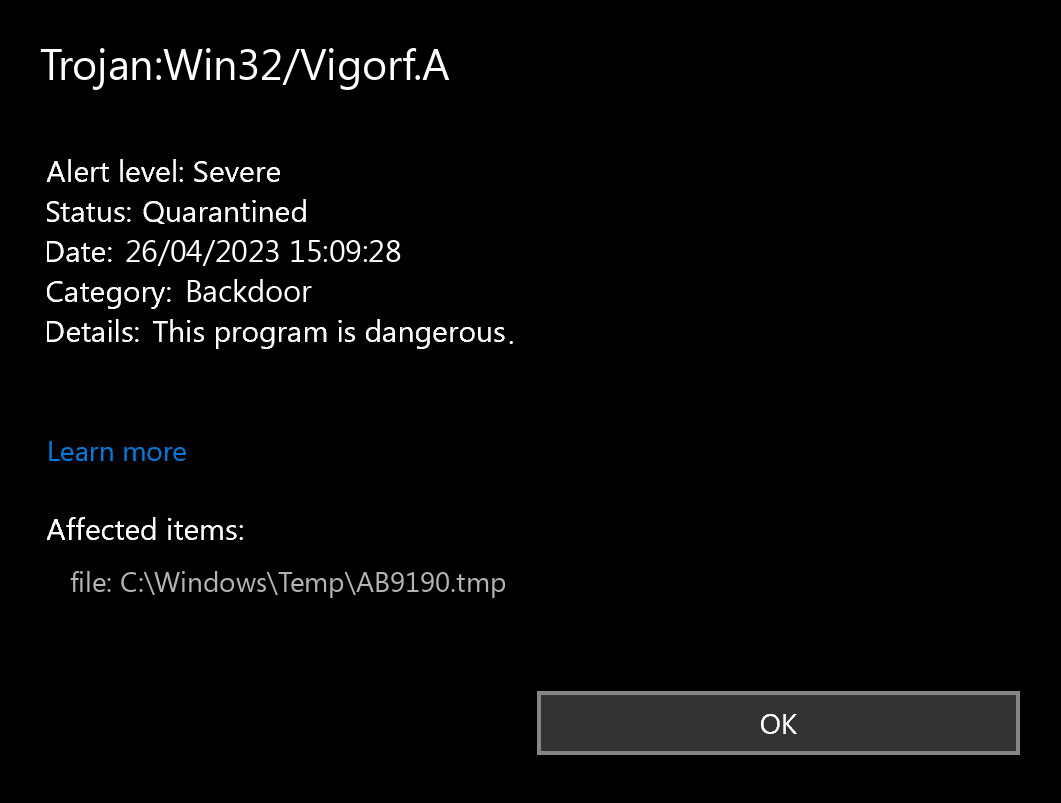
Microsoft Defender: “Trojan:Win32/Vigorf.A”
Backdoor Summary:
| Name | Vigorf Backdoor |
| Detection | Trojan:Win32/Vigorf.A |
| Damage | Gain access to the operating system to perform various malicious actions. |
| Similar | Msil Pasgen, Win64 Godropper, Win64 Vankul, Msil Androme, Lotok, Quasarrat, Trojan Smokeloader Pamtb, Asyncrat |
| Fix Tool | See If Your System Has Been Affected by Vigorf backdoor |
Technical details
File Info
crc32: C1159E57md5: dfa9a2416b38f862e8c5023f17225478name: wilog.exesha1: 10c8bf1254b14f4da8b5b1e27f594121ca577853sha256: 5582cf40315bd95ed71af01d99e0b5a5f8ac2d0ea8f30800b1fa57046a5f26adsha512: 7f620d4c21e7e44f004744d7c85243f906f31477e4bedd347d39d4618ecec878d6d99588000b1a2b14cf0acb701fa97963d72b0118f1fc6d37c91e903dead670ssdeep: 12288:2qokCS6aCDjce0rzYHkynrZKEY/rFpMqlJ3NysZYnTxu/jfR55l/tsR6Z:2qbCIpuZGjzMydNyGuTWbRDlWCtype: PE32 executable (GUI) Intel 80386, for MS Windows, Nullsoft Installer self-extracting archiveVersion Info:
0: [No Data]
Activities and properties
- Reads data out of its binary image. The trick allowing the malware to read data from your computer’s memory.
Everything you run, type, or click on your computer goes through the memory. This includes passwords, bank account numbers, emails, and other confidential information. With this vulnerability, there is the potential for a malicious program to read that data.
- Network activity detected but not expressed in API logs. Microsoft built an API solution right into its Windows operating system. It reveals network activity for all apps and programs that ran on the computer in the past 30 days. This malware hides network activity.
- Anomalous binary characteristics. This is a way of hiding virus code from antiviruses and virus analysts.
Trojan:Win32/Vigorf.A alternative detection names:
| CAT-QuickHeal | Trojan.Agentb |
| McAfee | Artemis!DFA9A2416B38 |
| Cylance | Unsafe |
| K7AntiVirus | Trojan ( 0055bb651 ) |
| K7GW | Trojan ( 0055bb651 ) |
| CrowdStrike | win/malicious_confidence_60% (W) |
| Arcabit | Trojan.Generic.D1F35AC5 |
| TrendMicro | TROJ_FRS.VSNW13K19 |
| Cyren | W32/Injector.ASRC-7802 |
| Symantec | Trojan.Gen.MBT |
| ESET-NOD32 | Win32/Injector.EIZG |
| APEX | Malicious |
| Kaspersky | Trojan.Win32.Inject.amnlw |
| BitDefender | Trojan.GenericKD.32725701 |
| Comodo | Malware@#2drr8r5z1t4ks |
| F-Secure | Trojan.TR/Injector.knnhk |
| DrWeb | Trojan.Siggen8.57577 |
| VIPRE | Trojan.Win32.Generic!BT |
| Invincea | heuristic |
| McAfee-GW-Edition | BehavesLike.Win32.ObfusRansom.hc |
| FireEye | Generic.mg.dfa9a2416b38f862 |
| Sophos | Mal/Generic-S |
| SentinelOne | DFI – Suspicious PE |
| F-Prot | W32/Injector.IOP |
| Avira | TR/Injector.knnhk |
| Fortinet | W32/Agent.F8B2!tr |
| Endgame | malicious (high confidence) |
| Microsoft | Trojan:Win32/Vigorf.A |
| ZoneAlarm | HEUR:Trojan.Win32.Agentb.gen |
| AhnLab-V3 | Malware/Gen.RL_Generic.R299897 |
| MAX | malware (ai score=81) |
| VBA32 | Trojan.Inject |
| Malwarebytes | Trojan.Injector.NSIS |
| Panda | Trj/CI.A |
| TrendMicro-HouseCall | TROJ_FRS.VSNW13K19 |
| Yandex | Trojan.Igent.bSGKvS.5 |
| Ikarus | Trojan.Win32.Injector |
| GData | Trojan.GenericKD.32725701 |
| AVG | Win32:Trojan-gen |
| Avast | Win32:Trojan-gen |
| Qihoo-360 | HEUR/QVM42.3.5369.Malware.Gen |
Is Trojan:Win32/Vigorf.A dangerous?
As I mentioned earlier, there is no such thing as harmless malware, and Trojan:Win32/Vigorf.A is no exception. This backdoor may not cause significant damage immediately upon release. However, it will come as an unpleasant surprise when you are unable to access a random discussion forum or website on the Internet because your IP address has been banned due to a DDoS attack. And even if that doesn’t concern you, it’s unsettling to know that someone else can easily gain access to your computer, monitor your conversations, open your files, and observe your activities.
The presence of spyware, which typically accompanies the Trojan:Win32/Vigorf.Malware is another compelling reason to remove it as soon as possible. In today’s world, where user information holds great value, it is illogical to provide thieves with such an opportunity. It becomes even worse if the spyware manages to obtain your banking information. The thought of seeing your bank account balance reduced to zero is my worst nightmare.
How did I get this virus?
It is hard to line the sources of malware on your PC. Nowadays, things are mixed, and distribution methods chosen by adware 5 years ago may be used by spyware nowadays. But if we abstract from the exact distribution method and think about why it works, the explanation will be quite basic – low level of cybersecurity knowledge. People click on ads on odd sites, open the pop-ups they get in their web browsers, and call the “Microsoft tech support” thinking that the scary banner that states about malware is true. It is important to recognize what is legit – to avoid misconceptions when trying to identify a virus.
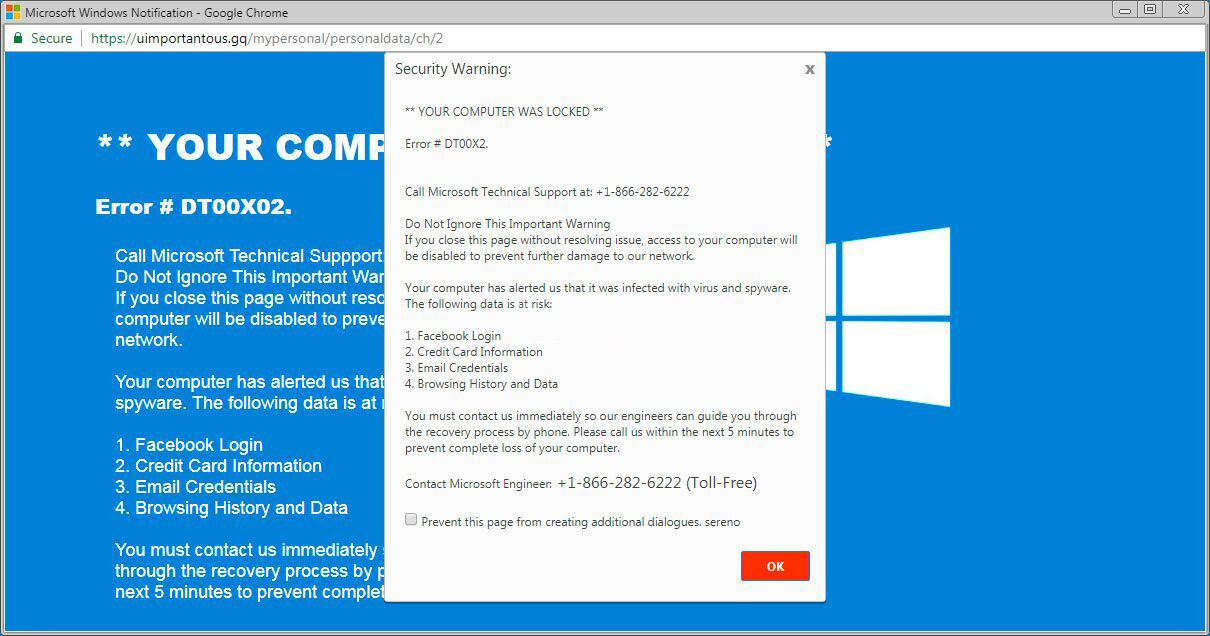
The example of Microsoft Tech support scam banner
Currently, there are two primary methods for distributing malware: luring emails and injection into compromised software. Evading the first method is not as straightforward since recognizing a counterfeit email requires a good understanding of the subject matter. However, addressing the second method is quite simple: avoid using cracked applications. Torrent trackers and other sources offering “free” applications (which are essentially paid but with disabled license checks) are clear indicators of potential malware. Trojan:Win32/Vigorf.A can easily be found among them.
How to remove the Trojan:Win32/Vigorf.A from my PC?
Frequently Asked Questions
In conclusion, Trojan:Win32/Vigorf.A is a dangerous Trojan virus that can cause significant harm to your computer system. It can steal sensitive information, compromise your security, and allow hackers to take control of your system. To protect your system, it’s important to have reliable antivirus software installed, be cautious of suspicious emails and downloads, and use strong passwords for all your online accounts. If you suspect that your system has been infected, act quickly and remove any threats found to prevent further damage.
References
- Read our detailed research about Amadey Dropper.
- Gossip about the backdoor in Intel processors on Reddit.



Leave a Comment