
Spoolsv.exe is the Windows Print Spooler process. It manages print jobs, printer queues, and communication with installed printers. It is common to see it in Task Manager on computers that have local printers, network printers, PDF printers, or enterprise print drivers installed.

What is spoolsv.exe?
The process receives print jobs from applications, places them in a queue, and sends them to printer drivers or network printers. Without the Print Spooler, Windows printing, many PDF printer tools, and some scanner/printer utilities may stop working.
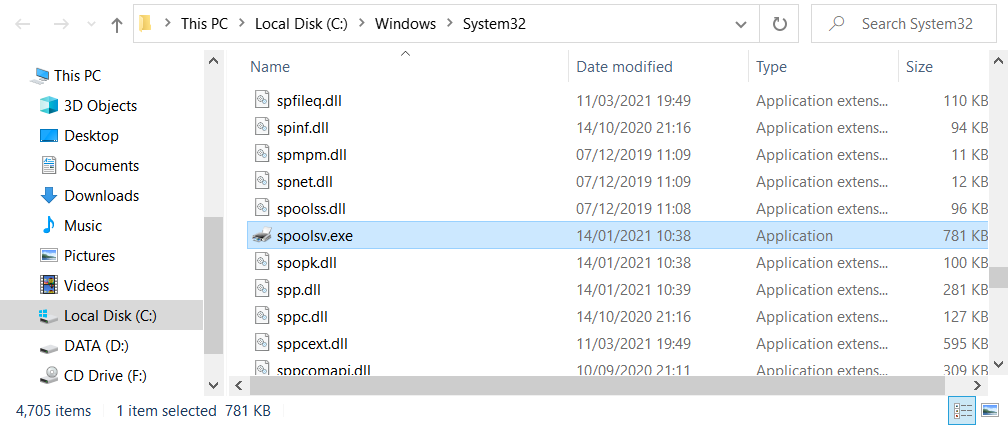
The legitimate file is C:\Windows\System32\spoolsv.exe and should be signed by Microsoft Windows. It usually uses little CPU when no print job is active. Short bursts during printing are normal, especially with large PDFs, old drivers, or network printers that wake slowly.
Is spoolsv.exe a virus?
Spoolsv.exe is not a virus by default. A fake file with the same name can exist, but the common real-world issue is more often a stuck print queue, broken driver, or offline printer than malware.
The filename is familiar and runs on many Windows computers, so malware may imitate it. A copy outside System32, especially in AppData, Temp, ProgramData, or Downloads, should be treated as suspicious.
Why spoolsv.exe can use high CPU, memory, or disk
High CPU or memory usage by spoolsv.exe usually means Windows is processing or retrying a print job. The process can also loop when a corrupt print job or printer driver refuses to complete.
- A print job is stuck in the queue and keeps retrying.
- A printer is offline, unreachable, or repeatedly disconnecting from Wi-Fi.
- An outdated or corrupted printer driver is crashing inside the spooler workflow.
- A PDF or image-heavy document is being converted for printing.
- A fake spoolsv.exe is running from a non-Windows folder.
Signs that the file should be investigated
Check the printing context first, then verify the executable. These signs justify deeper investigation.
- File location is not C:\Windows\System32\spoolsv.exe.
- Digital signature is missing or not from Microsoft.
- High usage continues after clearing all print queues and rebooting.
- Network connections appear from a suspicious copy in a user folder.
- Unknown startup entries launch a file named spoolsv.exe outside the Windows directory.
How to check spoolsv.exe manually
Work from least destructive to more specific checks. Most spoolsv.exe issues can be fixed without touching the Windows system file.
- 1. Open the print queue
Cancel stuck jobs from Settings, Control Panel, or the printer queue window. - 2. Restart Print Spooler
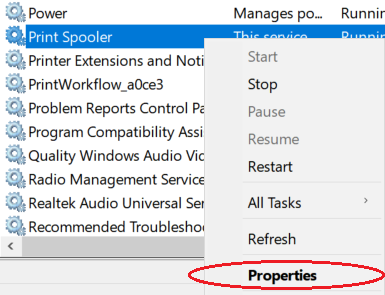
Open Services, restart Print Spooler, and check whether CPU usage drops after the queue clears. - 3. Check file location
Right-click the process, open file location, and confirm it is in C:\Windows\System32. - 4. Update or reinstall printer drivers
Remove old printer packages and install drivers from the printer vendor or Windows Update. - 5. Disconnect problem printers temporarily
If CPU drops after disconnecting a network printer, troubleshoot that printer or its driver. - 6. Scan suspicious copies
If the executable is not in System32 or is not Microsoft-signed, scan and quarantine the suspicious copy.
How to tell a print problem from malware
A real Print Spooler problem usually has a printer-related clue: a job stuck in the queue, a printer marked offline, a driver update that failed, or a PDF document that never finishes printing. In those cases, clearing the queue and restarting the Print Spooler service should change the behavior immediately. Malware usually does not care whether a printer is connected.
Check the Services console and the Devices and Printers panel before using removal tools. If spoolsv.exe calms down after a queue is cleared, after an offline printer is removed, or after a driver is reinstalled, the issue was operational rather than malicious. If CPU usage returns with no printers installed, no queue entries, and no valid System32 path, then the investigation should shift toward a fake executable or unwanted service.
For office and shared-printer environments, avoid disabling Print Spooler permanently unless printing is intentionally blocked. A safer repair is to remove stale printers, update the print driver package, and check whether the print server is reachable. Permanent service changes can create a different support problem while leaving the original driver issue unresolved.
Should you remove spoolsv.exe?
Do not delete the real spoolsv.exe. If you do not print, you can disable the Print Spooler service, but most users should fix the queue or driver instead. Delete only a confirmed fake copy outside the Windows directory.
Optional security check
Need a second opinion?
Optional recommendation. Do not remove a system file only because its name is spoolsv.exe; first confirm the path, signature, parent process, and recent changes on the computer.
FAQ
Why does spoolsv.exe run when I am not printing?
Windows may keep the Print Spooler ready for installed printers, virtual PDF printers, or queued jobs.
Is it safe to stop Print Spooler?
Yes for troubleshooting, but printing will not work until the service is started again.
Can malware hide as spoolsv.exe?
Yes. The strongest warning sign is a file path outside System32 or a missing Microsoft signature.
Conclusion
Spoolsv.exe is a normal Windows printing component. Fix queues and drivers first, then investigate path and signature if behavior still looks wrong.


Leave a Comment