
If you spectate the alert of PUA:Win32/PassShow detection, it appears that your system has a problem. All viruses are dangerous, with no exceptions. PassShow unwanted application can not be called full-fledged malware. However, it has plenty of proofs to claim that you will not like the changes this thing brings to your computer.
PUAs like that may be just a bothersome thing, as well as lead to a serious impact on your system’s functionality. Additionally, there are a number of situations when users report that this program acts like spyware or backdoor.
What does the notification with PUA:Win32/PassShow detection mean?
The PUA:Win32/PassShow detection you can see in the lower right corner is demonstrated to you by Microsoft Defender. That anti-malware application is good at scanning, however, prone to be generally unstable. It is prone to malware invasions, it has a glitchy interface and problematic malware clearing features. Thus, the pop-up which says concerning the PassShow is rather just an alert that Defender has actually spotted it. To remove it, you will likely need to use another anti-malware program.
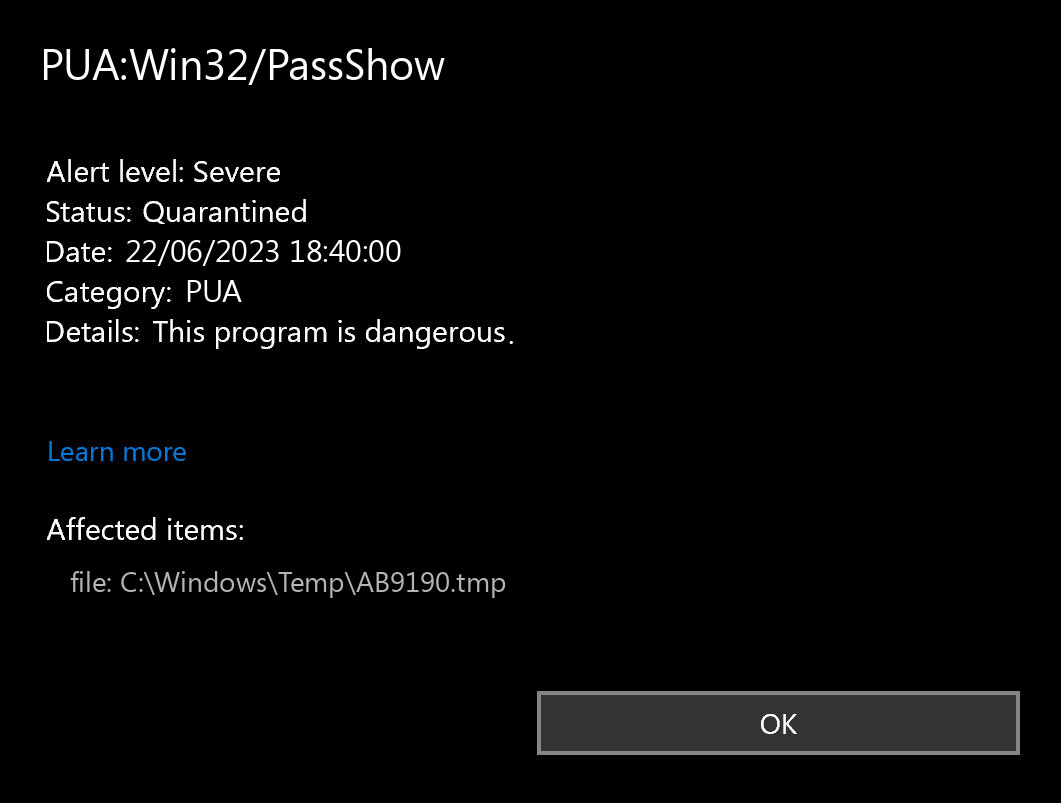
Microsoft Defender: “PUA:Win32/PassShow”
PUA:Win32/PassShow unwanted program is a typical example of PUA, which are quite widespread nowadays. Being free to use, it may offer you “the extended capabilities” for the additional money. Some examples of this program type can have no real functions whatsoever – just the shell with the colorful interface. You can see it advertised as a system optimization software, driver updater or torrent downloadings tracker. This or another way it does not grant you any type of true performance, exposing you to risk instead.
Unwanted Program Summary:
| Name | PassShow PUA |
| Detection | PUA:Win32/PassShow |
| Damage | PassShow is at least useless, or can perform various malicious actions on your PC. |
| Fix Tool | See If Your System Has Been Affected by PassShow exploit |
File Information
Other detection names
Is PUA:Win32/PassShow dangerous?
I have already stated that PUA:Win32/PassShow PUA is not as trustworthy as it pretends to be. The “legitimate and effective” program may suddenly unveil itself as a downloader trojan, spyware, backdoor, or coin miner malware. And you can never foresee what to expect even from different variants of PassShow unwanted program. That still does not imply that you have to panic – possibly, this unpleasant thing has not succeeded to do bad things to your computer.
The exact damage to your system can be created not just as a result of the malware injection. A significant share of suspicious programs, like the PassShow app is, is just poorly designed. Potentially, their actions are fairly useful than useless if done on specific system setups, however, not on each one. That’s how an uncomplicated system optimization app may cause disorder with continuous BSODs on your system. Any type of interruptions to the system registry are dangerous, and they are much more risky if completed with such programs.
How did I get this virus?
It is not easy to line the sources of malware on your computer. Nowadays, things are mixed, and distribution ways utilized by adware 5 years ago may be utilized by spyware these days. But if we abstract from the exact spreading way and will think about why it works, the reply will be quite simple – low level of cybersecurity knowledge. People click on promotions on weird websites, open the pop-ups they receive in their browsers, call the “Microsoft tech support” assuming that the weird banner that states about malware is true. It is important to understand what is legit – to prevent misunderstandings when attempting to determine a virus.
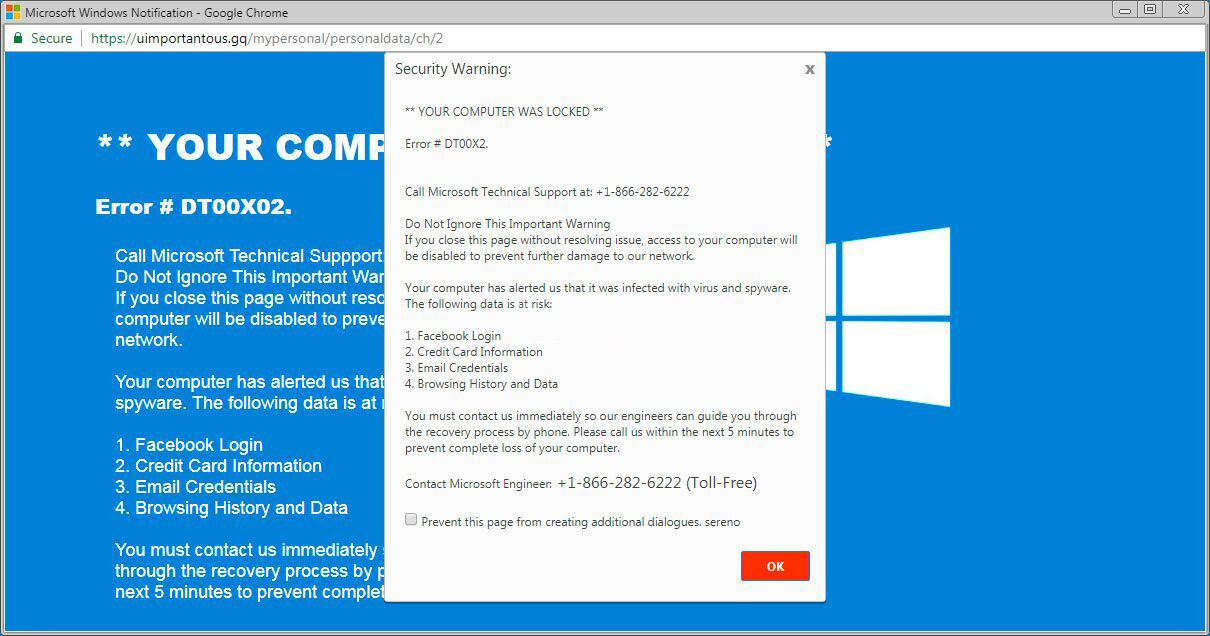
The example of Microsoft Tech support scam banner
Nowadays, there are two of the most extensive methods of malware spreading – bait e-mails and also injection into a hacked program. While the first one is not so easy to stay away from – you must know a lot to recognize a counterfeit – the 2nd one is simple to handle: just don’t use cracked programs. Torrent-trackers and various other providers of “free” applications (which are, actually, paid, but with a disabled license checking) are really a giveaway point of malware. And PUA:Win32/PassShow is simply among them.


What if this “PUA:Win32/PassShow” is in a software FOR hacking? Could it be in there as a feature of said software? Or is it specifically malicious?