
Poverty, a stealthy information stealer, spreads primarily through deceptive email attachments and drive-by downloads from compromised websites.
Poverty insidious infiltration involves extracting comprehensive system details, accessing critical directories, and pilfering sensitive information like cryptocurrency wallets and 2FA codes. With the added ability to capture screenshots, Poverty poses a multifaceted threat by compromising user privacy and security with minimal user interaction.
Poverty Stealer Overview
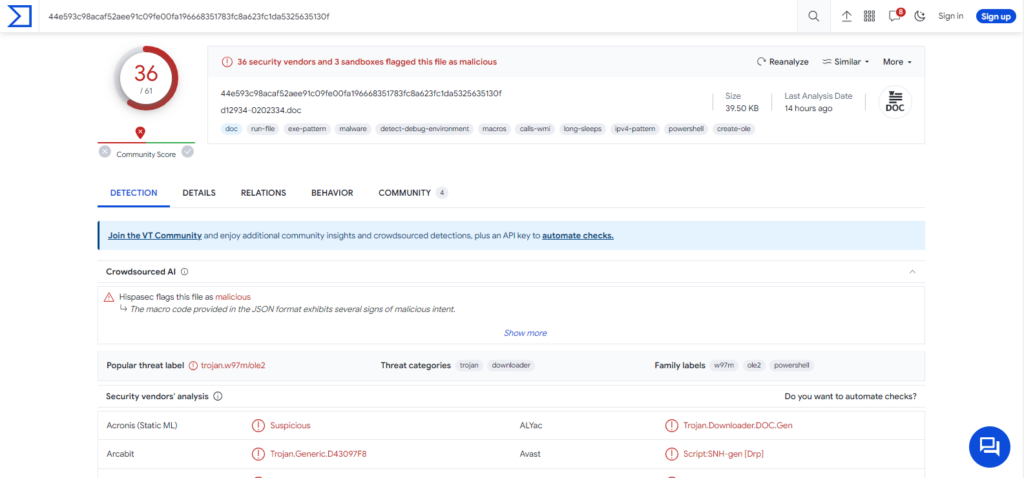
Poverty Stealer detections result
| Name | Poverty |
| Threat Type | Information stealer |
| Detection | Microsoft (Trojan:Win32/Leonem) |
| Distribution methods | Infected email attachments, malicious online advertisements, social engineering, software ‘cracks’. |
| Similar Behavitor | TrapStealer, S1deload, Luca Stealer |
| Damage | Stolen passwords and banking information, identity theft, the victim’s computer added to a botnet. |
Technical Analysis of Poverty Stealer
Poverty stealer serves a crucial role in gathering comprehensive system information, encompassing details about the operating system, video adapter, hardware ID (HWID), CPU, system, keyboard layouts, and screen size. This data proves invaluable for cybercriminals, providing insights into the target’s system and potential vulnerabilities for exploitation.
The stealer is strategically designed to infiltrate diverse directories on the victim’s computer, including “%APPDATA%”, “%LOCALAPPDATA%”, and “%DESKTOP%.” This approach allows it to access and extract files stored in these locations, potentially containing personal documents, images, or confidential data. This functionality enhances its effectiveness as a tool for data theft and espionage.
A noteworthy concern revolves around Poverty’s capability to pilfer highly sensitive information, including cryptocurrency wallets, Telegram session data, 2FA codes, and cookies. This not only jeopardizes personal and financial data but also compromises the victim’s online communication and security protocols. Adding to its arsenal, Poverty can capture screenshots, escalating the threat by compromising privacy and potentially exposing sensitive visual information.
Spreading methods
Poverty commonly spreads through two primary infection vectors, with users unwittingly introducing the malware into their systems. The first method involves deceptive emails crafted by cybercriminals, housing malicious attachments. Opening these attachments and enabling editing (macros commands) unknowingly permits the malware to infiltrate the system.
The second, and more prevalent, infection vector occurs through drive-by downloads. Users, often unaware, visit compromised or malicious websites where the Poverty stealer is surreptitiously delivered to their computers. These websites exploit vulnerabilities in the user’s browser or operating system, facilitating the injection of malware. Drive-by downloads pose a heightened threat due to their minimal requirement for user interaction.
How to remove the Poverty Stealer from my PC?
While manual removal of the threat is technically possible, I strongly discourage this method. In its pursuit of establishing persistence, Malware generates numerous instances of itself, making it exceedingly difficult to trace all its components manually. Consequently, manual removal can be time-consuming and often yield minimal to no results. Below, I have assembled a guide outlining the most effective removal practices for Poverty Stealer.


Leave a Comment