
TrapStealer is a versatile information-stealing malware with a focus on Discord-related data. Its developers promote it on GitHub, employing diverse distribution methods such as phishing, drive-by downloads, and malicious attachments in spam emails.
Once infiltrated, TrapStealer exhibits anti-detection measures, self-injection into Discord processes, and data exfiltration from browsers, Discord, WhatsApp, and more. With capabilities like taking screenshots and extracting sensitive information, TrapStealer poses a severe threat to user privacy and security.
TrapStealer Overview
The TrapStealer is a malicious software that is designed to steal sensitive information. It focused on obtaining information related to the Discord messaging platform. This malware is highly versatile, as it can adapt to different system environments and evade detection by security software. Overall, the TrapStealer is a dangerous threat that can cause significant harm to individuals and organizations alike.
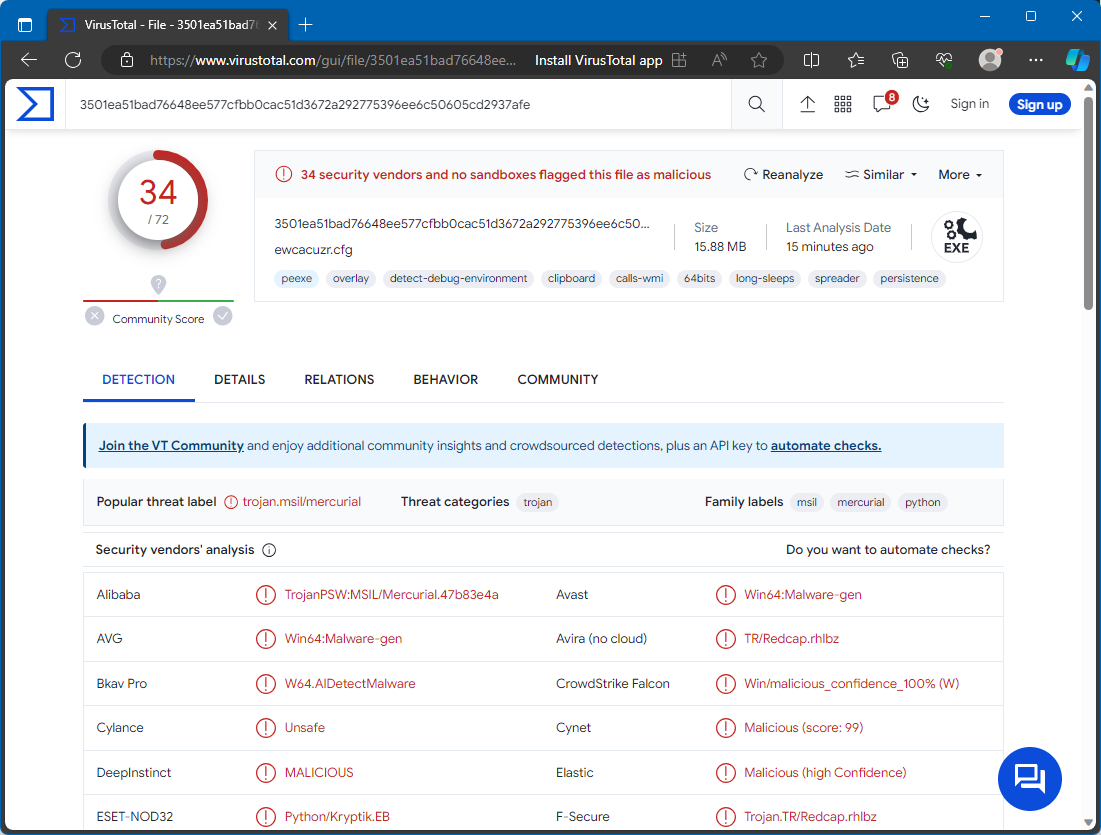
TrapStealer detections result
| Name | TrapStealer |
| Detection | Trojan.Win64.Agent.sa, Trojan:Script/Phonzy.B!ml (Microsoft) |
| Threat Type | Trojan, stealer, password-stealing virus, spyware. |
| Damage | Stolen passwords and banking information, identity theft, the victim’s computer added to a botnet. |
| Similar Behavitor | S1deload, Luca Stealer |
Technical Analysis
Primarily targeting Discord, TrapStealer extracts various data, such as tokens, usernames, passwords, emails, phone numbers, friend lists, and server details. It extends its reach to popular browsers, harvesting browsing histories, cookies, passwords, and more. Additional capabilities include targeting WhatsApp, Steam, taking screenshots, clipboard content theft, and file exfiltration.
As malware evolves, TrapStealer may undergo further updates, expanding its target list or incorporating additional features. Overall, the presence of TrapStealer poses significant risks to privacy, finances, and the potential for identity theft.
Spreading Methods
It may infiltrate your computer through various methods employed by cybercriminals. Its developers often promote the malware on GitHub, making its distribution channels diverse. Malicious files can disguise themselves as common content, ranging from archives and executables to documents and JavaScript. When users unknowingly execute or open these files, the malware initiates its infection process.
Moreover, some malware can autonomously spread through local networks and removable storage devices. Staying vigilant and avoiding interactions with suspicious content can help prevent TrapStealer and similar threats from infiltrating your system.


Leave a Comment