
Luca Stealer is malware adeptly infiltrates systems, gathering sensitive data like system specifics, passwords, and credit card info from over 30 browsers.
Luca Stealer, propelled by a leaked source code, employs phishing and deceptive methods for propagation. It also targets messaging apps and gaming software while maintaining the capability to capture screenshots and extract files, emphasizing the urgent need for robust antivirus protection.
Luca Stealer Overview
Luca, also referred to as RSStealer, represents a malicious software identified as a stealer. This type of malware actively extracts a broad spectrum of vulnerable data from compromised devices. Luca stealer has been coded using the Rust programming language.
As of now, the developer(s) have rolled out three updates to this stealer. Given the malware’s public availability, a steady stream of updates and modifications can be anticipated. Consequently, the functionalities, distribution methods, and employment of Luca may differ based on the specific variant and the cybercriminals leveraging it.
| Name | Luca (RSStealer) malware |
| Threat Type | Trojan, password-stealing virus, banking malware, spyware. |
| Detection | Microsoft (Trojan:Win32/Wacatac.B!ml), Gridinsoft (Trojan.Heur!.03014023) |
| Similar Behavior | S1deload, NightClub, StealDeal |
| Damage | Stolen passwords and banking information, identity theft, the victim’s computer added to a botnet. |
Technical Analysis of Luca Stealer
The Luca Stealer exhibits the ability to extract a diverse range of information from compromised machines. Its focal points encompass the operating system, device nomenclature, CPU specifications, desktop environment, network interfaces, user account particulars, preferred system language, and currently active processes.
This pernicious software exhibits prowess in filching data from over thirty Chromium-based browsers. Within these applications, Luca adeptly acquires Internet cookies, user authentication credentials (comprising usernames and passwords), as well as credit card numbers. Additionally, the stealer demonstrates the capability to harvest data from password manager and cryptocurrency wallet browser extensions that are compatible with more than twenty distinct browsers.
The malware’s scope extends to messaging platforms like Telegram, Discord, ICQ, Skype, and Element. It similarly casts its net over software linked to gaming activities, encompassing Steam and Uplay (Ubisoft Connect). Moreover, certain iterations of Luca possess the capacity to seize screenshots and exfiltrate files housed on the victim’s apparatus.
In succinct summation, infections like Luca wield the potential to precipitate grave privacy breaches, substantial financial ramifications, and even identity usurpation. If suspicions arise concerning the presence of Luca stealer (or analogous malware) on your device, immediate recourse to antivirus measures is emphatically advised for its eradication.
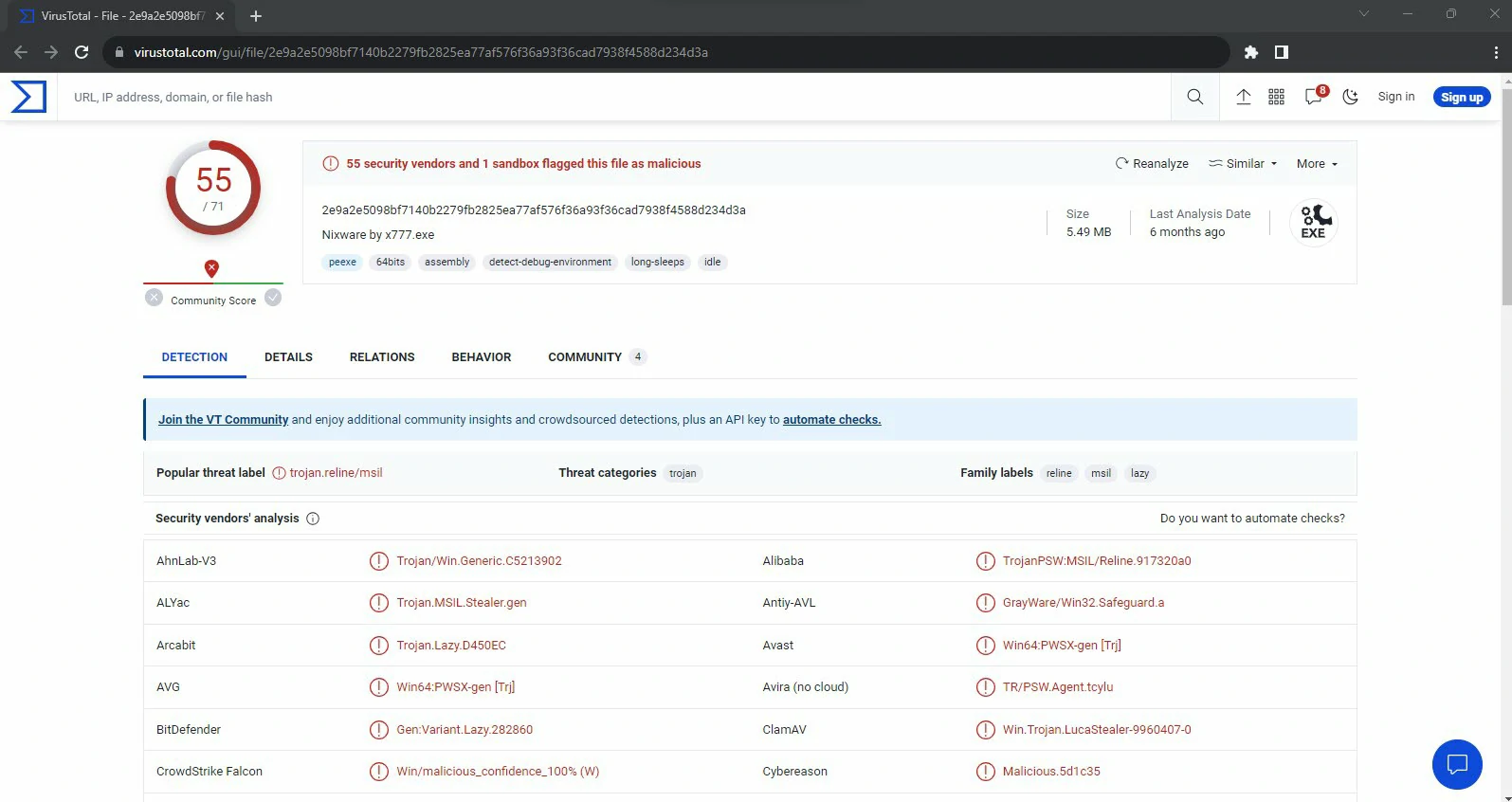
Luca malware analysis from VirusTotal
Spreading methods
As noted earlier, due to the exposure of Luca Stealer’s source code, it has attained a state of public accessibility. Consequently, the vectors of its proliferation are contingent upon the prevailing strategies adopted by the cybercriminals in play.
In the main, the dissemination of malware adheres to strategies rooted in phishing and social engineering. Perpetrators commonly cloak pernicious programs within the façade of commonplace software or media bundles.


Leave a Comment