
The “Norton – Your PC Is Infected With 18 Viruses!” is a deceptive scam scheme that spreads primarily through rogue advertising networks, spam notifications, and adware. It lures victims with a fake anti-virus interface, falsely claiming the detection of multiple threats like viruses and keyloggers.
This scam manipulates users into believing their system is compromised, urging them to purchase unnecessary anti-virus subscriptions and posing significant privacy breaches and financial loss risks.
“Norton – Your PC Is Infected With 18 Viruses!” Pop-up Scam Overview
In a recent investigation into suspicious websites, researchers uncovered the scam titled “Norton – Your PC Is Infected With 18 Viruses!” This fraudulent scheme, masquerading as the Norton anti-virus program, falsely claims to detect numerous infections on users’ devices. Scams like this typically aim to promote unreliable and potentially harmful content. It’s crucial to emphasize that this claim is entirely false. There is no connection between this scam and the genuine Norton AntiVirus or its developer, Gen Digital Inc.
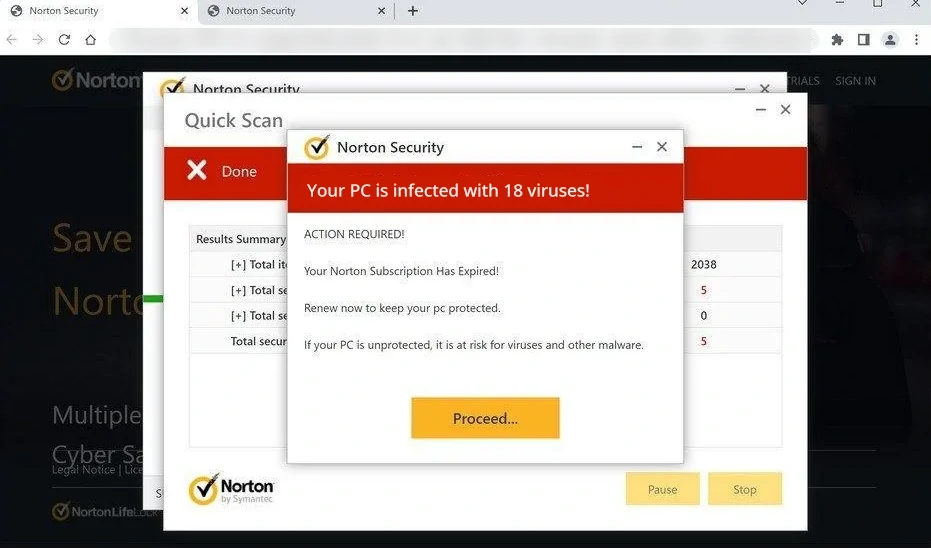
Norton – Your PC Is Infected With 18 Viruses! popup
| Name | Norton – Your PC Is Infected With 18 Viruses! |
| Threat Type | Phishing, Scam, Social Engineering |
| Damage | Loss of sensitive private information, monetary loss, identity theft, possible malware infections. |
| Similar Behavitor | “TotalAV Security – Your PC Is Infected With 5 Viruses!” Pop-up Scam, “Virus/Malware Infections Have Been Recognized” Scam |
Technical Analysis
This scam surfaced when we visited a site running it, where a false anti-virus interface appeared. It mimicked a system scan, falsely detecting numerous threats like viruses, trojans, keyloggers, adware, and scareware. After this fake scan, a pop-up claimed the visitor’s computer harbored eighteen viruses, potentially tracking their browsing and stealing login and banking details. It urged the user to renew their anti-virus subscription. Contrary to these claims, no website can conduct system scans or identify device threats. It’s crucial to understand that this scam bears no relation to the legitimate Norton AntiVirus or Gen Digital.
How did I open this website?
You might have inadvertently opened a scam website through various means. Often, rogue web advertising networks can directly take you to a scam site or redirect you after that, interacting with content like buttons, text fields, ads, or links. Online scams also gain traction through spam browser notifications and intrusive advertisements.
In its many forms, such as emails, personal or direct messages, SMS, and posts on forums or social media, spam is frequently used to promote scams. Mistyping a website’s domain (URL misspelling) can also accidentally lead you to a deceptive site. Additionally, adware plays a role in this process by showing ads that link to scams or forcibly opening websites that host these scams.
How To Remove Pop-up
Manual removal of malware is an option but not recommended. Malware seeks to establish persistence by creating multiple instances of itself, complicating tracing all components. Consequently, manual removal can be time-consuming and inefficient. For comprehensive guidance on removing pop-ups, please refer to the detailed removal practices in the guide below.


Leave a Comment