
The “Malwarebytes – Your PC Is Infected With 5 Viruses!” scam is a deceptive scheme that misleads users with a fake system scan, falsely claiming virus detection. It spreads primarily through rogue advertising networks, spam notifications, and possibly through misspelled URLs.
The scam alarmingly prompts users to take immediate action, like downloading software or clicking on links, potentially leading to further security risks or financial losses.
“Malwarebytes – Your PC Is Infected With 5 Viruses!” Scam Overview
The scam “Malwarebytes – Your PC Is Infected With 5 Viruses!” emerged from our research team’s investigation into fraudulent web pages. It presents users with a sham system scan, falsely claiming to detect multiple viruses on their devices. It’s crucial to understand that websites cannot identify threats on visitors’ devices; this scam is no exception. Importantly, this scam has no connection with the legitimate Malwarebytes anti-virus software or its developer, Malwarebytes Inc.
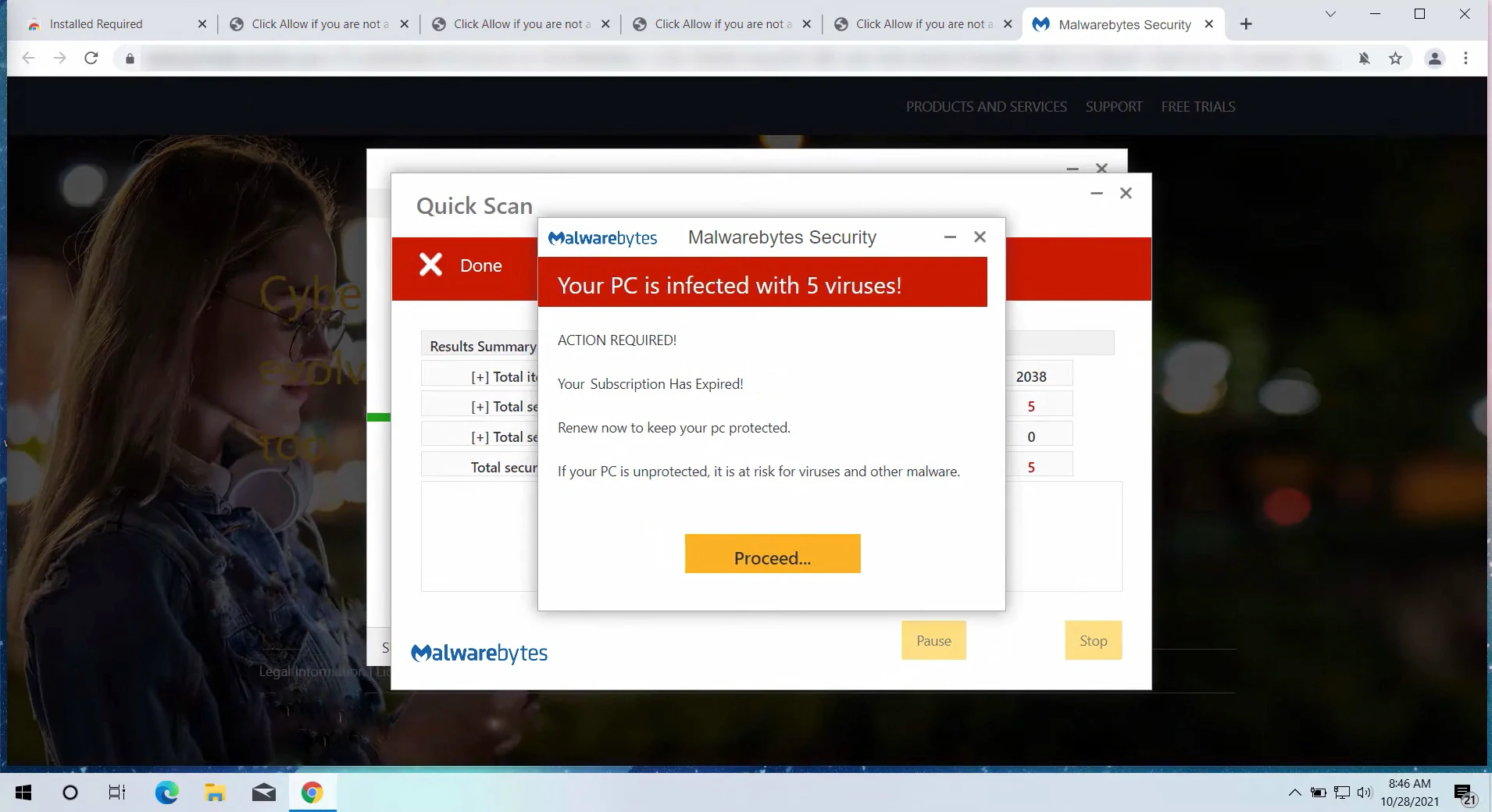
“Malwarebytes – Your PC Is Infected With 5 Viruses!” pop-up
| Name | “Malwarebytes – Your PC Is Infected With 5 Viruses!” pop-up |
| Threat Type | Phishing, Scam, Social Engineering |
| Damage | Loss of sensitive private information, monetary loss, identity theft, possible malware infections. |
| Similar Behavitor | “TotalAV Security – Your PC Is Infected With 5 Viruses!” Pop-up Scam, “Norton – Your PC Is Infected With 18 Viruses!” Scam |
Technical Analysis
The scam “Malwarebytes – Your PC Is Infected With 5 Viruses!” deceives users with a phony system scan, falsely detecting threats on the user’s device. It then generates a pop-up claiming that the computer has five viruses and that the anti-virus is unregistered. The alert urges immediate action: removing the infections and registering and updating the anti-virus. Contrary to its claims, this scam has no association with legitimate products or companies. Our exploration revealed that clicking the “DELETE VIRUSES” button redirects to the official Malwarebytes website, a rare tactic in scams. This likely stems from scammers seeking illegal commissions by exploiting the affiliate programs of the endorsed content.
How did I open this website?
You might have landed on a scam website through several methods. Accessing a website that uses rogue advertising networks or interacting with any element, like buttons, text fields, ads, or links, can force open deceptive webpages. Mistyping a website’s domain name can also lead to a redirect or a series of redirections to a scam site.
Moreover, scam websites often use intrusive ads and spam browser notifications for promotion. General spam tactics, such as posts on social media or forums, emails, private or direct messages, and text messages, are also employed. Adware, a type of malware, can also play a role by displaying ads endorsing online scams or automatically opening websites that host these scams.
How To Remove Malware?
Manual threat removal is an option but not recommended. In its quest for persistence, malware creates multiple instances of itself, complicating complete traceability. Consequently, manual removal can be time-consuming and inefficient. Refer to the comprehensive removal practices compiled in the guide below.


Leave a Comment