
BloodyStealer Malware, which can accurately be categorized as a stealer, is a dangerous virus that has gained immense prevalence in recent times. Numerous cybercriminals utilize this virus to pilfer your data, making it a significant threat. In this post, I will provide you with a comprehensive review of this virus, along with effective strategies to prevent its infiltration.
What is BloodyStealer?
BloodyStealer represents a classic example of a trojan-stealer that specifically targets your personal data, including login credentials, browser cookies, and other vital information. Additionally, this virus possesses the ability to gather details about your PC configuration, such as hardware specifications, installed programs, and session logs from gaming platforms like Steam and Origin. Furthermore, malware analysts affirm that the BloodyStealer virus is also capable of capturing screenshots.
BloodyStealer is a malware that specializes in stealing sensitive information from infected systems. It targets various types of data, including cookies, passwords, autofill forms, and saved maps from web browsers. In addition to browser data, BloodyStealer also targets computer-specific information such as details about installed hardware and software. It has the capability to extract session data from popular platforms like Bethesda, EpicGames, GOG, Origin, Steam, Telegram, and VimeWorld clients. Furthermore, the malware can access and retrieve text (.txt) files stored on the desktop and even capture screenshots of the infected system.
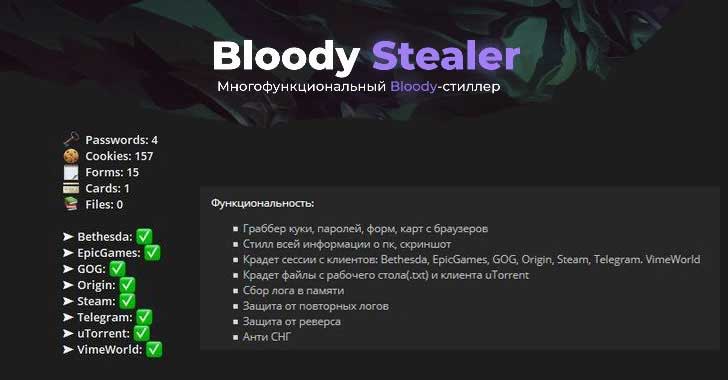
BloodyStealer on the hacker forum
Short info
| Name | BloodyStealer |
| Type | Trojan-stealer |
| Detection name | Microsoft (Trojan:Win32/Wacatac.B!ml), Kaspersky (HEUR:Trojan-Spy.MSIL.Stealer.gen), BitDefender (Gen:Variant.Bulz.412085), Emsisoft (Gen:Variant.Bulz.412085 (B)) (BloodyStealer on VirusTotal) |
| Malware source | Infected file attached to the email, hacktools and riskware |
| Protection methods |
To remove possible virus infections, try to scan your PC |
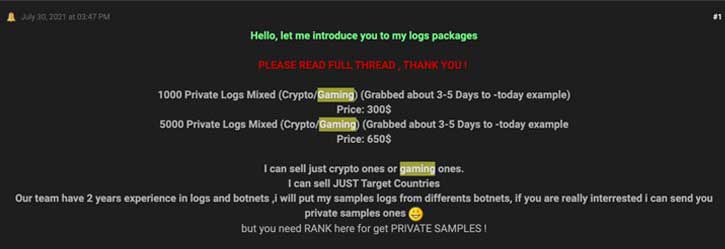
BloodyStealer Sell Logs
All information which BloodyStealer takes from the victim’s PC it sends to attackers through Telegram. Becoming such an attacker is possible through hackers forums, such as infected-zone[.]com. On that forum, this stealer is offered with a subscription: $10 for monthly and $40 for lifetime one. Pretty fair business model, isn’t it?
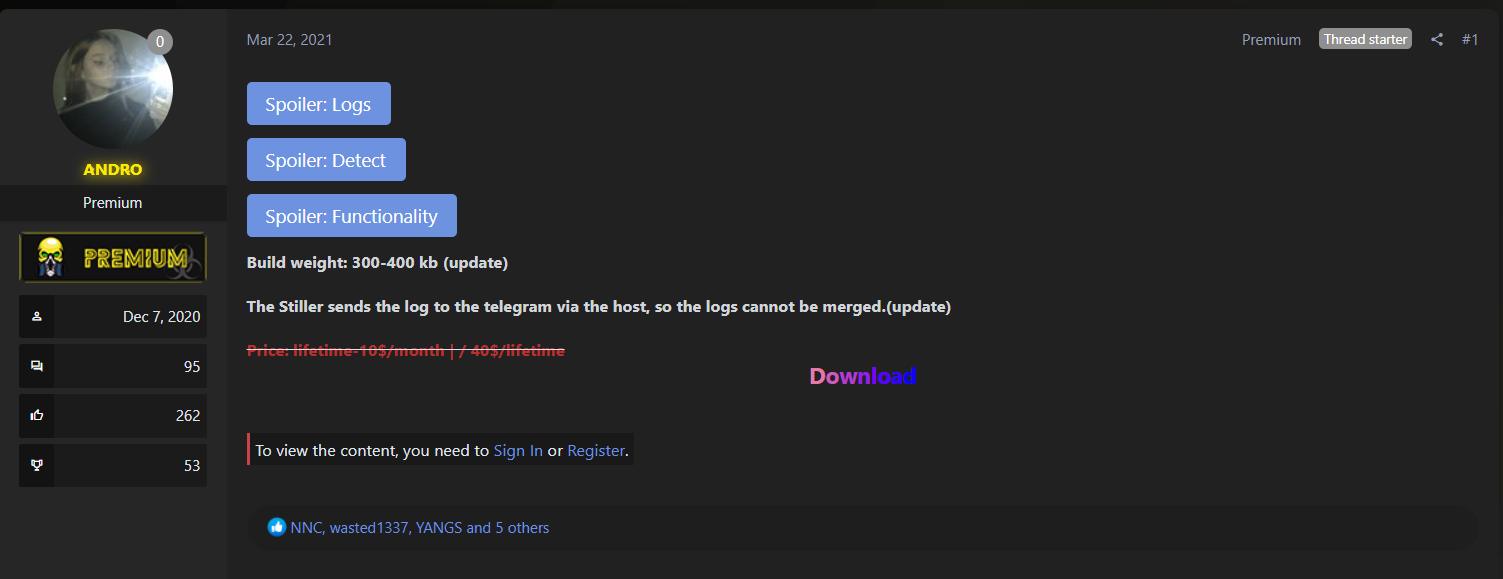
Message from Infected Zone forum
The total damage which BloodyStealer deals during the attack is huge. That virus is able to nuke all your privacy, so all your accounts in social networks, as well as online banking accounts and emails will be compromised. All data about your daily activities, such as working in the programs or gaming will be visible for crooks. And the most critical thing is credentials theft. One day you may discover that you cannot log in your Twitter account, and there are several strange money transfers from your bank account.
How did I get BloodyStealer malware?
Cybercriminals spread BloodyStealer massively through email spamming. Such a trend is caused by the fact that people trust the email notifications. Malware distributors disguise their emails as shipping notifications from Fedex, or alerts from Citibank about the changes in your account. In addition, they add several logotypes of the companies they mimic, to completely lull the vigilance. That’s why the mentioned spamming campaigns are so effective and profitable for their establishments.
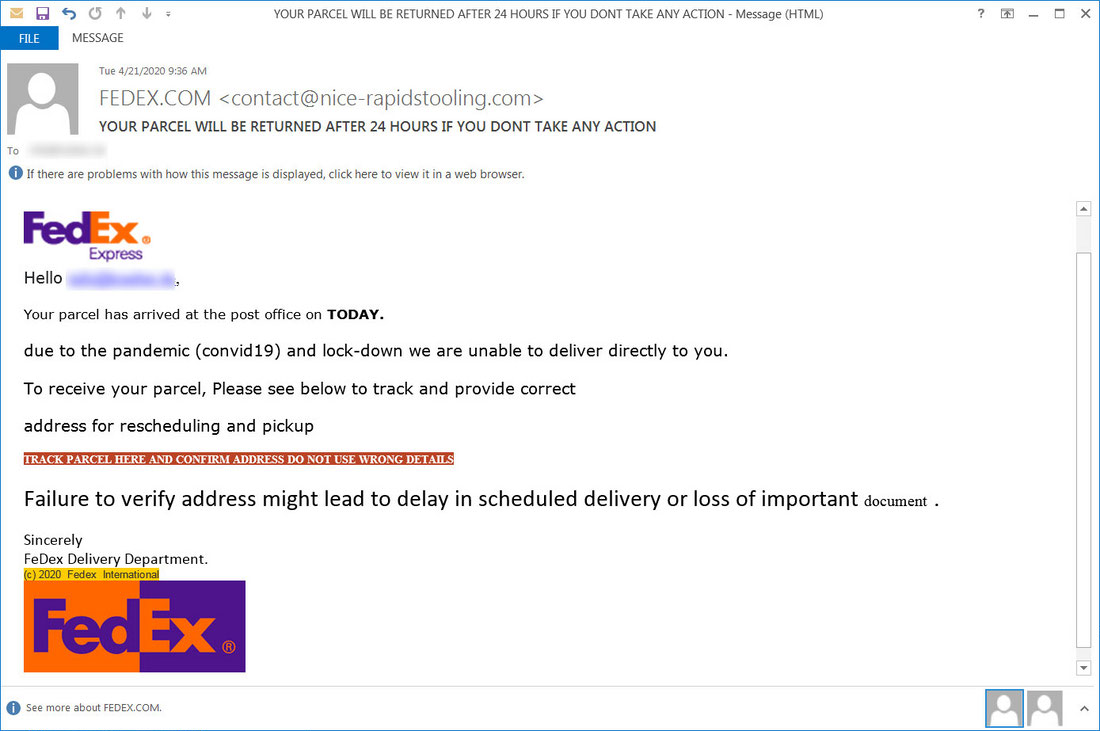
Fake Fedex email with shipping information
But the email spam is a new distribution channel, that does not cancel other distribution ways. Second method by popularity is a hacktools/riskware. Programs like KMSPico/KMS Activator, keygens and cheat engines for different programs and games are a perfect shell for the BloodyStealer, as well as any other stealer. The aforementioned programs may even have declared functions, but the virus will still be in it. Such disguise is an ultimate for malicious targets, since hacktools themselves are usually detected by the anti-malware software. To use these applications, users are forced to stop the antivirus or add the app to the whitelist. So, when the victim discovers the fact of malware activity, it is too late for any countermeasures.
How can I avoid the virus installation?
It is not very hard to uncover the email spamming. Fraudsters try to mimic the companies, but they are not able to get the same email address. You can just check the true email in the messages you have got before, and compare it with the address in a dubious email. Another way to avoid these fraudulent emails is to remember if you really have any incoming deliveries. Crooks can barely have the information if you are waiting for shipments, so it is easy to understand that someone tries to fool you.
In situations where you are not able to prove the benevolence of the email, you can try to download the file they are offering. By default, the typical source of malware in Office documents – macros – are disabled. If the document offers you to enable macroses, ignore this ask and close the document. There is no use for macroses in shipping information, so it is definitely a virus.
How to remove the BloodyStealer from my PC?
Frequently Asked Questions (FAQ) about the BloodyStealer Virus
-
What is the BloodyStealer virus?
The BloodyStealer virus is a dangerous form of malware that falls into the category of trojan-stealers. It is designed to steal personal data, including login credentials, browser cookies, and other important information. This virus can also gather details about your computer’s configuration and capture screenshots.
-
How does the BloodyStealer virus spread?
The BloodyStealer virus primarily spreads through various methods, such as malicious email attachments, software downloads from untrusted sources, or by exploiting vulnerabilities in outdated software. It is essential to exercise caution while opening email attachments or downloading files from the internet to prevent infection.
-
What are the potential risks of the BloodyStealer virus?
The BloodyStealer virus poses significant risks to your personal and financial security. By stealing your login credentials and personal information, cybercriminals can gain unauthorized access to your accounts, leading to identity theft, financial loss, or unauthorized use of your sensitive data.
-
How can I protect my computer from the BloodyStealer virus?
To protect your computer from the BloodyStealer virus, follow these preventive measures:
- Keep your operating system and software up to date with the latest security patches.
- Use a reliable antivirus or antimalware program and keep it regularly updated.
- Exercise caution while opening email attachments or clicking on suspicious links.
- Download software only from trusted sources.
- Enable a firewall and configure it to block unauthorized access.
- Regularly backup your important data to an external storage device or cloud service.
-
If my computer is infected with the BloodyStealer virus, what should I do?
If you suspect that your computer is infected with the BloodyStealer virus, take the following actions:
- Disconnect your computer from the internet to prevent further data theft or unauthorized access.
- Run a full system scan using an updated antivirus or antimalware program.
- If the virus is detected, follow the recommended actions provided by the security software to remove it.
- Change all your passwords for online accounts to prevent unauthorized access.
- Monitor your financial accounts for any suspicious activity and report it to your bank or credit card provider.
- Consider seeking assistance from a professional computer security expert if needed.


Leave a Comment