
The Admin locker virus belongs with the ransomware type of malicious agent. Malware of this type encrypts all user’s data on the computer (photos, documents, excel sheets, music, videos, etc) and appends its specific extension to every file, creating the !!!Recovery File.txt text files in every directory with the encrypted files.
Admin locker virus: what is known so far?
☝️ A scientifically correct denomination for the Admin locker would be “a ransomware malicious agent”.
Admin locker adds its specific .admin1 extension to the name of each encoded file. For example, a file named “photo.jpg” will be altered to “photo.jpg.admin1”. In the same manner, the Excel file with the name “table.xlsx” will be altered to “table.xlsx.admin1”, and so on.
In every folder containing the encrypted files, a !!!Recovery File.txt text file will appear. It is a ransom money memo. Therein you can find information on the ways of contacting the racketeers and some other information. The ransom note most probably contains instructions on how to purchase the decryption tool from the Admin locker developers. That is basically the scheme of the crime.
Admin locker summary:
| Name | Admin locker Virus |
| Extension | .admin1 |
| Ransomware note | !!!Recovery File.txt |
| Detection | Win32/Filecoder.FCT.A, Ransom.StopCrypt, BScope.Adware.FileTour |
| Symptoms | Your files (photos, videos, documents) get a .admin1 extension and you can’t open them. |
| Fix Tool | See If Your System Has Been Affected by Admin locker virus |
In the image below, you can see what a folder with files encrypted by the Admin locker looks like. Each filename has the “.admin1” extension added to it.
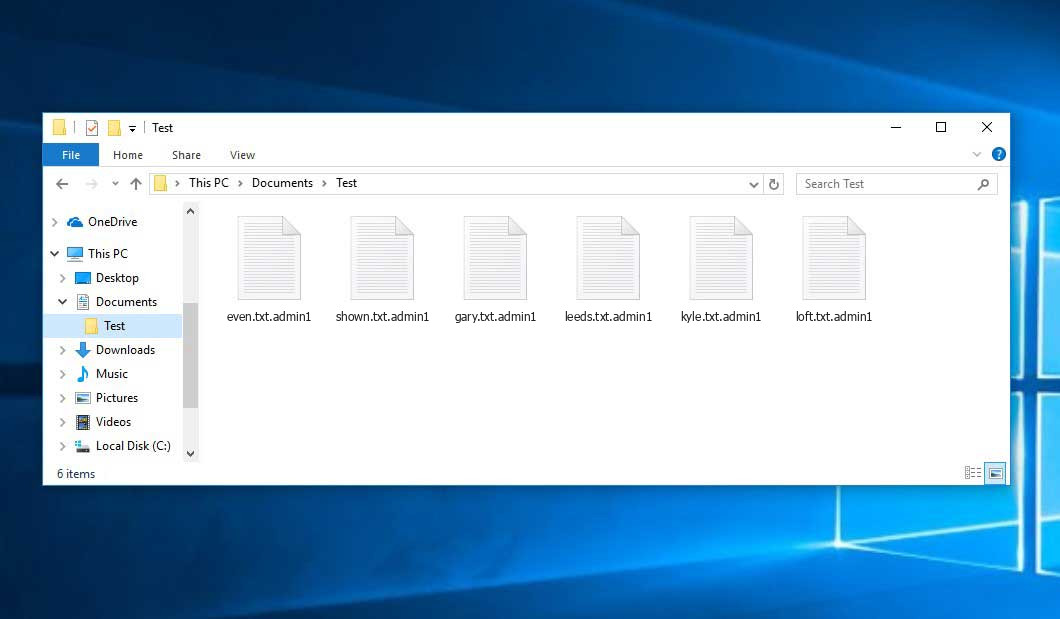
An example of encrypted .admin1 files.
How did my machine catch Admin locker ransomware?
There is a huge number of possible ways of ransomware infiltration.
Nowadays, there are three most exploited methods for malefactors to have ransomware settled in your system. These are email spam, Trojan injection and peer-to-peer file transfer.
If you access your inbox and see letters that look just like notifications from utility services providers, delivery agencies like FedEx, web-access providers, and whatnot, but whose mailer is strange to you, beware of opening those letters. They are most likely to have a viral file attached to them. So it is even more dangerous to download any attachments that come with emails like these.
As for the peer-to-peer file transfer protocols like torrents or eMule, the threat is that they are even more trust-based than the rest of the Internet. You can never guess what you download until you get it. So you’d better be using trustworthy websites. Also, it is a good idea to scan the folder containing the downloaded files with the antivirus as soon as the downloading is complete.
How to remove the Admin locker virus?
It is important to note that besides encrypting your files, the Admin locker virus will probably deploy the Azorult Spyware on your computer to get access to credentials to different accounts (including cryptocurrency wallets). The mentioned spyware2 can extract your logins and passwords from your browser’s auto-filling cardfile.
Sometimes criminals would decrypt some of your files to prove that they do have the decryption tool. Since Admin locker virus is a relatively recent ransomware, security software developers have not yet found a method to undo its work. However, the decoding instruments are frequently upgraded, so the effective countermeasure may soon be available.
Of course, if the hackers do the job of encoding victim’s critical files, the hopeless person will most likely fulfill their demands. Nevertheless, paying to racketeers gives no guarantee that you’re getting your files back. It is still risky. After getting the ransom, the racketeers may send a wrong decryption code to the injured party. There were reports of racketeers just disappearing after getting the ransom without even writing back.
The optimal safety measure against ransomware is to have a system restore point or the copies of your essential files in the cloud drive or at least on an external storage. Obviously, that might be not enough. Your most important thing could be that file you were working on when it all went down. Nevertheless, it is something. It is also wise to scan your drives with the anti-malware utility after the OS restoration.
Admin locker is not the only ransomware of its kind, since there are other specimens of ransomware out there that act in the same manner. For instance, Ygvb, Tuid, Udla, and some others. The two basic differences between them and the Admin locker are the ransom amount and the encoding method. The rest is the same: documents become blocked, their extensions changed, ransom notes are created in each directory containing encoded files.
Some lucky people were able to decrypt the arrested files with the aid of the free tools provided by anti-malware experts. Sometimes the racketeers accidentally send the decoding code to the wronged in the ransom readme. Such an epic fail allows the user to restore the files. But naturally, one should never expect such a chance. Remember, ransomware is a tamperers’ tool to lay their hands on the money of their victims.
How to avert ransomware infiltration?
Admin locker ransomware doesn’t have a endless power, so as any similar malware.
You can armour yourself from its attack in several easy steps:
- Ignore any emails from unknown senders with unknown addresses, or with content that has nothing to do with something you are waiting for (can you win in a lottery without even taking part in it?). If the email subject is likely something you are expecting, scrutinize all elements of the suspicious email with caution. A hoax email will always contain mistakes.
- Never use cracked or untrusted software. Trojan viruses are often shared as a part of cracked products, most likely under the guise of “patch” to prevent the license check. But dubious programs are difficult to tell from trustworthy software, as trojans may also have the functionality you seek. You can try to find information about this program on the anti-malware forums, but the best way is not to use such programs at all.
Reasons why I would recommend GridinSoft3
Download Removal Tool.
Run the setup file.
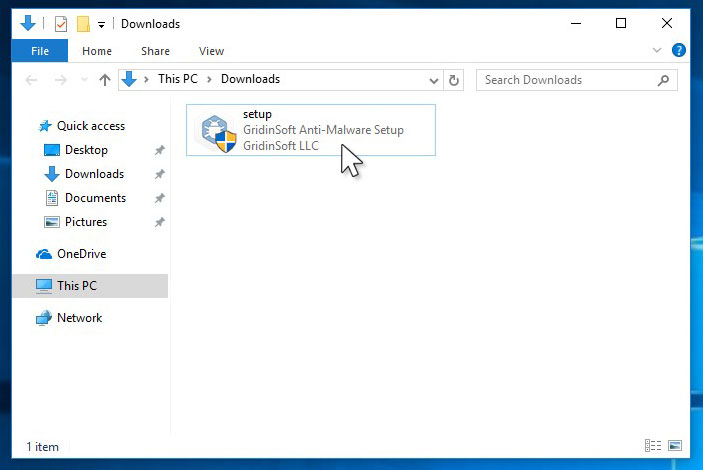
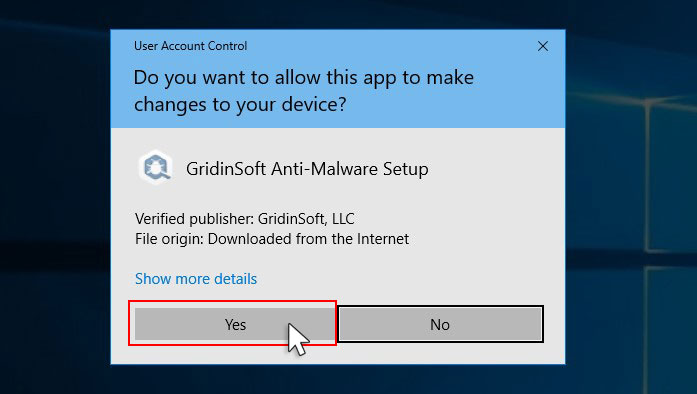
Press “Install” button.
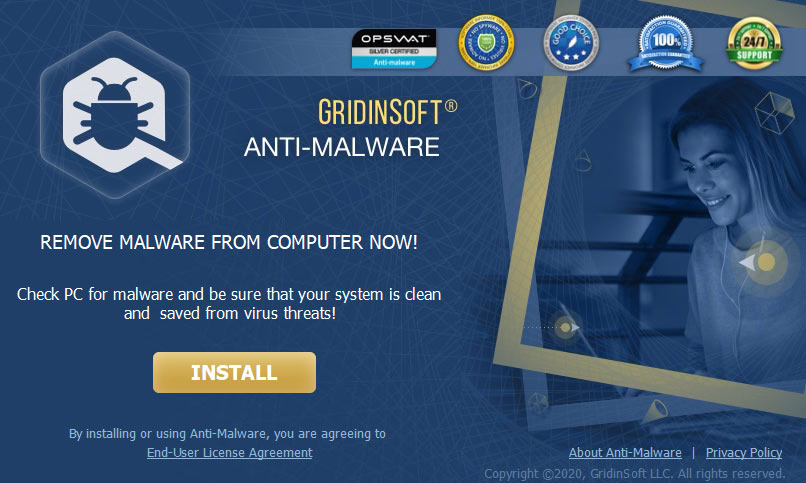
Once installed, Anti-Malware will automatically run.
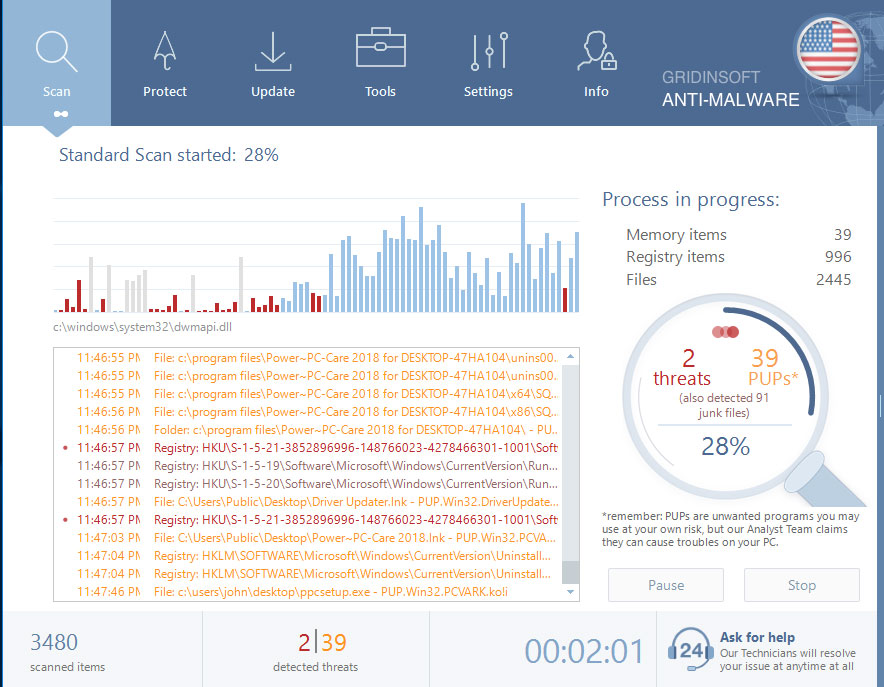
Wait for the Anti-Malware scan to complete.
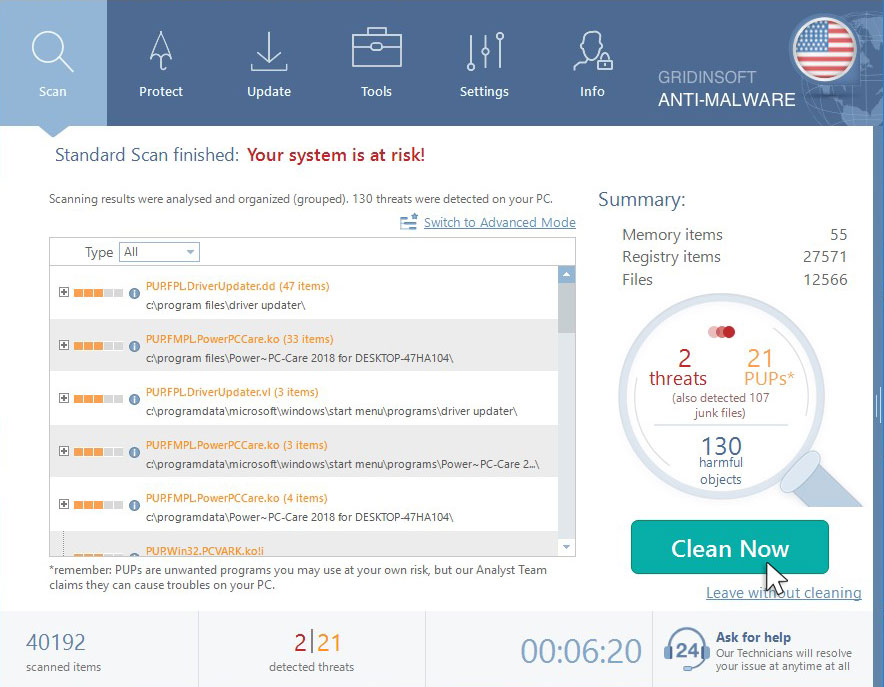
Click on “Clean Now”.
FAQ
🤔 How can I open “.admin1” files?Is it possible to open“.admin1” files?
Unfortunately, no. You need to decipher the “.admin1” files first. Then you will be able to open them.
🤔 What should I do to make my files accessible as fast as possible?
If the “.admin1” files contain some really important information, then you probably have them backed up. If not, there is still a function of System Restore but it needs a Restore Point to be previously saved. The rest of the methods require patience.
🤔 What actions should I take if the Admin locker virus has blocked my computer and I can’t get the activation key.
🤔 What can I do right now?
Many of the blocked files might still be at your disposal
- If you exchanged your important files via email, you could still download them from your online mailbox.
- You might have shared photographs or videos with your friends or relatives. Just ask them to post those images back to you.
- If you have initially downloaded any of your files from the Web, you can try downloading them again.
- Your messengers, social networks pages, and cloud storage might have all those files as well.
- Maybe you still have the needed files on your old PC, a laptop, mobile, flash memory, etc.
HINT: You can employ file recovery programs5 to get your lost data back since ransomware encodes the copies of your files, removing the authentic ones. In the tutorial below, you can see how to recover your files with PhotoRec, but remember: you can do it only after you remove the virus with an anti-malware program.
Also, you can contact the following governmental fraud and scam sites to report this attack:
- In the United States: On Guard Online;
- In Canada: Canadian Anti-Fraud Centre;
- In the United Kingdom: Action Fraud;
- In Australia: SCAMwatch;
- In New Zealand: Consumer Affairs Scams;
- In France: Agence nationale de la sécurité des systèmes d’information;
- In Germany: Bundesamt für Sicherheit in der Informationstechnik;
- In Ireland: An Garda Síochána;
To report the attack, you can contact local executive boards. For instance, if you live in USA, you can have a talk with FBI Local field office, IC3 or Secret Service.
I need your help to share this article.
It is your turn to help other people. I have written this guide to help people like you. You can use the buttons below to share this on your favorite social media Facebook, Twitter, or Reddit.
Brendan SmithReferences
- Here’s the list of Top 10 Data Recovery Software Of 2023.


Leave a Comment