
Spectating the Win32/Patched.NKM malware detection means that your computer is in big danger. This virus can correctly be named as ransomware – virus which encrypts your files and asks you to pay for their decryption. Stopping it requires some unusual steps that must be done as soon as possible.
Win32/Patched.NKM detection is a malware detection you can spectate in your computer. It generally appears after the preliminary actions on your PC – opening the suspicious email, clicking the advertisement in the Internet or installing the program from unreliable sources. From the moment it appears, you have a short time to do something about it before it starts its destructive activity. And be sure – it is better not to await these malicious things.
What is Win32/Patched.NKM virus?
Win32/Patched.NKM Summary
Summarizingly, Win32/Patched.NKM ransomware actions in the infected system are next:
- Behavioural detection: Executable code extraction – unpacking;
- Reads data out of its own binary image;
- CAPE extracted potentially suspicious content;
- Drops a binary and executes it;
- Unconventionial language used in binary resources: Arabic (Qatar);
- The binary likely contains encrypted or compressed data.;
- Authenticode signature is invalid;
- Touches a file containing cookies, possibly for information gathering;
- Yara rule detections observed from a process memory dump/dropped files/CAPE;
- Encrypting the documents located on the victim’s drive — so the victim cannot open these documents;
- Blocking the launching of .exe files of anti-malware programs
- Blocking the launching of installation files of security tools
Ransomware has actually been a nightmare for the last 4 years. It is hard to realize a more harmful malware for both individuals and corporations. The algorithms used in Win32/Patched.NKM (typically, RHA-1028 or AES-256) are not hackable – with minor exclusions. To hack it with a brute force, you need to have a lot more time than our galaxy already exists, and possibly will exist. However, that malware does not do all these unpleasant things without delay – it may take up to several hours to cipher all of your documents. Thus, seeing the Win32/Patched.NKM detection is a clear signal that you must begin the removal process.
Where did I get the Win32/Patched.NKM?
Common ways of Win32/Patched.NKM spreading are common for all other ransomware variants. Those are one-day landing web pages where users are offered to download and install the free app, so-called bait e-mails and hacktools. Bait e-mails are a pretty new strategy in malware distribution – you get the e-mail that imitates some regular notifications about deliveries or bank service conditions shifts. Inside of the email, there is a corrupted MS Office file, or a link which opens the exploit landing site.
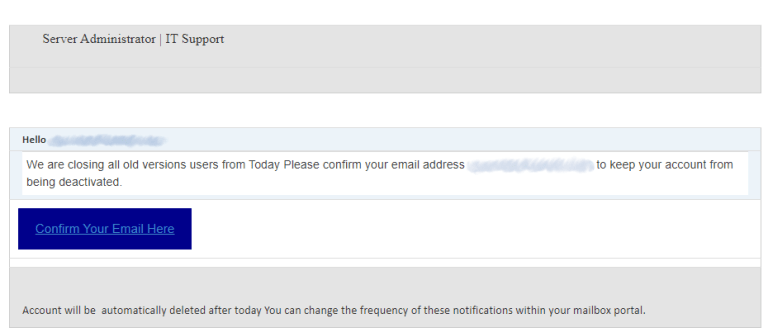
Malicious email message. This one tricks you to open the phishing website.
Preventing it looks pretty uncomplicated, but still demands a lot of focus. Malware can hide in various places, and it is better to stop it even before it goes into your system than to trust in an anti-malware program. Simple cybersecurity awareness is just an essential item in the modern-day world, even if your relationship with a computer remains on YouTube videos. That may save you a lot of money and time which you would certainly spend while looking for a fix guide.
Win32/Patched.NKM malware technical details
File Info:
name: 0C7186C2FD9C6E4EDFDB.mlwpath: /opt/CAPEv2/storage/binaries/725923290ea1a4a5facd27c535130cb7901c21e16e8e2dc84c454969cdb48019crc32: 0C72DF04md5: 0c7186c2fd9c6e4edfdbff9fde86f528sha1: b2c4fefff64e4c7c8ac5c6f465f516b9684e2ce5sha256: 725923290ea1a4a5facd27c535130cb7901c21e16e8e2dc84c454969cdb48019sha512: a02cd6c67d010dba273aaa9b0a17efac00790332b358eb1dc1ae9043ba6f6725b95ea450252a65d09dabe7410953a34a6bcee84fab9aca7578f866c4f322bbe3ssdeep: 6144:XlbFv94h7KqbQzeh4JR+Wovf0A9H7FmFBf60DW2Vl1nNGcyFeCVA4xAZx2Ac:XTG7szeh4YL9Hpm3CURN7yFeCVJ2Y5type: PE32 executable (console) Intel 80386, for MS Windowstlsh: T10884D020B79AC672E048033149B47A6942BAEF3D5B6246CFE3F1FA4B1D707D26435927sha3_384: c508dbb3671d491d916d1e8e3a95ee30be40193938e81cc7f40fdaa45aa19a2abe464d1476f5d41807469f6c40a956b4ep_bytes: e8a50c0000e978feffff8b4df464890dtimestamp: 2020-02-04 13:33:25Version Info:
CompanyName: Adobe Systems Inc.FileDescription: Adobe Create PDF plug-in listener for ChromeFileVersion: 20.6.20034.366983LegalCopyright: Copyright 1984-2020 Adobe Systems IncorporatedOriginalFilename: WCChromeNativeMessagingHost.exeProductName: Adobe Create PDFProductVersion: 20.6.20034.366983Translation: 0x0409 0x04b0
Win32/Patched.NKM also known as:
| Bkav | W32.AIDetectMalware |
| Elastic | malicious (high confidence) |
| MicroWorld-eScan | Gen:Variant.Lazy.386542 |
| FireEye | Generic.mg.0c7186c2fd9c6e4e |
| McAfee | GenericRXEB-KP!0C7186C2FD9C |
| Sangfor | Trojan.Win32.Save.a |
| CrowdStrike | win/malicious_confidence_90% (D) |
| Cyren | W32/S-baa22e42!Eldorado |
| ESET-NOD32 | a variant of Win32/Patched.NKM |
| Kaspersky | HEUR:Trojan-Ransom.Win32.Gen.pef |
| BitDefender | Gen:Variant.Lazy.386542 |
| NANO-Antivirus | Virus.Win32.Gen-Crypt.ccnc |
| Avast | Win32:TrojanX-gen [Trj] |
| Tencent | Malware.Win32.Gencirc.10bf223d |
| Emsisoft | Gen:Variant.Lazy.386542 (B) |
| DrWeb | Win32.Beetle.2 |
| VIPRE | Gen:Variant.Lazy.386542 |
| McAfee-GW-Edition | GenericRXEB-KP!0C7186C2FD9C |
| Ikarus | Trojan.Win32.Patched |
| GData | Gen:Variant.Lazy.386542 |
| Detected | |
| MAX | malware (ai score=84) |
| Antiy-AVL | Trojan/Win32.Patched |
| Arcabit | Trojan.Lazy.D5E5EE |
| ZoneAlarm | HEUR:Trojan-Ransom.Win32.Gen.pef |
| Microsoft | Trojan:Win32/Doina.RPX!MTB |
| AhnLab-V3 | Trojan/Win.KP.R603327 |
| VBA32 | BScope.TrojanDownloader.Emotet |
| ALYac | Gen:Variant.Lazy.386542 |
| Panda | Trj/Genetic.gen |
| Rising | [email protected] (RDML:h1eBrUN+McfQzOnqhS5qow) |
| Fortinet | W32/Patched.IP!tr |
| AVG | Win32:TrojanX-gen [Trj] |
| DeepInstinct | MALICIOUS |


Leave a Comment