
Spectating the Win32/GenKryptik.FUIE detection name usually means that your computer is in big danger. This malware can correctly be identified as ransomware – virus which encrypts your files and asks you to pay for their decryption. Removing it requires some unusual steps that must be done as soon as possible.
Win32/GenKryptik.FUIE detection is a malware detection you can spectate in your computer. It often appears after the preliminary procedures on your computer – opening the untrustworthy e-mail, clicking the banner in the Web or installing the program from dubious resources. From the moment it shows up, you have a short time to take action before it starts its malicious action. And be sure – it is far better not to wait for these harmful effects.
What is Win32/GenKryptik.FUIE virus?
Win32/GenKryptik.FUIE Summary
In summary, Win32/GenKryptik.FUIE malware activities in the infected PC are next:
- SetUnhandledExceptionFilter detected (possible anti-debug);
- Behavioural detection: Executable code extraction – unpacking;
- At least one process apparently crashed during execution;
- Dynamic (imported) function loading detected;
- Yara rule detections observed from a process memory dump/dropped files/CAPE;
- Creates RWX memory;
- CAPE extracted potentially suspicious content;
- Unconventionial language used in binary resources: Uzbek (Latin);
- The binary likely contains encrypted or compressed data.;
- Authenticode signature is invalid;
- Detects Sandboxie through the presence of a library;
- Detects Avast Antivirus through the presence of a library;
- Checks the presence of disk drives in the registry, possibly for anti-virtualization;
- Encrypting the files located on the victim’s disk — so the victim cannot open these files;
- Blocking the launching of .exe files of anti-virus programs
- Blocking the launching of installation files of anti-virus programs
Ransomware has been a horror story for the last 4 years. It is challenging to imagine a more harmful malware for both individuals and companies. The algorithms used in Win32/GenKryptik.FUIE (generally, RHA-1028 or AES-256) are not hackable – with minor exclusions. To hack it with a brute force, you need to have a lot more time than our galaxy already exists, and possibly will exist. However, that virus does not do all these unpleasant things without delay – it may take up to a few hours to cipher all of your documents. Therefore, seeing the Win32/GenKryptik.FUIE detection is a clear signal that you need to start the clearing procedure.
Where did I get the Win32/GenKryptik.FUIE?
Ordinary ways of Win32/GenKryptik.FUIE injection are typical for all other ransomware examples. Those are one-day landing websites where victims are offered to download the free app, so-called bait emails and hacktools. Bait e-mails are a pretty new tactic in malware distribution – you get the email that imitates some regular notifications about shippings or bank service conditions modifications. Within the e-mail, there is a corrupted MS Office file, or a link which leads to the exploit landing page.
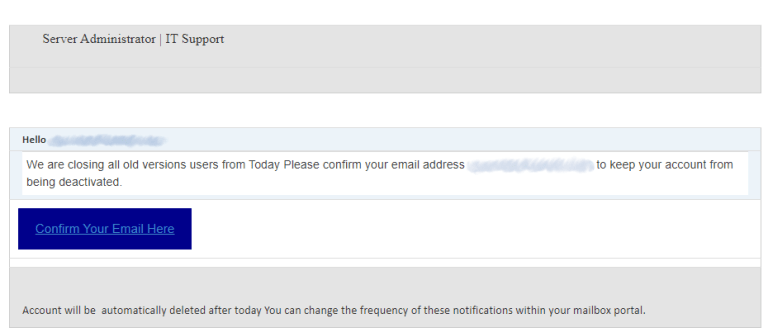
Malicious email message. This one tricks you to open the phishing website.
Avoiding it looks quite simple, but still demands a lot of focus. Malware can hide in different spots, and it is much better to stop it even before it invades your PC than to rely upon an anti-malware program. Simple cybersecurity knowledge is just an essential thing in the modern-day world, even if your interaction with a computer remains on YouTube videos. That may save you a great deal of money and time which you would spend while searching for a fix guide.
Win32/GenKryptik.FUIE malware technical details
File Info:
name: 280ADD4300196137E439.mlwpath: /opt/CAPEv2/storage/binaries/627276691b303ca5cf8fd1d3899f7a049a39f89975b5f496dd84c05ba19aa414crc32: C2338D0Cmd5: 280add4300196137e43962a88dc684b0sha1: 75cb65fb521c196d4a75f751aff12d989c6b85a0sha256: 627276691b303ca5cf8fd1d3899f7a049a39f89975b5f496dd84c05ba19aa414sha512: b333f0796f1f51859d59e0917c4661671ab3ad8153705238c24720666ae39fff5dcdb47197199c49a91bf65282579bd0edb8c0b0d04d5d6ad42d7767b969c770ssdeep: 6144:bTibsGta0oyjj99FKqs3ztejRly1MStkFHito:HSHFbjj3FG30RmjyFHtype: PE32 executable (GUI) Intel 80386, for MS Windowstlsh: T1A5449E04BBA0D035F1B726F945798368B93E7EA15B2490CB62D53BEE56346E0EC3131Bsha3_384: 7e85fea5163bd3004c8a26bc23d7f0f93571ef120f3fb9982dbc94d1be72eac592bc82473b5f6981f40fe3155087df76ep_bytes: 8bff558bece8e6a60000e8110000005dtimestamp: 2021-04-13 03:37:33Version Info:
Translations: 0x0203 0x02bd
Win32/GenKryptik.FUIE also known as:
| Bkav | W32.AIDetect.malware2 |
| Elastic | malicious (high confidence) |
| FireEye | Generic.mg.280add4300196137 |
| CAT-QuickHeal | Ransom.Stop.P5 |
| Cylance | Unsafe |
| Sangfor | Trojan.Win32.Save.a |
| Cybereason | malicious.b521c1 |
| Cyren | W32/Kryptik.EYC.gen!Eldorado |
| Symantec | ML.Attribute.HighConfidence |
| tehtris | Generic.Malware |
| ESET-NOD32 | a variant of Win32/GenKryptik.FUIE |
| Kaspersky | VHO:Backdoor.MSIL.Pandora.gen |
| APEX | Malicious |
| Rising | [email protected] (RDMK:cmRtazppa41+DyQvmB4QjKPj4tKQ) |
| McAfee-GW-Edition | BehavesLike.Win32.Generic.dh |
| Sophos | ML/PE-A |
| Ikarus | Trojan-Ransom.StopCrypt |
| Microsoft | Trojan:Win32/Sabsik.FL.B!ml |
| Cynet | Malicious (score: 100) |
| Acronis | suspicious |
| McAfee | Packed-GEE!280ADD430019 |
| Malwarebytes | Trojan.MalPack.GS |
| SentinelOne | Static AI – Malicious PE |
| AVG | DropperX-gen [Drp] |
| Avast | DropperX-gen [Drp] |
| CrowdStrike | win/malicious_confidence_100% (D) |


Leave a Comment