
Spectating the Win32/GenKryptik.FUIA detection name means that your PC is in big danger. This computer virus can correctly be named as ransomware – type of malware which ciphers your files and asks you to pay for their decryption. Deleteing it requires some unusual steps that must be done as soon as possible.
Win32/GenKryptik.FUIA detection is a virus detection you can spectate in your computer. It generally appears after the preliminary actions on your computer – opening the untrustworthy e-mail, clicking the banner in the Internet or mounting the program from unreliable resources. From the instance it appears, you have a short time to take action before it starts its harmful action. And be sure – it is better not to await these malicious things.
What is Win32/GenKryptik.FUIA virus?
Win32/GenKryptik.FUIA Summary
In summary, Win32/GenKryptik.FUIA virus activities in the infected system are next:
- SetUnhandledExceptionFilter detected (possible anti-debug);
- Behavioural detection: Executable code extraction – unpacking;
- Yara rule detections observed from a process memory dump/dropped files/CAPE;
- Creates RWX memory;
- Dynamic (imported) function loading detected;
- Enumerates the modules from a process (may be used to locate base addresses in process injection);
- CAPE extracted potentially suspicious content;
- Unconventionial language used in binary resources: Uzbek (Latin);
- The binary likely contains encrypted or compressed data.;
- Authenticode signature is invalid;
- CAPE detected the RedLine malware family;
- Ciphering the documents located on the victim’s drives — so the victim cannot open these files;
- Blocking the launching of .exe files of anti-malware programs
- Blocking the launching of installation files of security tools
Ransomware has been a major problem for the last 4 years. It is challenging to picture a more harmful malware for both individual users and companies. The algorithms utilized in Win32/GenKryptik.FUIA (usually, RHA-1028 or AES-256) are not hackable – with minor exclusions. To hack it with a brute force, you need a lot more time than our galaxy currently exists, and possibly will exist. However, that malware does not do all these horrible things instantly – it can require up to several hours to cipher all of your files. Hence, seeing the Win32/GenKryptik.FUIA detection is a clear signal that you should begin the elimination process.
Where did I get the Win32/GenKryptik.FUIA?
Typical tactics of Win32/GenKryptik.FUIA injection are usual for all other ransomware examples. Those are one-day landing sites where users are offered to download and install the free software, so-called bait e-mails and hacktools. Bait e-mails are a relatively new method in malware spreading – you get the email that simulates some normal notifications about shipments or bank service conditions updates. Inside of the e-mail, there is an infected MS Office file, or a web link which leads to the exploit landing page.
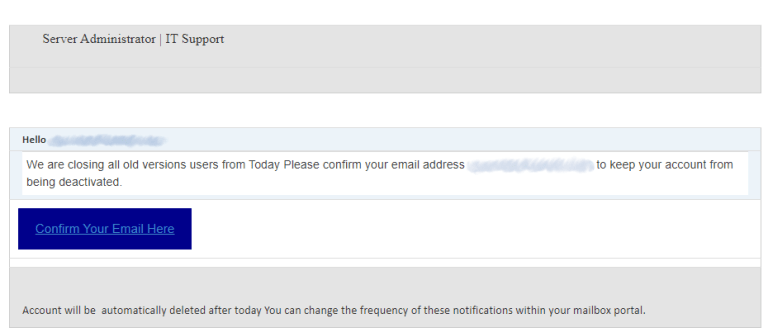
Malicious email message. This one tricks you to open the phishing website.
Preventing it looks quite simple, but still needs a lot of awareness. Malware can hide in different spots, and it is far better to prevent it even before it gets into your PC than to depend on an anti-malware program. General cybersecurity knowledge is just an essential thing in the modern-day world, even if your relationship with a PC remains on YouTube videos. That can save you a great deal of time and money which you would certainly spend while searching for a fixing guide.
Win32/GenKryptik.FUIA malware technical details
File Info:
name: 680CA3FDEA52FD260C53.mlwpath: /opt/CAPEv2/storage/binaries/a4ef96d18aedc3f36f90e6d7be7e88f8bff7f17c69d7563624bab1264ec9f641crc32: C681EFC7md5: 680ca3fdea52fd260c53f9cdda589e51sha1: 782c689abfd8ea3d6d9d0ee2679850e5c7e2e2fdsha256: a4ef96d18aedc3f36f90e6d7be7e88f8bff7f17c69d7563624bab1264ec9f641sha512: 2b22bb59e5d2b81a98f7e5c7eb19a2ba9a7b4129a1deddce7bb5db9bbae535be81e84c601056631b7efbf685f41ac0d4f59714ee99d2c2124d656f1479c56ffassdeep: 6144:WVUX2u9bBdOh9drF78KzYd9I3JA6QEDqtay4vtKBhgoqXo:W2GmddE/rFIfdKJYI5vwItype: PE32 executable (GUI) Intel 80386, for MS Windowstlsh: T1CC84CF14BB90D038F1B722F489799378B53E7EE19B2444CB62D52AEE56346E4EC3035Bsha3_384: 4b26c14deb22e74a18438ed358f76be63cb0e7850ebdf0cfaf3150c3fa96216fe4ac23fc590034d29d07c5accbff81fcep_bytes: 8bff558bece876a60000e8110000005dtimestamp: 2021-07-11 14:46:32Version Info:
Translations: 0x0209 0x02bd
Win32/GenKryptik.FUIA also known as:
| Bkav | W32.AIDetect.malware2 |
| Elastic | malicious (high confidence) |
| FireEye | Generic.mg.680ca3fdea52fd26 |
| CAT-QuickHeal | Ransom.Stop.P5 |
| McAfee | Packed-GEE!680CA3FDEA52 |
| Cylance | Unsafe |
| Sangfor | Trojan.Win32.Save.a |
| Cybereason | malicious.abfd8e |
| Cyren | W32/Kryptik.EYC.gen!Eldorado |
| Symantec | ML.Attribute.HighConfidence |
| tehtris | Generic.Malware |
| ESET-NOD32 | a variant of Win32/GenKryptik.FUIA |
| Kaspersky | UDS:Trojan-Spy.Win32.Stealer.gen |
| Sophos | ML/PE-A |
| DrWeb | Trojan.DownLoader44.58807 |
| McAfee-GW-Edition | BehavesLike.Win32.Generic.fc |
| APEX | Malicious |
| Kingsoft | Win32.Hack.Undef.(kcloud) |
| Microsoft | Trojan:Win32/Sabsik.FL.B!ml |
| Cynet | Malicious (score: 100) |
| AhnLab-V3 | Trojan/Win.RunPE.C5117047 |
| Acronis | suspicious |
| Malwarebytes | Trojan.MalPack.GS |
| Ikarus | Trojan-Ransom.StopCrypt |
| Rising | [email protected] (RDML:S4SK0vOs5ChfscbCksKHsg) |
| SentinelOne | Static AI – Malicious PE |
| AVG | Win32:PWSX-gen [Trj] |
| Avast | Win32:PWSX-gen [Trj] |
| CrowdStrike | win/malicious_confidence_100% (W) |


Leave a Comment