
Spectating the Win32/Filecoder.Avaddon.H detection means that your computer is in big danger. This virus can correctly be named as ransomware – sort of malware which encrypts your files and forces you to pay for their decryption. Stopping it requires some peculiar steps that must be done as soon as possible.
Win32/Filecoder.Avaddon.H detection is a virus detection you can spectate in your system. It generally appears after the provoking activities on your PC – opening the untrustworthy e-mail, clicking the banner in the Internet or setting up the program from suspicious sources. From the second it shows up, you have a short time to act until it starts its malicious action. And be sure – it is much better not to wait for these destructive actions.
What is Win32/Filecoder.Avaddon.H virus?
Win32/Filecoder.Avaddon.H Summary
In total, Win32/Filecoder.Avaddon.H malware activities in the infected computer are next:
- A file was accessed within the Public folder.;
- Uses Windows utilities for basic functionality;
- Creates an autorun.inf file;
- Authenticode signature is invalid;
- Performs a large number of encryption calls using the same key possibly indicative of ransomware file encryption behavior;
- Checks for the presence of known devices from debuggers and forensic tools;
- Checks for the presence of known devices from debuggers and forensic tools;
- Attempts to ensure mapped drives are available from an elevated prompt or process with UAC enabled;
- Collects information to fingerprint the system;
- Anomalous binary characteristics;
- Uses suspicious command line tools or Windows utilities;
- Encrypting the documents located on the target’s disks — so the victim cannot check these files;
- Blocking the launching of .exe files of anti-malware apps
- Blocking the launching of installation files of anti-virus apps
Ransomware has actually been a major problem for the last 4 years. It is hard to picture a more dangerous malware for both individuals and organizations. The algorithms used in Win32/Filecoder.Avaddon.H (usually, RHA-1028 or AES-256) are not hackable – with minor exclusions. To hack it with a brute force, you need more time than our galaxy actually exists, and possibly will exist. But that virus does not do all these horrible things instantly – it can take up to a few hours to cipher all of your documents. Hence, seeing the Win32/Filecoder.Avaddon.H detection is a clear signal that you should start the removal process.
Where did I get the Win32/Filecoder.Avaddon.H?
General tactics of Win32/Filecoder.Avaddon.H distribution are typical for all other ransomware variants. Those are one-day landing sites where users are offered to download and install the free program, so-called bait emails and hacktools. Bait emails are a relatively new strategy in malware distribution – you receive the e-mail that imitates some routine notifications about deliveries or bank service conditions changes. Inside of the email, there is a corrupted MS Office file, or a link which leads to the exploit landing site.
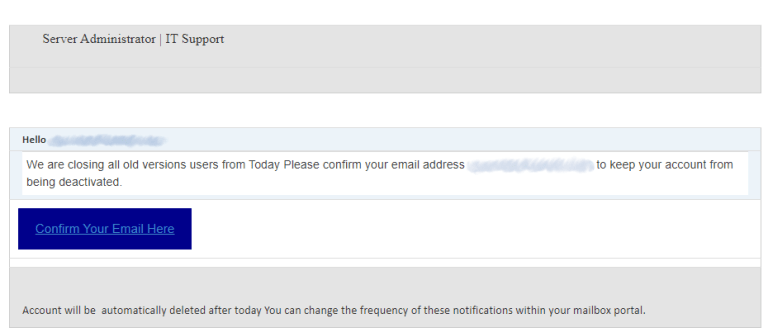
Malicious email message. This one tricks you to open the phishing website.
Preventing it looks quite easy, but still needs a lot of awareness. Malware can hide in different places, and it is better to prevent it even before it invades your computer than to trust in an anti-malware program. Basic cybersecurity knowledge is just an essential thing in the modern-day world, even if your interaction with a PC stays on YouTube videos. That may save you a lot of time and money which you would certainly spend while looking for a fix guide.
Win32/Filecoder.Avaddon.H malware technical details
File Info:
name: 47AE17D89C2D9B6ACDC7.mlwpath: /opt/CAPEv2/storage/binaries/9d346518330eeefbf288aeca7b2b6243bc158415c7fee3f2c19694f0e5f7d51ccrc32: FEABE0F8md5: 47ae17d89c2d9b6acdc7458f5df1c6f7sha1: d38c613020cb4616783c8535380e28404f7eaebfsha256: 9d346518330eeefbf288aeca7b2b6243bc158415c7fee3f2c19694f0e5f7d51csha512: 0f95218afbed2344213c0b0d8b2a72e657bed25750be2bf63769663b1c31f41f8af1883dadfdbe6ec270533e2bbfad54f04efb7dfdca10107afbc096594c8776ssdeep: 6144:DXwT1UV9rYDVgi6dYGXZdisUmYs7kMDOlh/5Zy6vbx3s3ONH:MT1UbrYhYld1+M0+6tc6type: PE32 executable (GUI) Intel 80386, for MS Windowstlsh: T14F747C11BA02C035D66202304E68FF7B81EDBA144F7516DB77E40B5D6F602D27A36B6Bsha3_384: 372fc42713a47ae0cb94ece8aac85a308542b5224c4716e915bdd0087a3e57eec8bb0349bc89b0ccfa3aca93b90bea67ep_bytes: e812050000e97afeffff558bec56ff75timestamp: 2023-05-27 21:08:44Version Info:
0: [No Data]
Win32/Filecoder.Avaddon.H also known as:
| Bkav | W32.Common.F2E7073C |
| Lionic | Trojan.Win32.Avaddon.j!c |
| DrWeb | Trojan.Encoder.37610 |
| MicroWorld-eScan | Trojan.GenericKD.67370328 |
| FireEye | Generic.mg.47ae17d89c2d9b6a |
| CAT-QuickHeal | Ransom.Noescape.S30222715 |
| Skyhigh | BehavesLike.Win32.AdwareLinkury.fh |
| ALYac | Trojan.Ransom.Filecoder |
| Malwarebytes | Ransom.Avaddon |
| Zillya | Trojan.DelShad.Win32.2136 |
| Sangfor | Ransom.Win32.Save.a |
| K7AntiVirus | Trojan ( 0001140e1 ) |
| Alibaba | Trojan:Win32/CryptInject.c556ee11 |
| K7GW | Trojan ( 0001140e1 ) |
| CrowdStrike | win/malicious_confidence_100% (W) |
| Arcabit | Trojan.Generic.D403FD58 |
| BitDefenderTheta | Gen:NN.ZexaF.36792.wuW@auWmaRfi |
| VirIT | Trojan.Win32.Genus.RAY |
| Symantec | Downloader |
| Elastic | malicious (high confidence) |
| ESET-NOD32 | a variant of Win32/Filecoder.Avaddon.H |
| APEX | Malicious |
| Kaspersky | HEUR:Trojan-Ransom.Win32.Generic |
| BitDefender | Trojan.GenericKD.67370328 |
| NANO-Antivirus | Trojan.Win32.Encoder.jygnes |
| Avast | Win32:RansomX-gen [Ransom] |
| Tencent | Malware.Win32.Gencirc.10beece2 |
| Emsisoft | Trojan.GenericKD.67370328 (B) |
| F-Secure | Trojan.TR/AD.Nekark.dckib |
| VIPRE | Trojan.GenericKD.67370328 |
| TrendMicro | Ransom.Win32.NOESCAPE.THFOEBC |
| Sophos | Mal/Generic-S |
| Jiangmin | Trojan.Generic.hqyym |
| Webroot | W32.Ransom.Noescape |
| Varist | W32/Avaaddon.SFPO-8741 |
| Avira | TR/AD.Nekark.dckib |
| MAX | malware (ai score=100) |
| Antiy-AVL | Trojan/Win32.DelShad |
| Kingsoft | malware.kb.a.968 |
| Xcitium | Malware@#2j8cz11ujakts |
| Microsoft | Trojan:Win32/CryptInject!MSR |
| ViRobot | Trojan.Win.Z.Agent.368640.EIA |
| ZoneAlarm | HEUR:Trojan-Ransom.Win32.Generic |
| GData | Trojan.GenericKD.67370328 |
| Detected | |
| AhnLab-V3 | Ransomware/Win.Extensions.C5437034 |
| McAfee | Ransom-Avaddon |
| VBA32 | BScope.TrojanRansom.Medusa |
| Cylance | unsafe |
| Panda | Trj/RansomGen.A |
| TrendMicro-HouseCall | Ransom.Win32.NOESCAPE.THFOEBC |
| Rising | Ransom.Avaddon!1.E5F4 (CLASSIC) |
| Ikarus | Trojan-Ransom.FileCrypter |
| MaxSecure | Trojan.Malware.74279478.susgen |
| Fortinet | W32/Filecoder_Avaddon.H!tr.ransom |
| AVG | Win32:RansomX-gen [Ransom] |
| Cybereason | malicious.020cb4 |
| DeepInstinct | MALICIOUS |


Leave a Comment