
If you see the message reporting that the Trojan:Win32/Ramnit.J was identified on your computer, or in times when your computer system functions also slow and also provides you a lot of headaches, you most definitely compose your mind to scan it for Ramnit.J as well as tidy it in a proper way. Now I will inform to you how to do it.
Trojan:Win32/Ramnit has the ability to inject malicious code into files with the extensions “.dll”, “.exe”, and “.HTML”. It’s important to note that Ramnit infects files that are already present on the computer, resulting in the corruption of any existing files. Once these infected files are opened, they execute code that discreetly downloads and installs malware onto the system.
Trojan:Win32/Ramnit belongs to an older trojan family and was most active during a certain period when it was used to distribute viruses like AZORult. Therefore, the impact of Ramnit’s presence can vary. In many cases, these sophisticated tools are employed to spread information-stealing trojans and ransomware.
Information stealers capture personal data such as keystrokes, saved logins/passwords, and banking information, which is then stored on a remote server. Ransomware-type viruses encrypt data and lock computer screens to extort victims. In either scenario, the infiltration of Ramnit can lead to serious privacy issues, including identity theft, as well as significant financial and data loss.
Most reputable anti-virus/anti-spyware software suites have the capability to detect and remove Ramnit malware, as well as other viruses propagated using this tool.
Regrettably, restoring affected files to their previous states may prove to be impossible. Therefore, if your anti-virus software identifies any malicious “.dll”, “.exe”, or “.HTML” files, we strongly recommend permanently deleting them. Viruses like Ramnit provide a compelling argument for maintaining regular data backups.
The majority of Ramnit.J are used to earn a profit on you. The criminals specifies the range of bad programs to steal your charge card information, online banking credentials, as well as other data for illegal functions.
Threat Summary:
| Name | Ramnit.J Trojan |
| Detection | Trojan:Win32/Ramnit.J |
| Details | Ramnit.J tool that looks legitimate but can take control of your computer. |
Sorts of viruses that were well-spread 10 years ago are no longer the resource of the issue. Currently, the problem is extra obvious in the areas of blackmail or spyware. The difficulty of repairing these problems calls for new softwares and also different techniques.
Does your antivirus regularly report about the “Ramnit.J”?
If you have actually seen a message suggesting the “Trojan:Win32/Ramnit.J found”, after that it’s an item of great news! The infection “Trojan:Win32/Ramnit.J” was spotted and, most likely, deleted. Such messages do not indicate that there was a truly energetic Ramnit.J on your device. You might have merely downloaded a documents which contained Trojan:Win32/Ramnit.J, so your antivirus software application instantly deleted it prior to it was introduced and created the troubles. Alternatively, the malicious script on the infected website might have been detected and also avoided prior to triggering any kind of troubles.
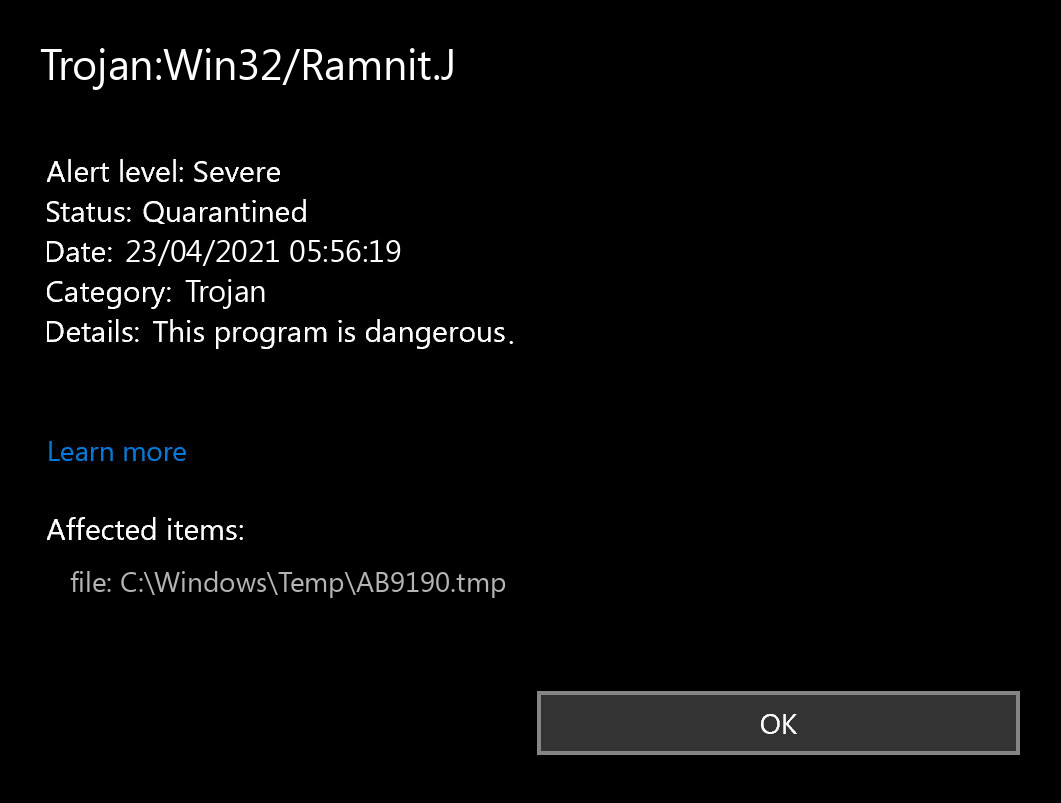
Microsoft Defender: “Trojan:Win32/Ramnit.J”
In other words, the message “Trojan:Win32/Ramnit.J Found” during the common use of your computer system does not imply that the Ramnit.J has finished its mission. If you see such a message then maybe the proof of you seeing the infected page or filling the destructive data. Try to avoid it in the future, yet don’t panic too much. Experiment with opening the antivirus program as well as inspecting the Trojan:Win32/Ramnit.J discovery log documents. This will offer you more information about what the specific Ramnit.J was discovered as well as what was especially done by your antivirus software with it. Certainly, if you’re not confident enough, describe the hands-on scan– at any rate, this will be handy.
How to scan for malware, spyware, ransomware, adware, and other threats.
If your computer works in an extremely sluggish means, the websites open in an odd way, or if you see ads in the position you’ve never expected, it’s possible that your computer got infected and also the virus is currently active. Spyware will certainly track all your tasks or redirect your search or web page to the areas you don’t intend to check out. Adware may contaminate your internet browser and even the entire Windows OS, whereas the ransomware will attempt to block your computer and also require a significant ransom money quantity for your very own data.
How to scan your PC for Trojan:Win32/Ramnit.J?
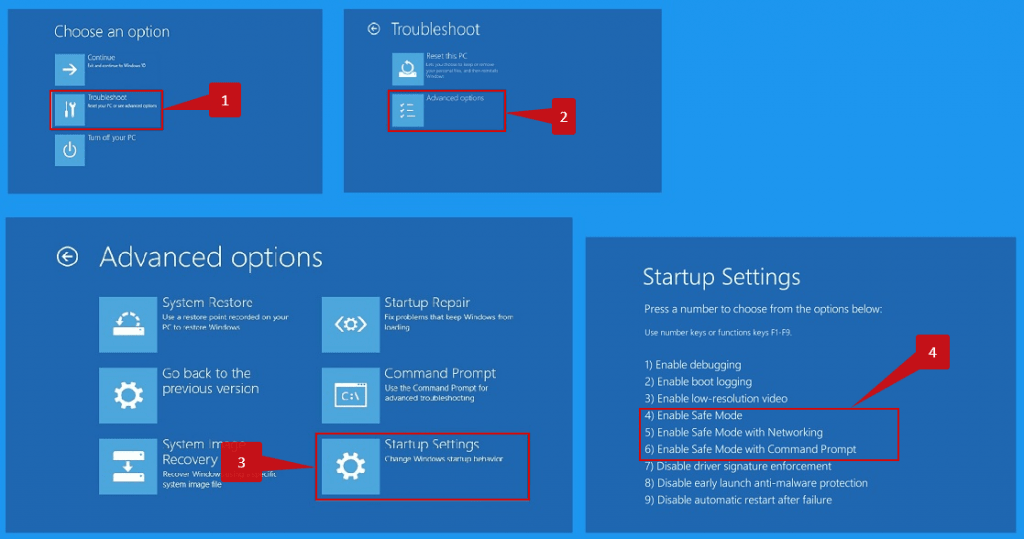
Use Safe Mode to fix the most complex Trojan:Win32/Ramnit.J issues.
It’s not sufficient to simply use the antivirus for the safety and security of your PC. You need to have a more detailed antivirus app. Not all malware can be spotted by typical antivirus scanners that mainly try to find virus-type dangers. Your computer might have plenty of “trash”, for instance, toolbars, web browser plugins, unethical internet search engines, bitcoin-miners, and other types of unwanted programs used for generating income on your inexperience. Beware while downloading software online to avoid your tool from being loaded with unwanted toolbars and other scrap data.


Leave a Comment