
Silver is a Remote Access Trojan known for its ability to spread through multiple methods, such as phishing, malvertising, and suspicious downloads. It excels in gaining remote access and control, stealing data, and performing surveillance through audio and video recording.
Its advanced features enable it to bypass security systems and spread across networks and devices, making it a significant threat. Therefore, it is crucial to have robust cybersecurity measures in place to prevent its propagation.
Silver Malware Overview
Silver is a malware developed in C# – not a common choice due to the ease of reverse engineering. It allows remote access and control of infected machines. Experts first observed it in the wild in autumn 2023. This Trojan exhibits both sophistication and versatility. The capabilities of Silver RAT include initiating chain infections and pilfering information. Currently, various hacker forums and platforms actively promote and sell it. Indications point to the RAT’s developers being located in Syria.
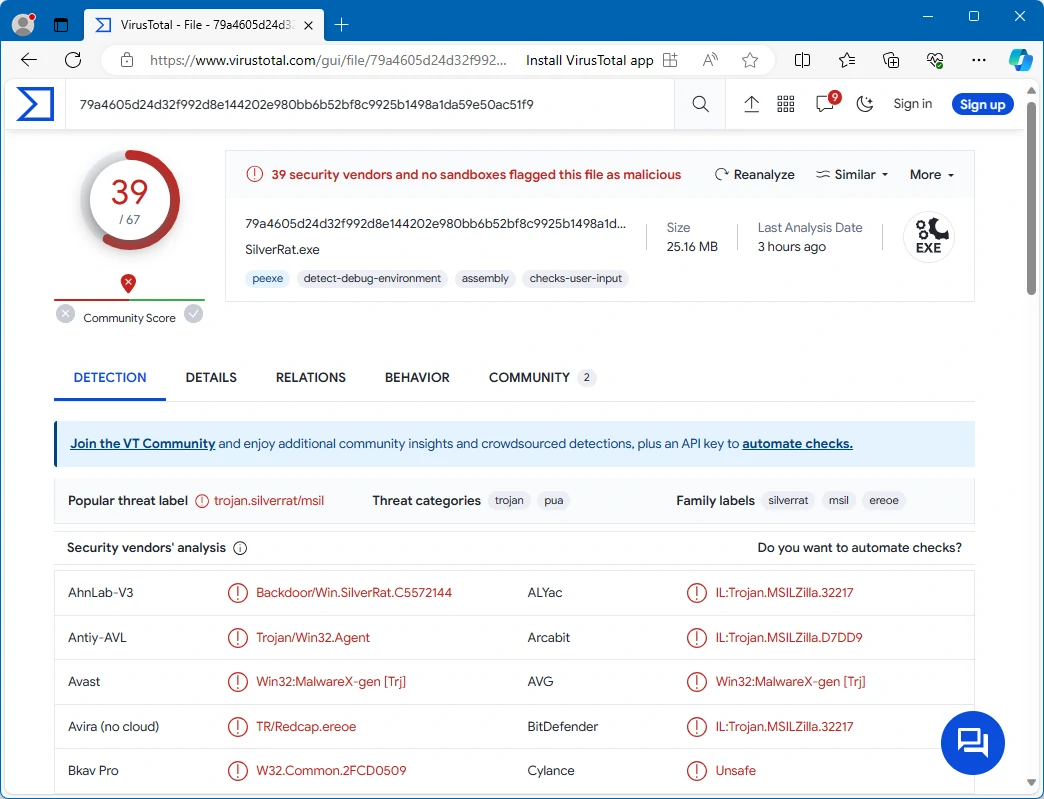
Silver Malware on VirusTotal
| Name | Silver remote access trojan |
| Threat Type | Trojan, Remote Access Trojan, Remote Access Tool, RAT |
| Detection | Trojan.Win32.Gen.sa, Trojan:MSIL/SilverRAT!MSR (Microsoft) |
| Damage | Stolen passwords and banking information, identity theft, the victim’s computer added to a botnet. |
| Similar Behavitor | PySilon RAT, JanelaRAT |
Technical Analysis
Remote access trojans like Silver grant remote access and control over compromised devices. Silver stands out for its anti-detection and anti-analysis features, successfully evading Microsoft Defender and possessing anti-debugging capabilities. It uniquely assigns custom names to its malicious processes. As a multifunctional tool, Silver’s abilities include bypassing User Account Control (UAC). It efficiently manages files, applications, and processes and can browse, search, modify, delete, and extract content on victims’ systems.
Silver simultaneously uses browsers and various applications, allowing it to operate even when the victim is active on the device. It can sabotage system recovery options. The RAT’s surveillance capabilities are extensive. It records audio and video through microphones and cameras on the device and has keylogging functions. Silver targets Internet cookies, capable of deleting and stealing them. It also functions as ransomware, encrypting files and demanding ransoms for decryption.
Malware developers often enhance their products, implying that future versions of Silver might possess new or altered features. There are plans to release an Android-compatible version of Silver. Silver’s presence on devices can lead to widespread system infections, irreversible data loss, significant privacy breaches, financial damage, and potential identity theft.
Spreading Methods
Various hacker forums, GitHub, Telegram, and other platforms actively promoted Silver during the research period. The methods cybercriminals use to spread this RAT vary. Typically, malware spreads through phishing and social engineering techniques. It often appears disguised or bundled with standard program/media files, including archives (RAR, ZIP), executables (.exe, .run), documents (Microsoft Office, OneNote, PDF), and JavaScript files. The most prevalent distribution methods are:
- Drive-by downloads, which are covert and misleading.
- Malicious attachments or links in spam are found in emails, direct messages, social media posts, etc.
- Online scams and malvertising.
- Distribution via pirated programs/media.
- Use questionable download sources, like freeware, third-party websites, and peer-to-peer sharing networks.
Malicious programs can also self-replicate through local networks and removable storage devices, such as external hard drives and USB flash drives.
How To Remove Malware
Removing malware like Silver manually isn’t advisable. This is because malware seeks to establish persistence, creating multiple instances of itself, which can be challenging to track completely. Consequently, manual removal efforts are often time-consuming and may yield limited results.


Leave a Comment