
Seeing the Ransom:Win32/Pocrimcrypt!pz detection means that your computer is in big danger. This computer virus can correctly be identified as ransomware – virus which encrypts your files and asks you to pay for their decryption. Stopping it requires some peculiar steps that must be taken as soon as possible.
Ransom:Win32/Pocrimcrypt!pz detection is a virus detection you can spectate in your computer. It generally appears after the provoking activities on your PC – opening the untrustworthy email, clicking the advertisement in the Internet or installing the program from unreliable sources. From the second it appears, you have a short time to do something about it before it starts its destructive activity. And be sure – it is better not to await these harmful effects.
What is Ransom:Win32/Pocrimcrypt!pz virus?
Ransom:Win32/Pocrimcrypt!pz Summary
In summary, Ransom:Win32/Pocrimcrypt!pz virus actions in the infected PC are next:
- A file was accessed within the Public folder.;
- Sample contains Overlay data;
- Performs HTTP requests potentially not found in PCAP.;
- Reads data out of its own binary image;
- Authenticode signature is invalid;
- CAPE detected the shellcode get eip malware family;
- Attempts to modify proxy settings;
- Creates a copy of itself;
- Touches a file containing cookies, possibly for information gathering;
- Anomalous binary characteristics;
- Yara detections observed in process dumps, payloads or dropped files;
- Encrypting the documents located on the target’s drive — so the victim cannot check these documents;
- Blocking the launching of .exe files of security tools
- Blocking the launching of installation files of security tools
Ransomware has been a nightmare for the last 4 years. It is difficult to picture a more hazardous virus for both individual users and organizations. The algorithms utilized in Ransom:Win32/Pocrimcrypt!pz (typically, RHA-1028 or AES-256) are not hackable – with minor exclusions. To hack it with a brute force, you need a lot more time than our galaxy already exists, and possibly will exist. However, that virus does not do all these unpleasant things without delay – it can take up to several hours to cipher all of your documents. Thus, seeing the Ransom:Win32/Pocrimcrypt!pz detection is a clear signal that you need to start the clearing procedure.
Where did I get the Ransom:Win32/Pocrimcrypt!pz?
Common tactics of Ransom:Win32/Pocrimcrypt!pz distribution are typical for all other ransomware examples. Those are one-day landing sites where users are offered to download the free app, so-called bait emails and hacktools. Bait e-mails are a pretty new strategy in malware spreading – you receive the email that mimics some routine notifications about shippings or bank service conditions updates. Within the e-mail, there is a corrupted MS Office file, or a web link which opens the exploit landing page.
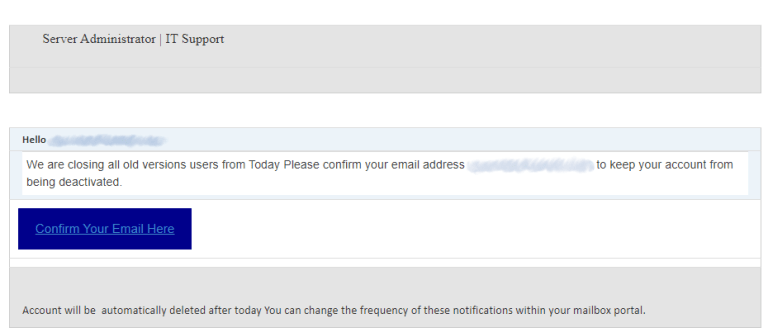
Malicious email message. This one tricks you to open the phishing website.
Avoiding it looks pretty simple, but still demands a lot of awareness. Malware can hide in various places, and it is much better to stop it even before it invades your computer than to trust in an anti-malware program. Standard cybersecurity awareness is just an essential item in the modern-day world, even if your interaction with a PC remains on YouTube videos. That may keep you a lot of money and time which you would certainly spend while looking for a fix guide.
Ransom:Win32/Pocrimcrypt!pz malware technical details
File Info:
name: 5BE009D5A07669335E12.mlwpath: /opt/CAPEv2/storage/binaries/c5d9d12ade0813384ca6a7c67d738dd6b427d3d659755cd37fb0055b3b66ecb3crc32: BBE152C3md5: 5be009d5a07669335e120c35e3c860d4sha1: ad3c4f6d6a038158a4db12b37c7665bb5a63b871sha256: c5d9d12ade0813384ca6a7c67d738dd6b427d3d659755cd37fb0055b3b66ecb3sha512: d13eb10aed77ddff4ba1cfca060e1493d261b85df91670e8b0079ce622a5ee62ffad8f0ea6bb1932dd5ec89bbcc0524c0a79e19cd5cb2e8390e416cd782c69d5ssdeep: 12288:EhkDgouVA2nxKkorvdRgQriDwOIxmxiZnYQE7PJcE4aLuAVYgW7cMJV4Hk7cyXb:cRmJkcoQricOIQxiZY1iaLuAe/n4Hkrtype: PE32 executable (GUI) Intel 80386, for MS Windowstlsh: T108256A23A5BDC0E2F1AE3EB04A29B35556386D260235D197E3CF3DE1D973043D6296E2sha3_384: e7c09b91f74a5227e288eff7858add031821e43a53d52d30bb4b14e89b7c2fdbc8d2a92aeb74c1158f8673d2570853c9ep_bytes: e816900000e989feffffcccccccccc55timestamp: 2012-01-29 21:32:28Version Info:
FileDescription: FileVersion: 3, 3, 8, 1CompiledScript: AutoIt v3 Script: 3, 3, 8, 1Translation: 0x0809 0x04b0
Ransom:Win32/Pocrimcrypt!pz also known as:
| Bkav | W32.AIDetectMalware |
| Lionic | Trojan.Win32.Autoit.i!c |
| Elastic | malicious (high confidence) |
| MicroWorld-eScan | Gen:Variant.Strictor.162566 |
| FireEye | Generic.mg.5be009d5a0766933 |
| Skyhigh | BehavesLike.Win32.Ransomware.dh |
| McAfee | Generic.bao |
| Cylance | unsafe |
| Zillya | Trojan.AutoIT.Win32.36991 |
| Sangfor | Infostealer.Win32.Autoit.Vnxn |
| CrowdStrike | win/malicious_confidence_100% (W) |
| Alibaba | TrojanPSW:Win32/Pocrimcrypt.f16cd064 |
| K7GW | Trojan ( 0050728b1 ) |
| K7AntiVirus | Trojan ( 0050728b1 ) |
| BitDefenderTheta | AI:Packer.44AFF4E515 |
| VirIT | Trojan.Win32.Autoit.L |
| Symantec | Trojan.Gen |
| tehtris | Generic.Malware |
| ESET-NOD32 | Win32/Autoit.BQ |
| APEX | Malicious |
| Cynet | Malicious (score: 100) |
| Kaspersky | Trojan-PSW.Win32.Autoit.ti |
| BitDefender | Gen:Variant.Strictor.162566 |
| NANO-Antivirus | Trojan.Win32.Autoit.eoxkdx |
| Avast | Win32:Malware-gen |
| Tencent | Win32.Trojan-QQPass.QQRob.Zylw |
| Emsisoft | Gen:Variant.Strictor.162566 (B) |
| F-Secure | Heuristic.HEUR/AGEN.1321697 |
| VIPRE | Gen:Variant.Strictor.162566 |
| TrendMicro | TSPY_INFOSTEAL.SM |
| Sophos | Mal/Generic-S |
| Ikarus | Trojan-Ransom.Crypt888 |
| GData | Gen:Variant.Strictor.162566 |
| Jiangmin | Trojan.PSW.Autoit.ez |
| Webroot | W32.Trojan.Gen |
| Detected | |
| Avira | HEUR/AGEN.1321697 |
| Kingsoft | Win32.PSWTroj.Undef.a |
| Xcitium | TrojWare.Win32.Injector.EUXI@4yxp37 |
| Arcabit | Trojan.Strictor.D27B06 |
| ZoneAlarm | Trojan-PSW.Win32.Autoit.ti |
| Microsoft | Ransom:Win32/Pocrimcrypt!pz |
| Varist | W32/Trojan.EIRZ-7402 |
| AhnLab-V3 | Trojan/Win32.RL_Agent.R278204 |
| VBA32 | Trojan.Autoit.F |
| ALYac | Trojan.PSW.Autoit |
| MAX | malware (ai score=83) |
| Malwarebytes | Malware.AI.833452655 |
| Panda | Trj/CI.A |
| Rising | Trojan.Obfus/Autoit!1.BEDE (CLASSIC) |
| SentinelOne | Static AI – Suspicious PE |
| MaxSecure | Trojan.Autoit.AZA |
| AVG | Win32:Malware-gen |
| DeepInstinct | MALICIOUS |


Leave a Comment