
Spectating the PWS:Win32/Sekur malware detection usually means that your system is in big danger. This computer virus can correctly be identified as ransomware – sort of malware which ciphers your files and forces you to pay for their decryption. Deleteing it requires some specific steps that must be done as soon as possible.
PWS:Win32/Sekur detection is a malware detection you can spectate in your system. It frequently shows up after the provoking actions on your PC – opening the untrustworthy e-mail messages, clicking the banner in the Internet or installing the program from untrustworthy resources. From the second it shows up, you have a short time to take action before it begins its harmful activity. And be sure – it is better not to await these destructive actions.
What is PWS:Win32/Sekur virus?
PWS:Win32/Sekur Summary
In summary, PWS:Win32/Sekur virus actions in the infected system are next:
- Behavioural detection: Executable code extraction – unpacking;
- Yara rule detections observed from a process memory dump/dropped files/CAPE;
- CAPE extracted potentially suspicious content;
- The binary contains an unknown PE section name indicative of packing;
- The binary likely contains encrypted or compressed data.;
- Authenticode signature is invalid;
- Behavioural detection: Injection (Process Hollowing);
- Behavioural detection: Injection (inter-process);
- Encrypting the files located on the victim’s disk — so the victim cannot use these files;
- Blocking the launching of .exe files of anti-malware programs
- Blocking the launching of installation files of security tools
Ransomware has actually been a nightmare for the last 4 years. It is difficult to picture a more dangerous virus for both individual users and corporations. The algorithms used in PWS:Win32/Sekur (usually, RHA-1028 or AES-256) are not hackable – with minor exclusions. To hack it with a brute force, you need more time than our galaxy already exists, and possibly will exist. But that malware does not do all these bad things instantly – it may take up to several hours to cipher all of your documents. Therefore, seeing the PWS:Win32/Sekur detection is a clear signal that you need to start the elimination process.
Where did I get the PWS:Win32/Sekur?
Common tactics of PWS:Win32/Sekur distribution are usual for all other ransomware examples. Those are one-day landing sites where victims are offered to download the free app, so-called bait emails and hacktools. Bait emails are a relatively modern method in malware spreading – you get the e-mail that mimics some normal notifications about shippings or bank service conditions modifications. Within the email, there is a malicious MS Office file, or a link which opens the exploit landing page.
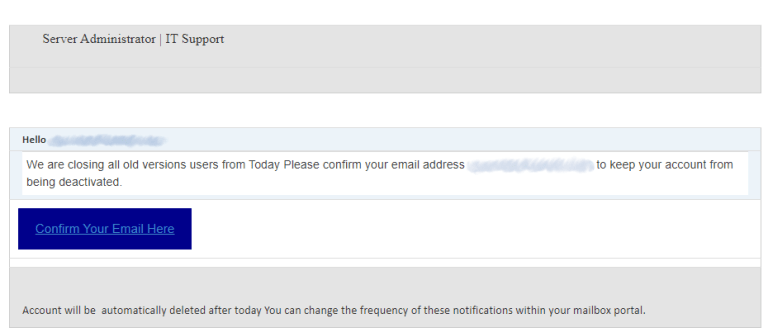
Malicious email message. This one tricks you to open the phishing website.
Preventing it looks pretty easy, but still demands a lot of recognition. Malware can hide in different places, and it is better to stop it even before it gets into your computer than to trust in an anti-malware program. General cybersecurity knowledge is just an important item in the modern-day world, even if your relationship with a computer stays on YouTube videos. That can keep you a lot of time and money which you would certainly spend while seeking a fixing guide.
PWS:Win32/Sekur malware technical details
File Info:
name: A1979AA159E0C5421212.mlwpath: /opt/CAPEv2/storage/binaries/bea5b1e72c25d978222b27766acd89cc83ff715ef6699589d0422a31393698f0crc32: 33D0E005md5: a1979aa159e0c54212122fd8acb24383sha1: 3d82c2a4cb4339d2b24a08e4f8e3922c4a0a4004sha256: bea5b1e72c25d978222b27766acd89cc83ff715ef6699589d0422a31393698f0sha512: aaef3dbdabc3819bf956f627eec5fe1ba5bed9251ae8dabcba4ce28648f2c01813dfcb49ab2ab109d3a798e36857ee39978fe21316a4f01d642993b219286b9cssdeep: 3072:bxmWjOoosmpXf/hlFNXsnYltGg8MkJL4waZO+MClinlogJWTrQdKimNd:bx96oovRRJZg8waZKlogJWAdKimNdtype: PE32 executable (GUI) Intel 80386, for MS Windowstlsh: T10014D0FAA1F165CCEC835D79E6107A3F55DEB138134645D3B0480F8A48CB39A472BEA6sha3_384: a255ec14fe4779b13558b2e3734307a0d110002bd053bb6c24b653cf80944a3a0559fe34975cc98752954424d48935a7ep_bytes: 837c2408018bc5508bec83ec4cbb2100timestamp: 2011-04-05 03:00:57Version Info:
CompanyName: Softshape DevelopmentProductVersion: 6FileVersion: 6, 2, 4InternalName: RatadLegalTrademarks: Huhy Myli Eqed Xawar IxemLegalCopyright: 2003OriginalFilename: Ufwsoyjbd.exeProductName: XakyFileDescription: Opap Zap OpegodTranslation: 0x0409 0x04b0
PWS:Win32/Sekur also known as:
| Bkav | W32.EnserteyLTF.Trojan |
| Lionic | Trojan.Win32.Carbanak.trPR |
| Elastic | malicious (high confidence) |
| Cynet | Malicious (score: 100) |
| FireEye | Generic.mg.a1979aa159e0c542 |
| McAfee | BackDoor-FCMT!A1979AA159E0 |
| Malwarebytes | Spyware.Zbot.VXGen |
| Zillya | Trojan.Reconyc.Win32.12789 |
| Sangfor | Virus.Win32.Save.a |
| K7AntiVirus | Trojan ( 00549d461 ) |
| Alibaba | Backdoor:Win32/Carbanak.e841d36c |
| K7GW | Trojan ( 00549d461 ) |
| Cybereason | malicious.159e0c |
| Baidu | Win32.Trojan.Kryptik.ho |
| VirIT | Trojan.Win32.Crypt3.ACGH |
| Cyren | W32/Trojan.XXKU-0098 |
| Symantec | Trojan.Carberp.B |
| tehtris | Generic.Malware |
| ESET-NOD32 | a variant of Win32/Kryptik.CFGH |
| APEX | Malicious |
| Paloalto | generic.ml |
| Kaspersky | Backdoor.Win32.Carbanak.gfn |
| BitDefender | Gen:Variant.Lazy.215833 |
| NANO-Antivirus | Trojan.Win32.Reconyc.dxargb |
| ViRobot | Trojan.Win32.S.Agent.197632.BG |
| MicroWorld-eScan | Gen:Variant.Lazy.215833 |
| Avast | Win32:Crypt-SIP [Trj] |
| Tencent | Malware.Win32.Gencirc.114cc24d |
| Ad-Aware | Gen:Variant.Lazy.215833 |
| TACHYON | Trojan/W32.Reconyc.197632 |
| Emsisoft | Gen:Variant.Lazy.215833 (B) |
| Comodo | Malware@#344etk8gliwlv |
| DrWeb | BackDoor.Anunak.29 |
| VIPRE | Gen:Variant.Lazy.215833 |
| TrendMicro | BKDR_CARBANAK.B |
| McAfee-GW-Edition | BackDoor-FCMT!A1979AA159E0 |
| Trapmine | malicious.high.ml.score |
| Sophos | Mal/Generic-R + Mal/Ransom-CV |
| Ikarus | Trojan.Win32.Reconyc |
| GData | Gen:Variant.Lazy.215833 |
| Jiangmin | Backdoor.Carbanak.ao |
| Webroot | W32.Gen.BT |
| Avira | HEUR/AGEN.1240261 |
| Antiy-AVL | Trojan/Generic.ASMalwS.35E5 |
| Kingsoft | Win32.Troj.Reconyc.bw.(kcloud) |
| Arcabit | Trojan.Lazy.D34B19 |
| ZoneAlarm | Backdoor.Win32.Carbanak.gfn |
| Microsoft | PWS:Win32/Sekur |
| Detected | |
| AhnLab-V3 | Trojan/Win32.Zbot.R111836 |
| Acronis | suspicious |
| BitDefenderTheta | Gen:NN.ZexaF.34606.mu0@aKc8dwpi |
| ALYac | Gen:Variant.Lazy.215833 |
| MAX | malware (ai score=100) |
| VBA32 | BScope.Trojan.KillProc |
| Cylance | Unsafe |
| TrendMicro-HouseCall | BKDR_CARBANAK.B |
| Rising | Backdoor.Carbanak!8.2FED (TFE:4:joYjl3HVsnR) |
| Yandex | Trojan.Reconyc!BhtcXZDkfp0 |
| SentinelOne | Static AI – Malicious PE |
| AVG | Win32:Crypt-SIP [Trj] |
| Panda | Trj/Chgt.C |
| CrowdStrike | win/malicious_confidence_100% (W) |


Leave a Comment