
What is PUADlManager:Win32/Bundlore?
PUADlManager:Win32/Bundlore belongs to the Bundlore family of threats and is classified as a potentially unwanted application (PUA). This program is categorized as potentially unwanted due to its intrusive behavior and the negative effects it can have on a user’s system. PUADlManager:Win32/Bundlore is commonly spread through software bundling, where it is included as an additional component in free software downloads.
Once PUADlManager:Win32/Bundlore is installed on a system, it can exhibit various unwanted behaviors. These may include displaying excessive advertisements, redirecting web browsers to unwanted websites, collecting user data without consent, or modifying browser settings. In more severe cases, it may also serve as a downloader for additional malware or engage in other malicious activities.
Given its potentially harmful nature and the adverse impact it can have on system performance and user privacy, it is strongly recommended to remove PUADlManager:Win32/Bundlore using reputable security software.
PUAs like that can be just an annoyance or can significantly impact your system’s functionality. Furthermore, there have been cases where users have reported that this program behaves like spyware or a backdoor.
What does the notification with PUADlManager:Win32/Bundlore detection mean?
The PUADlManager:Win32/Bundlore detection you can see in the lower right corner is displayed to you by Microsoft Defender. That anti-malware program is good at scanning, however, prone to be generally unreliable. It is unprotected to malware invasions, it has a glitchy interface and bugged malware clearing features. For this reason, the pop-up which says about the Bundlore is simply a notification that Defender has identified it. To remove it, you will likely need to use another anti-malware program.
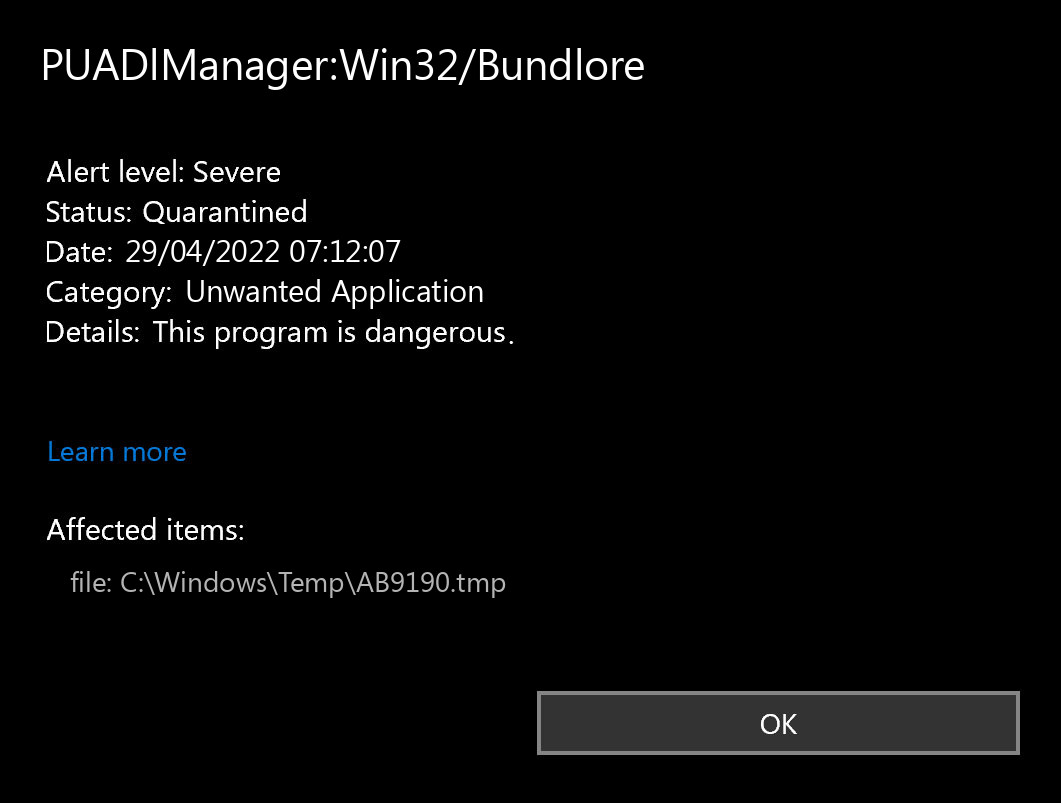
Microsoft Defender: “PUADlManager:Win32/Bundlore”
PUADlManager:Win32/Bundlore unwanted program is a typical example of PUA, which are pretty common nowadays. Being free to use, it can give you “the extended capabilities” for the extra payment. Some instances of this program type can have no real functions at all – just the shell with the bright interface. You can see it advertised as a system optimization tool, driver updater or torrent downloadings tracker. This or another way it does not give you any kind of real performance, exposing you to risk instead.
Unwanted Program Summary:
| Name | Bundlore PUA |
| Detection | PUADlManager:Win32/Bundlore |
| Damage | Bundlore is at least useless, or can perform various malicious actions on your PC. |
| Fix Tool | See If Your System Has Been Affected by Bundlore exploit |
Is PUADlManager:Win32/Bundlore dangerous?
I have already explained that the PUADlManager:Win32/Bundlore PUA is not as harmless as it pretends to be. The “legitimate and effective” tool can unexpectedly reveal itself as a downloader trojan, spyware, backdoor, or coin miner virus. And you can never predict what to expect even from different instances of the unwanted Bundlore program. However, this does not necessarily mean that you should panic – perhaps this nasty thing hasn’t managed to cause any harm to your computer.
The damage to your system can be caused not only due to malware injection. A significant portion of questionable programs, like the Bundlore app, are poorly designed. In specific system configurations, their actions may be somewhat useful, but not on every system. That’s how a simple system optimization application can wreak havoc with constant BSODs (Blue Screen of Death) on your system. Any kind of interference with the system registry is not very safe, and it becomes even more risky when performed with such programs.
How did I get this virus?
It is hard to line the sources of malware on your computer. Nowadays, things are mixed, and distribution tactics utilized by adware 5 years ago may be utilized by spyware these days. But if we abstract from the exact distribution way and will think about why it has success, the reply will be really simple – low level of cybersecurity awareness. Individuals press on promotions on strange sites, click the pop-ups they get in their web browsers, call the “Microsoft tech support” believing that the odd banner that states about malware is true. It is essential to recognize what is legit – to stay away from misconceptions when attempting to identify a virus.
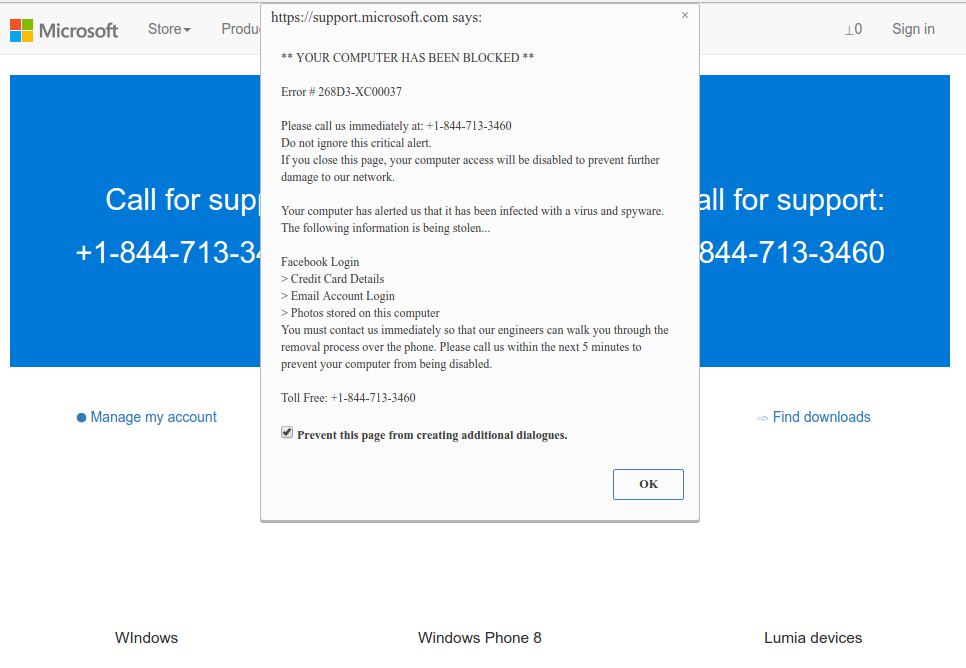
Microsoft Tech Support Scam
Nowadays, there are two of the most widespread tactics of malware distribution – bait emails and injection into a hacked program. While the first one is not so easy to avoid – you need to know a lot to recognize a fake – the 2nd one is simple to solve: just do not use hacked applications. Torrent-trackers and various other sources of “totally free” applications (which are, actually, paid, but with a disabled license checking) are really a giveaway place of malware. And PUADlManager:Win32/Bundlore is just amongst them.


Leave a Comment