
Lumar Stealer, a prevalent threat, infiltrates systems via phishing, drive-by downloads, and spam emails. This malware’s primary mission is data extraction, targeting crucial information like Internet cookies, login credentials, and cryptocurrency wallet details.
What sets Lumar apart is its ability to snatch various document types. The diversity in its distribution channels and data theft capabilities emphasize the urgency of robust cybersecurity measures to counter its influence.
Lumar Stealer Overview
Lumar Stealer is a potent information-extracting malware written in C, primarily used by cybercriminals to steal sensitive data. Once infiltrating a system, it collects device specifics and targets browser data, including Internet cookies, login credentials, and Telegram Messenger sessions. It also gathers information related to cryptocurrency wallets. Lumar is equipped with a file grabber, allowing it to snatch various document types. Additionally, malware developers frequently update Lumar, potentially expanding its capabilities. Its presence on a system poses severe threats to device integrity and user privacy, making swift detection and elimination crucial.
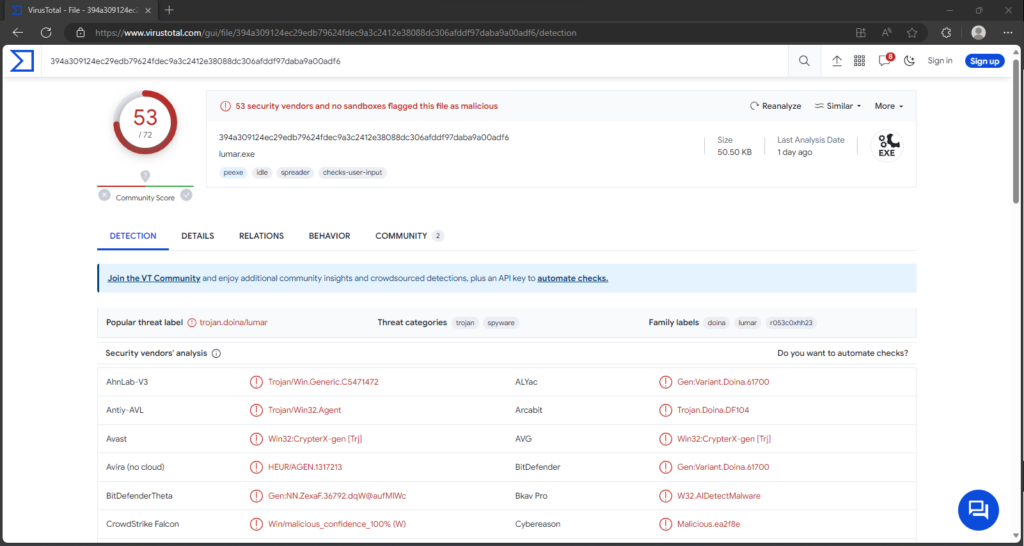
Lumar Stealer malware on VirusTotal site
| Name | Lumar |
| Threat Type | Trojan, stealer, password-stealing virus. |
| Detection | Microsoft (Trojan:Win32/PovertyStealer.RPX!MTB), Gridinsoft (Trojan.Win32.Agent.oa!s1) |
| Distribution methods | Infected email attachments, malicious online advertisements, social engineering, software ‘cracks’. |
| Damage | Stolen passwords and banking information, identity theft, the victim’s computer added to a botnet. |
| Similar Behavior | BlazeStealer, Lumma, Vidar, |
Technical Analysis of Lumar Stealer
Lumar Stealer operates as a potent information-extracting malware with a modular architecture. Upon infiltrating a target system, it deploys a multi-step process to exfiltrate valuable data. Lumar Stealer was spotted on hacker forums in July 2023. Cybercriminals use it, thanks to its availability for purchase.
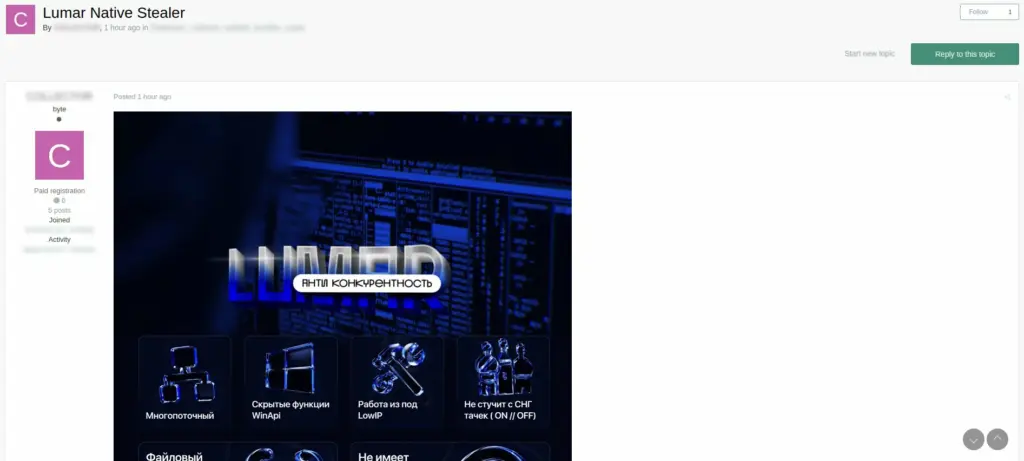
Screenshot of Lumar stealer for sale on hacker forums
It’s important to note that malware developers frequently update Lumar, potentially introducing new features, tactics, or targets. This necessitates continuous monitoring and cybersecurity measures to counter its evolving threats.
Spreading methods
Lumar commonly enters systems through deceptive methods, including phishing and social engineering techniques. It may be concealed within seemingly innocuous files or software, exploiting users’ trust.
- Lumar often disguises itself as legitimate software or is bundled with seemingly harmless files, leveraging social engineering techniques to deceive users into executing it.
- It can be distributed through stealthy, drive-by downloads where users unintentionally acquire the malware when visiting compromised websites or interacting with malicious content.
- Lumar may be found on unofficial and free file-hosting websites, as well as on Peer-to-Peer (P2P) sharing networks, posing as legitimate software or files.
- Cybercriminals may use spam emails and messages to distribute Lumar. Users are enticed to open malicious attachments or click on links, leading to the malware’s installation.
- Users looking to activate paid software for free may unwittingly download Lumar when they use illegal software activation tools, which often contain malware.
- Lumar can mimic software update notifications, prompting users to download and install what they believe to be legitimate updates, but are actually the malware.
To defend against Lumar Stealer and similar threats, users should exercise caution when downloading files, clicking on links, and opening attachments, and maintain up-to-date cybersecurity measures.


Leave a Comment