
LuaDream Backdoor Overview
LuaDream is a sophisticated and adaptable backdoor, distinguished by its multifaceted components and communication protocols. This well-maintained and actively developed project boasts significant complexity and scale in its design. LuaDream’s primary objective is to clandestinely connect a victim’s computer to one controlled by cybercriminals. It transmits crucial information about the victim’s system, including its type, user, and sensitive data, employing various communication methods, both over the internet and through covert channels.
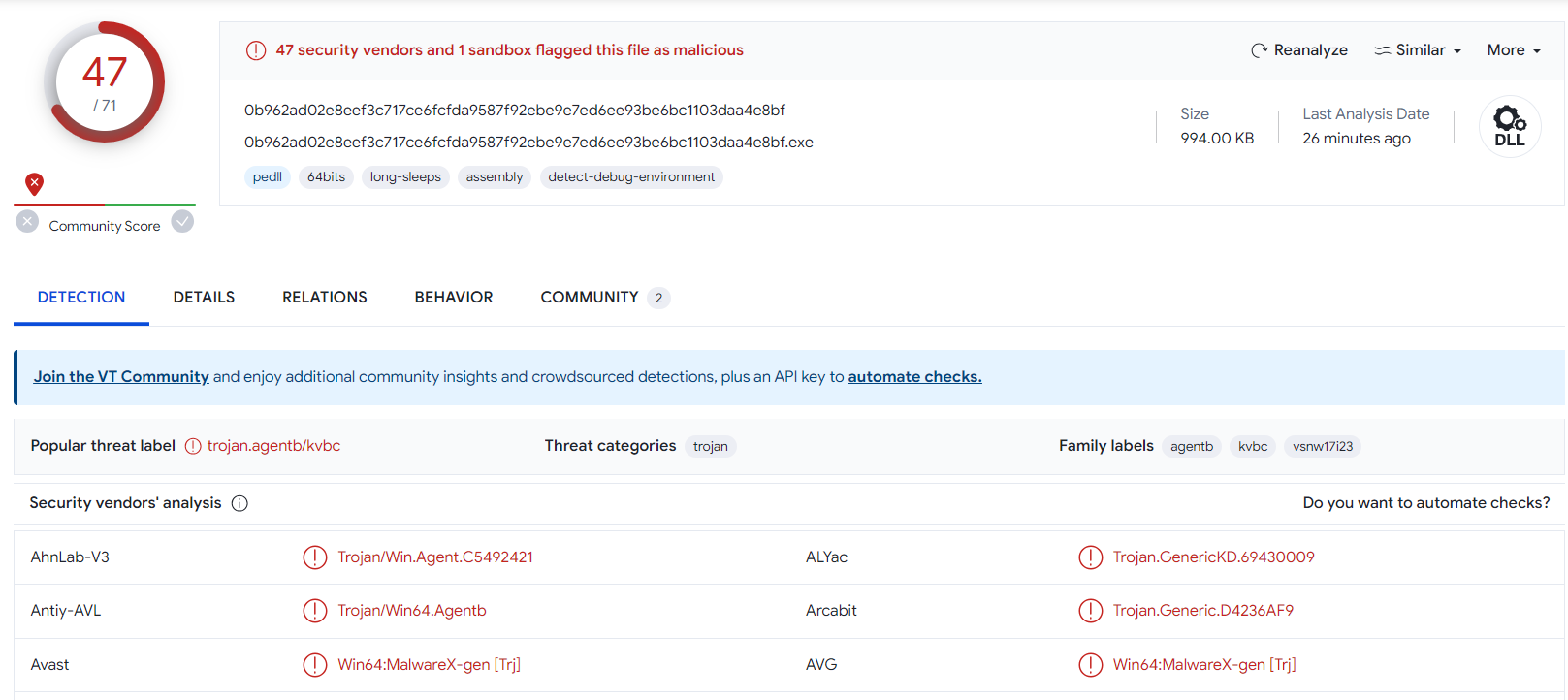
LuaDream analysis from VirusTotal
Notably, LuaDream possesses shape-shifting capabilities, enabling it to evade detection by security software. Its impact on victims is profound; it initiates data theft, amassing sensitive information such as personal data, login credentials, and financial particulars, which are then forwarded to malevolent actors. Furthermore, LuaDream’s capacity to communicate with remote servers and execute diverse commands facilitates a range of malicious activities, from downloading and deploying additional malware to orchestrating further attacks on the victim’s network or other targets.
| Name | LuaDream |
| Detection | Trojan:Win64/Tnega!MSR |
| Threat Type | Backdoor |
| Damage | Establishes remote connection to your system, gathers personal data. |
LuaDream Analysis
During the staging process, LuaDream employs a series of anti-analysis measures to thwart detection and analysis:
- Concealing Threads. LuaDream masks its threads from debuggers, making it harder for security analysts to trace its execution and behavior.
- Invalid File Handles. It closes files using invalid handles, which can confuse analysis tools and hinder their ability to track file operations.
- Sandbox Detection. LuaDream can detect Wine-based sandbox environments, indicating a proactive approach to evading analysis within virtualized systems.
- In-Memory Mapping. The malware employs in-memory mapping to evade detection by EDR systems that rely on API hooks and file-based detection methods.
- XOR-Based Encryption and Compression. LuaDream further obfuscates its staging code by packing it with XOR-based encryption and compression techniques, adding an additional layer of complexity for analysts.
LuaDream is a comprehensive threat, consisting of 34 components, with 13 core and 21 support components. It leverages LuaJIT bytecode and the Windows API via the ffi library. Core components manage essential functions such as data collection, plugin control, and command and control (C2) communications, while support components handle technical aspects like providing Lua libraries and Windows API definitions. This intricate architecture enhances its resilience and adaptability in the face of analysis and security measures.
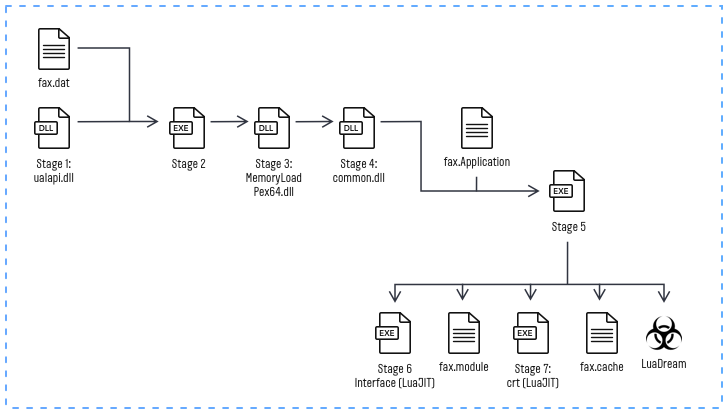
Scheme of LuaDream backdoor execution
How does it spread?
Being a brainchild of Sandman, an APT threat actor, LuaDream mostly sees targeted spreading. Highly-functional backdoor is useful in any multi-stage cyberattack, but such attacks rarely follow a certain pattern. To deliver this malware, hackers are in fact forced to plan the scheme from scratch for each attack case.
However, even within a volatile world of cyberattacks, there are acknowledged favorites for malware spreading. Email spam, vulnerable RDP ports and vulnerabilities in network infrastructure software definitely reign over others. These attack vectors can be protected with a proper anti-malware software and frequent updates installation.


Leave a Comment