
Error Code: 0x80073b01 is a fraudulent notification you can while browsing the Web. It commonly appears after a redirection, and belongs to a Microsoft tech support scam. In that manner, scoundrels try to force you to install fake TeamViewer
The exact Error Code: 0x80073b01 does not have any particular meaning. Windows uses similar hexcode error codes in some interfaces, but it never shows ones in Windows Defender. Moreover, Defender never sends notifications in a web form, as it has its own interface in the system. At least these factors clearly show that this pop-up is a 100% scam. But let’s have a deeper look to understand the reasons and ways to avoid them in the future.
Error Code: 0x80073b01 Scam Overview
The scam website employs a fabricated Microsoft Windows Security Center warning to deceive users. It falsely reports several virus/malware infections, coupled with error code 0x80073b01, stirring concerns of compromised data, banking info, and login credentials. A supposed urgency drives users to dial +1-866-552-3512 for Microsoft Windows Support.
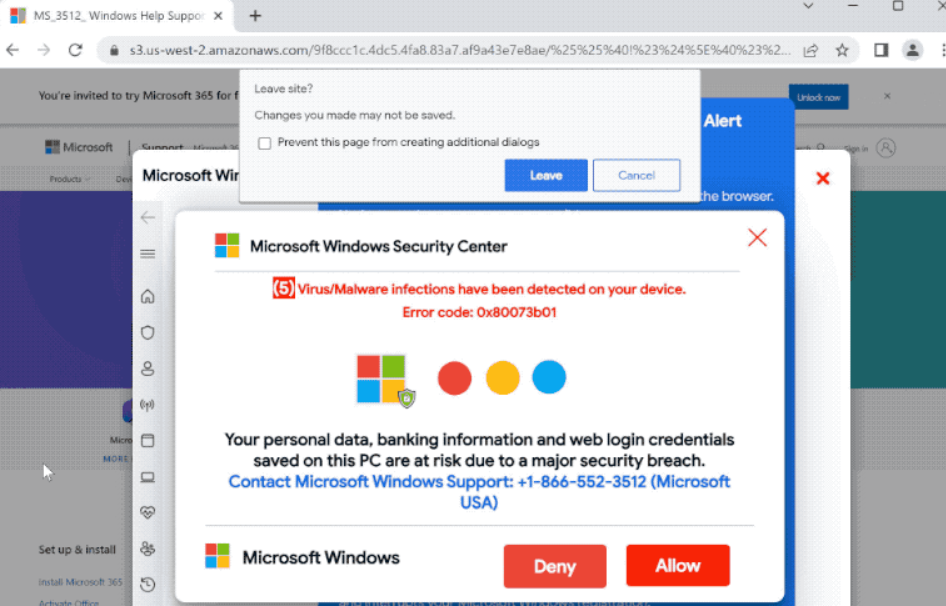
Error Code 0x80073b01 Scam Page
This scam capitalizes on user anxiety, creating a perception of malware infection. A phony error notice and contact number manipulate victims into calling. Scammers employ diverse tactics during calls, exploiting users for monetary gain. They offer unnecessary services, request remote system access, or offer questionable software installation. Familiar schemes include TeamViewer and UltraViewer scams for remote entry.
| Name | Error Code: 0x80073b01 |
| Threat type | Fake Microsoft tech support scam |
| Damage | Privacy exposure through remote access tools, malware installation |
| Similar Behavior | Ads.Fiancetrack(2).dll, Your Computer is Disabled |
More about tech support scams
Technical support scams like Error Code: 0x80073b01 hinge on impersonating legitimate technical support, frequently leveraging alarming messages or pop-ups to induce urgency. Crooks ensure that computers are besieged by viruses, malware, or glitches, forcing users to dial a number from the banner.
The objective is to monetarily exploit victims through superfluous services, counterfeit software sales, or acquiring remote device access for fraudulent pursuits. Vigilance is paramount when encountering unrequested messages or pop-ups alleging technical woes. Rely exclusively on reputable sources for support and remain wary of these deceptive tactics.
How did I get to the Error Code: 0x80073b01 scam?
Fraudulent websites, including technical support scams, can appear following the interaction with malevolent ads or pop-ups, or links on questionable websites. In-browser pop-up ads also contribute to this. Phishing emails may embed links to these deceitful sites, luring users into clicking.
Adware compounds the issue, amplifying scam proliferation. Users further stumble upon scam websites during visits to pages linked with rogue ad networks. Illicit movie streaming platforms, torrent sites, and adult content websites frequently employ such networks. Awareness is pivotal in navigating this intricate web of deceptive tactics.

