
Epsilon, a data-stealing malware, infiltrates systems through deceptive gaming-related campaigns. Its distribution relies on fake game download sites promoted via spam, particularly on platforms like Discord.
Once inside a system, Epsilon collects sensitive data, targeting browsers, gaming applications, and cryptocurrency wallets. Its versatile nature makes it a significant threat, potentially leading to severe privacy breaches, financial losses, and identity theft.
Epsilon Malware Overview
Epsilon is a malware specifically crafted for stealing sensitive information. This stealer is adept at targeting data from browsers, gaming-related applications, and -various other software, including cryptocurrency wallets. Notably, Epsilon has been identified in campaigns directed at video game players, showcasing its focus on exploiting this particular user group.
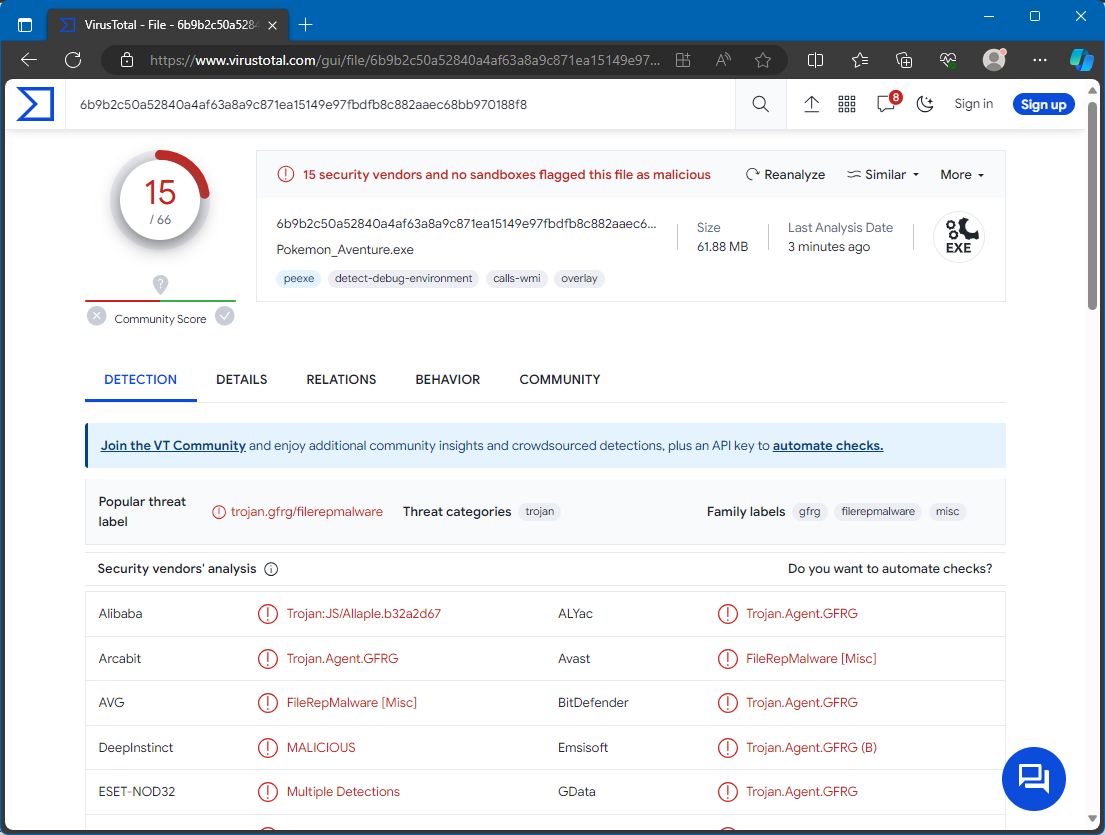
Epsilon malware VirusTotal scan result
| Name | Epsilon |
| Detection | Trojan:Win32/Wacatac |
| Damage | Stolen passwords and banking information, identity theft, the victim’s computer added to a botnet. |
| Similar Behavitor | TrapStealer, S1deload Stealer |
Technical Analysis
Additionally, the malware seeks login credentials from cryptocurrency wallets. The dynamic nature of malware development suggests potential enhancements in future versions, posing risks of expanded targets and capabilities. Epsilon’s presence on devices significantly threatens privacy, finances, and identity security.
Spreading Methods
Epsilon gains access to systems through sales facilitated on Telegram and Discord. Its distribution varies based on cybercriminal preferences, with notable campaigns targeting the gaming community. Victims often download malicious files from fake game download sites, promoted through spam on platforms like Discord. Compromised accounts amplify the credibility of these promotions.
In formats like executables and archives, the initially downloaded files may request beta tester keys through decoy dialogue boxes. Epsilon’s versatile proliferation methods encompass phishing, social engineering, malicious attachments, malvertising, online scams, and deceptive downloads, emphasizing the significance of cautious online behavior.


Leave a Comment