
CCXProcess.exe is usually an Adobe Creative Cloud background process, not malware. It supports Creative Cloud features such as account state, templates, libraries, notifications, and communication between Adobe desktop components. The question is not simply “is CCXProcess.exe a virus?” The better question is whether the file belongs to Adobe, whether it needs to run at startup, and why it is using resources on your PC.
What is CCXProcess.exe?
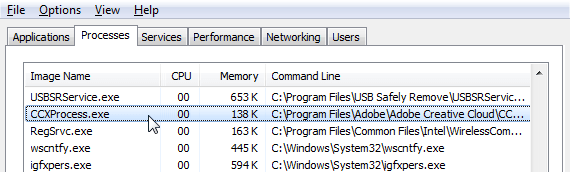
CCXProcess.exe is associated with Adobe Creative Cloud Experience. On systems with Photoshop, Illustrator, Premiere Pro, Acrobat, Creative Cloud Desktop, or related Adobe tools, it can appear in Task Manager even when no Adobe editor is open. That is normal if Creative Cloud is installed and syncing account, library, update, or notification data in the background.
It is also normal to see CCXProcess in the Startup tab. Adobe uses background startup components so that Creative Cloud services are ready when an Adobe app launches. This does not mean you must keep it enabled. If you rarely use Adobe apps, disabling startup can reduce boot clutter without uninstalling Adobe software.
Quick verdict
| Usually safe | Needs checking |
| Located in an Adobe or Creative Cloud folder. | Runs from AppData, Temp, Downloads, Startup, or a random folder. |
| Adobe Creative Cloud is installed and signed by Adobe. | No Adobe software is installed, or the file has no trusted signature. |
| Brief CPU/network use during updates, sync, or app launch. | Constant high CPU, disk, or network use while the system is idle. |
| Disabling startup does not break your Adobe apps. | The process returns from a scheduled task or unknown startup entry after removal. |
Where should the real file be?
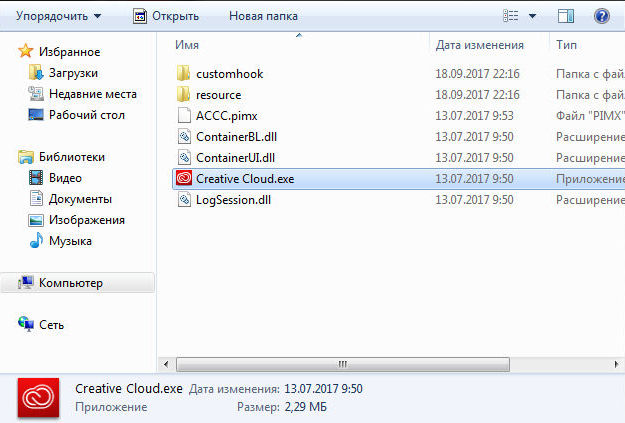
Right-click CCXProcess.exe in Task Manager and choose Open file location. A legitimate copy should point to an Adobe installation path, commonly under Program Files, Program Files (x86), or a Creative Cloud component folder. Then open file properties and check the digital signature. A suspicious copy often hides in a user-writable folder and uses the Adobe-looking name only to appear familiar.
Can you disable CCXProcess.exe at startup?
Yes, in most cases. Disabling startup does not remove Adobe apps; it only prevents the background component from launching automatically at boot. Open Task Manager, go to Startup apps, select CCXProcess or Adobe Creative Cloud, and choose Disable. You can also open Creative Cloud Desktop settings and turn off automatic launch if the option is available.
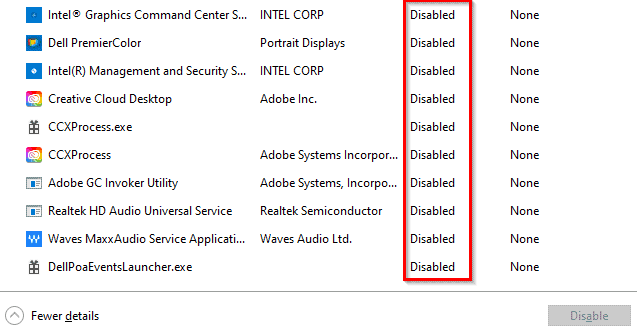
If Adobe apps behave normally after a restart, leave it disabled. If Creative Cloud sync, fonts, libraries, or updates stop working, re-enable the startup item or launch Creative Cloud manually before opening Adobe software.
How to fix high CPU, memory, or disk usage
- Restart Creative Cloud Desktop and check whether the spike ends after updates or sync complete.
- Update Creative Cloud Desktop and the Adobe apps you use.
- Sign out of Creative Cloud, restart Windows, and sign in again if account sync is stuck.
- Disable Creative Cloud startup and test whether the PC becomes stable after boot.
- Clear Creative Cloud cache only if Adobe support guidance or app behavior points to a stuck cache issue.
- If usage began after a recent Adobe update, repair or reinstall Creative Cloud Desktop from Adobe’s official installer.
When to scan the file
Scan the system if CCXProcess.exe runs from a non-Adobe folder, has no valid signature, reappears after uninstalling Adobe software, or launches together with unknown scheduled tasks. Also check browser extensions and recently installed freeware if the process appeared after a bundle installer rather than an Adobe update.
Should you remove it or just disable it?
For a real Adobe installation, disabling startup is the best first move. Removing the file manually is not useful because Creative Cloud can repair or reinstall its components, and Adobe apps may behave unpredictably if one helper is missing. Uninstall or repair Creative Cloud Desktop only when the whole Adobe stack is broken, not because one background process appears in Task Manager.
If you are cleaning a shared or work computer, document the file path before making changes. A path in an Adobe folder points toward a configuration or performance issue. A path in a user profile, especially with a random folder name or recently created timestamp, points toward a security review.
Decision tree
- You use Adobe apps and the file is in an Adobe folder: update Creative Cloud, disable startup if you do not need it, and watch CPU after reboot.
- You use Adobe apps but CPU stays high: sign out and back in, check sync, pause notifications, repair Creative Cloud Desktop, and update Adobe apps.
- You do not use Adobe apps: uninstall Creative Cloud from Apps & Features, then check whether CCXProcess disappears.
- The file is outside Adobe folders: do not trust the name. Scan the exact file, check startup entries, and remove the parent program if confirmed unwanted.
What competitors often miss
Many generic guides say only “disable it in Task Manager.” That helps boot time, but it does not answer the more important question: whether the file is actually Adobe’s component. The path, signature, parent app, and recent install history are what separate a harmless Creative Cloud helper from a suspicious copy using a familiar name.
FAQ
Is CCXProcess.exe required?
It is not required for Windows. It is an Adobe background component. Adobe apps may still open without it, but some Creative Cloud features can be delayed until Creative Cloud starts manually.
Is it safe to end the task?
Yes, ending it temporarily is safe. The parent Adobe component may start it again when needed.
Why does it keep coming back?
Creative Cloud can recreate startup entries during updates or when automatic launch is enabled. If the file is not in an Adobe folder, treat that as suspicious and verify the exact path.



Leave a Comment