
The Bang virus was originally discovered by virus analyst Michael Gillespie, and belongs to the WannaScream ransomware family. This ransomware encrypts all user’s data on the PC (photos, documents, excel tables, music, videos, etc), adds its specific extension to every file, and creates the ReadMe.txt files in every folder which contains encrypted files.
What is “Bang”?
Bang can be correctly identify as a ransomware-type infection.
After the encryption process files will be renamed according to the pattern [*id*[[email protected]].Bang, which is laid in ransomware. Your photo, named an example “me.jpg” will be altered to “me.jpg.[C4277723[[email protected]].Bang” after the encryption.
ReadMe.txt file, which can be found in every folder that contains the encrypted files, is a ransom money note. Inside of it, you can find information about ways of contacting Bang ransomware developers, and some other info. Inside of the ransom note, there is usually an instruction saying about purchasing the decryption tool. This decryption tool is created by ransomware developers, and can be obtained through the email, contacting [email protected].
Here is a summary for the Bang:
| Ransomware family1 | WannaScream ransomware |
| Extension | .[*id*[[email protected]].Bang |
| Ransomware note | ReadMe.txt |
| Contact | [email protected] |
| Detection | Backdoor:Win32/Tofsee.T, Trojan:Win32/Skeeeyah!rfn, Trojan:Win32/EmotetCrypt.PEF!MTB |
| Symptoms | Your files (photos, videos, documents) have a .[*id*[[email protected]].Bang extension and you can’t open it. |
| Fix Tool | See If Your System Has Been Affected by Bang virus |
The image below gives a clear vision of how the files with “.[*id*[[email protected]].Bang” extension look like:
![Bang Virus - encrypted .[*id*[databang2020@protonmail.com].Bang files](https://howtofix.guide/wp-content/uploads/2020/10/Bang-files-virus.jpg)
Example of encrypted .[*id*[[email protected]].Bang files
How did I get Bang ransomware on my computer?
That was a huge number of different ways of ransomware injection.
However, nowadays there are only two ways of Bang injection – email spam and trojans. You may see a lot of messages on your email, stating that you need to pay different bills or to get your parcel from the local FedEx department. But all such messages are sent from unknown email addresses, not from familiar official emails of these companies. All such letters contain the attached file, which is used as a ransomware carrier. If you open this file – your system will get infected by Bang.
In case of trojans presence, you will be offered to download and install ransomware on your PC under the guise of something legit, like a Chrome update, or update for the software you are storing on your computer. Sometimes, trojan viruses can be masked as legit programs, and ransomware will be offered for download as an important update, or a big pack of extensions which are essential for proper program functioning.
There is also the third way of ransomware injection, however, it becomes less and less popular day-to-day. I am talking about peering networks, such as torrents or eMule. No one can control which files are packed in the seeding, so you can discover a huge pack of different malware after downloading. If circumstances force you to download something from peering networks – scan every downloaded folder or archive with antivirus software.
How to remove Bang virus?
In addition to encode a victim’s files, the Bang virus has also started to install the Azorult Spyware on PC to steal account credentials, cryptocurrency wallets, desktop files, and more.
To ensure the user that ransomware distributors really have the decryption tool, they may offer to decrypt several encrypted files. And they are the single owners of this decryption program: Bang ransomware is a completely new type, so there is no legit program from anti-malware vendors, which can decrypt your files. But such a situation is in momentum: decryption tools are updating every month.
However, paying the ransom is a bad decision, too. There is no guarantee that Bang ransomware developers will send you the decryption tool and a proper decryption key. And there are a lot of cases when ransomware distributors deceived their victims, sending the wrong key or even nothing. In the majority of cases, there is a way to recover your files for free. Search for available backups, and restore your system using it. Of course, there is a chance that the backup you found is too old, and does not contain a lot of files you need. But, at least you will be sure that there is no malware in your system. However, to ensure that there are no malicious programs in your system after the backup, you need to scan your PC with anti-malware software.
Bang ransomware is not unique. There are more ransomware of this type: James, Captcha, Regretlocker. These examples of ransomware act in a similar way: encrypting your files, adding a specific extension, and leaving a great number of ransom money notes in every folder. But there are two things which make difference between these ransomware – cryptography algorithm, which is used for file encryption, and ransom amount. In some cases, victims are able to decrypt their files without any payments, just using free solutions produced by several anti-malware vendors, or even with the decryption tool which is offered by ransomware creators. The last scenario is possible when ransomware distributors have typed your decryption key inside of a ransom money note. However, as you can already guess, such luck is a very rare thing. Ransomware is created for money gaining, not for jokes or scaring.
Reasons why I would recommend GridinSoft2
Download Removal Tool.
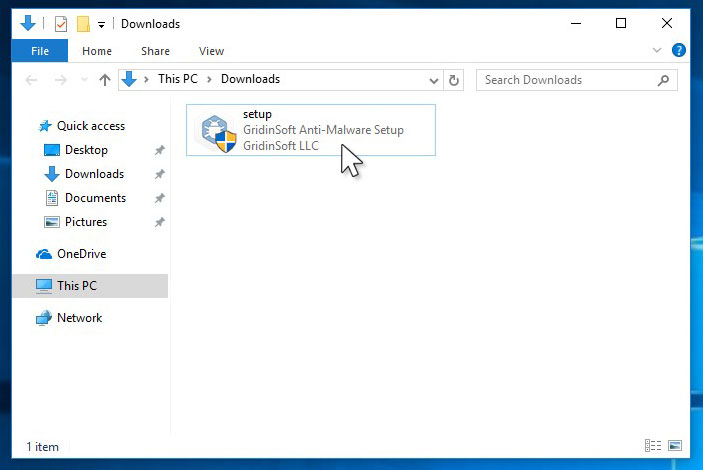
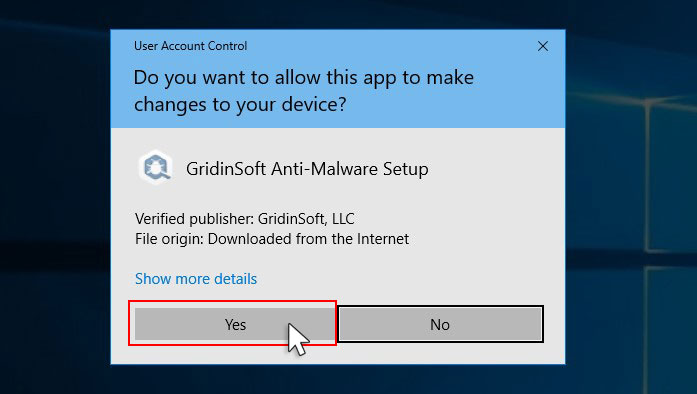
Run the setup file.
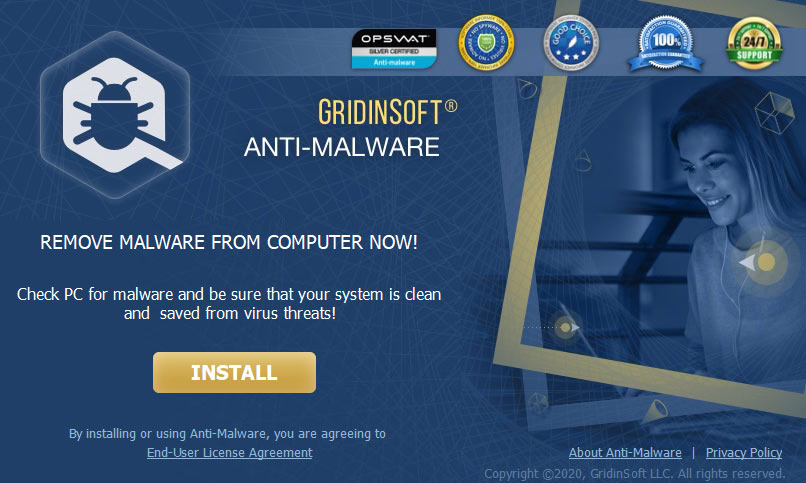
Press “Install” button.
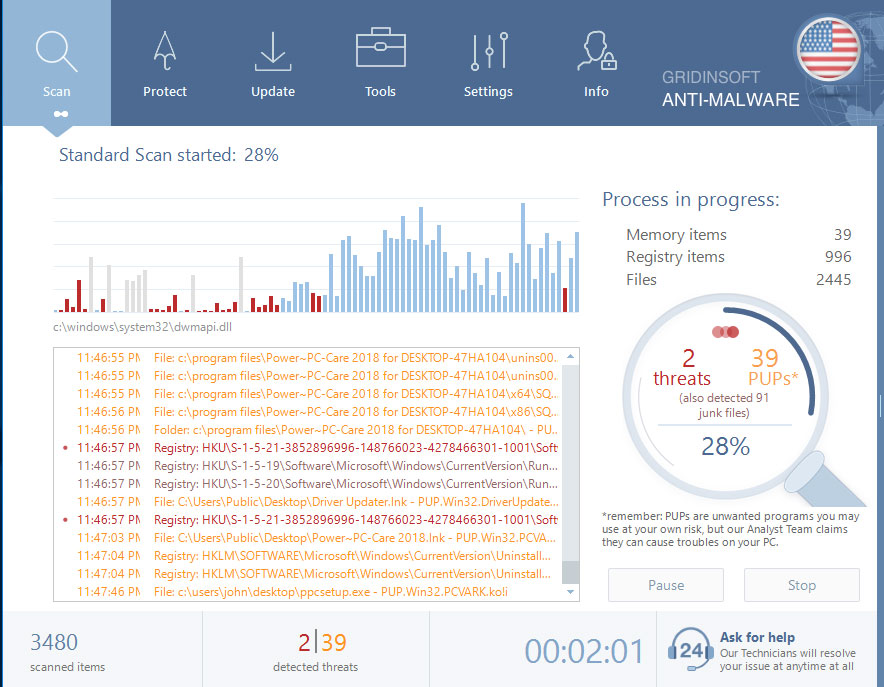
Once installed, Anti-Malware will automatically run.
Wait for the Anti-Malware scan to complete.
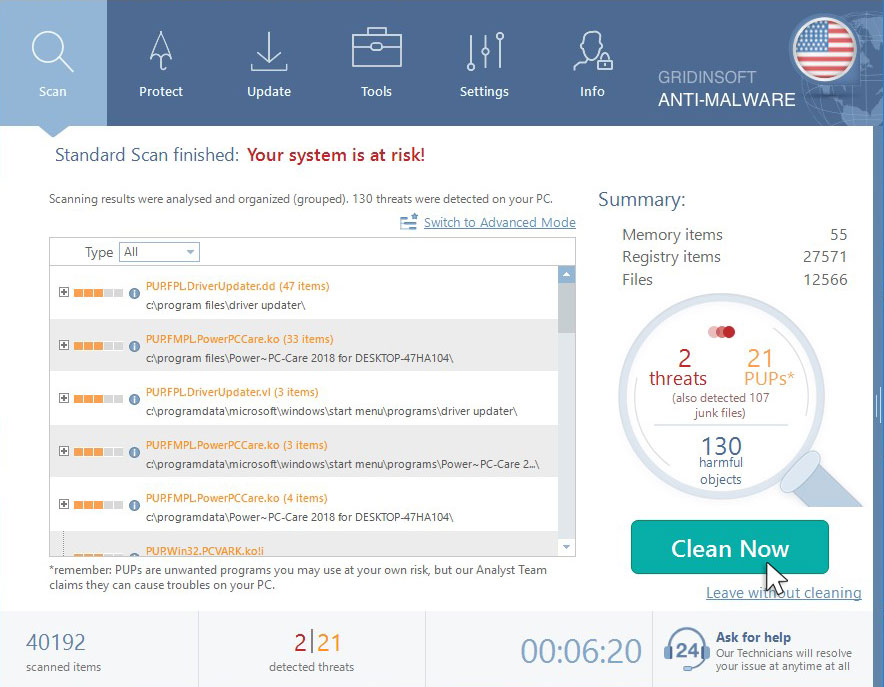
Click on “Clean Now”.
Frequently Asked Questions
How сan I avoid ransomware attack?
Bang ransomware doesn’t have a superpower.
You can easily protect yourself from its injection in several easy steps :
- Ignore all emails from unknown mailboxes with a strange unknown address, or with content that has likely no connection to something you are waiting for (can you win in a lottery without taking part in it?). If the email subject is likely something you are waiting for, check carefully all elements of the suspicious letter. A fake email will surely contain a mistake.
- Do not use cracked or untrusted programs. Trojans are often distributed as a part of cracked software, possibly under the guise of “patch” which prevents the license check. But untrusted programs are very hard to distinguish from trustworthy software, because trojans may also have the functionality you need. You can try to find information about this program on the anti-malware forums, but the best solution is not to use such programs.


Leave a Comment