
Backdoor:Win64/Androm!ic is a specific detection name used by antivirus software, such as Microsoft Defender Antivirus, to identify a particular variant of the Androm backdoor malware. Backdoors are a type of malicious software that allow unauthorized access to an infected system, enabling attackers to gain control, execute commands, and potentially carry out malicious activities without the user’s knowledge or consent.
Backdoor:Win64/Androm!ic specifically refers to this specific variant of the Androm backdoor that has been identified and classified by antivirus vendors. However, without more specific information about its characteristics or behavior, it is challenging to provide detailed insights into this particular variant.
In general, backdoor malware like Androm!ic can perform various malicious activities, including:
- Unauthorized Access: Backdoors provide a secret entry point into an infected system, allowing attackers to remotely control the system, execute commands, and potentially steal or modify data.
- Information Theft: Backdoors can be used to harvest sensitive information, such as login credentials, financial data, or personal information, from the compromised system. This stolen information can be used for identity theft, financial fraud, or other malicious purposes.
- Remote Control and Operation: Attackers can use backdoors to remotely control the infected system, giving them the ability to execute additional malicious commands or download and install additional malware.
- Persistence and Defense Evasion: Backdoors often employ techniques to maintain persistence on the infected system, ensuring they can survive system reboots and avoid detection by security software.
To protect your system from Backdoor:Win64/Androm!ic and similar threats:
- Use Reputable Antivirus Software: Install a reliable antivirus or anti-malware program and ensure it is regularly updated to detect and remove backdoors and other malware.
- Keep Software Updated: Keep your operating system, antivirus software, and other applications up to date with the latest security patches. Regular updates help protect against known vulnerabilities that malware can exploit.
- Exercise Caution: Be cautious when opening email attachments, downloading files from untrusted sources, or clicking on suspicious links. Be especially wary of emails or files that request sensitive information or exhibit suspicious characteristics.
- Enable Firewalls: Activate and properly configure firewalls on your system to block unauthorized network connections and protect against inbound threats.
What does the notification with Backdoor:Win64/Androm!ic detection mean?
The Backdoor:Win64/Androm!ic detection you can see in the lower right corner is shown to you by Microsoft Defender. That anti-malware software is quite OK at scanning, but prone to be generally unstable. It is vulnerable to malware invasions, it has a glitchy interface and bugged malware removal capabilities. Hence, the pop-up which says about the Androm!ic is rather just a notification that Defender has actually spotted it. To remove it, you will likely need to make use of another anti-malware program.
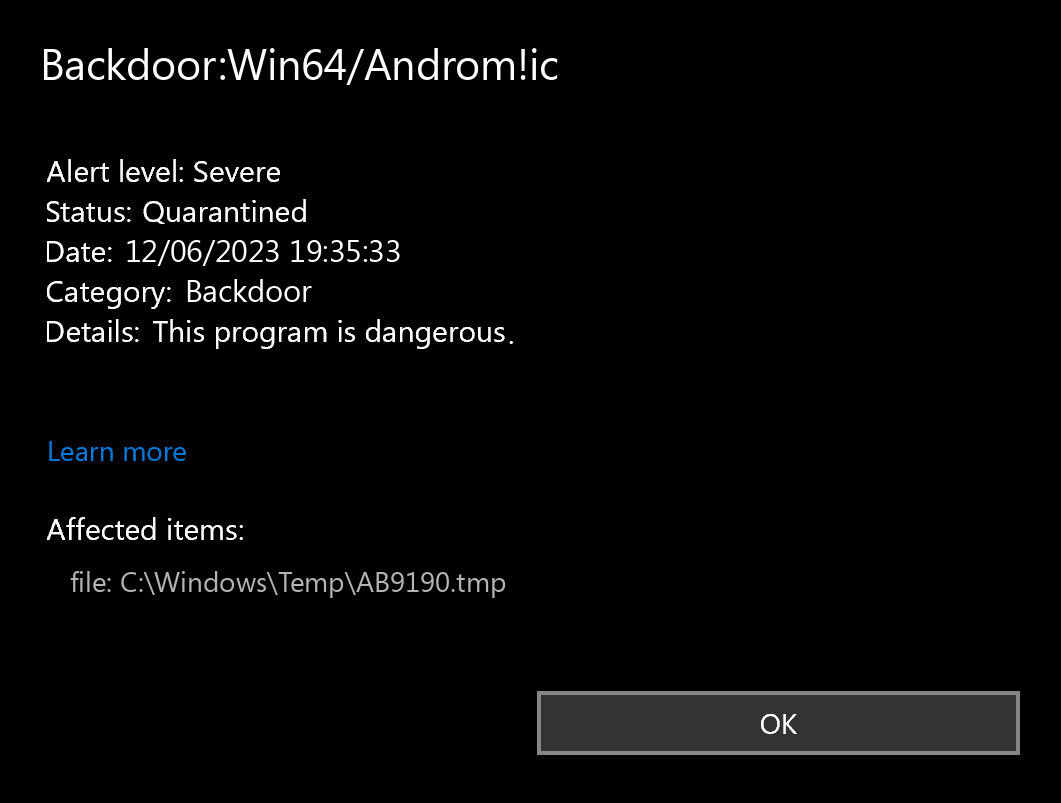
Microsoft Defender: “Backdoor:Win64/Androm!ic”
Backdoor Summary:
| Name | Androm Backdoor |
| Detection | Backdoor:Win64/Androm!ic |
| Damage | Gain access to the operating system to perform various malicious actions. |
| Similar | Mestys, Php Artemis, Metasploitloader, Msil Pasgen, Win64 Godropper, Win64 Vankul, Msil Androme, Lotok |
| Fix Tool | See If Your System Has Been Affected by Androm!ic backdoor |
Shortly about backdoors
Is Backdoor:Win64/Androm!ic dangerous?
As I have pointed out previously, non-harmful malware does not exist. And Backdoor:Win64/Androm!ic is not an exception. This backdoor does not deal a lot of damage just after it launches. Nonetheless, it will likely be a very bad surprise when an occasional discussion forum or page in the Internet will not let you in, due to the fact that your IP-address is disallowed after the DDoS attack. However, even if it is not crucial for you – is it positive in any way to realize that someone can easily access your computer, check out your conversations, open your files, and spectate what you do?
The spyware that is commonly present as a supplement to the Backdoor:Win64/Androm!ic malware will be just an additional argument to remove it as fast as you can. Nowadays, when users’ information is valued extremely high, it is too silly to grant the crooks such an opportunity. Even worse if the spyware will somehow manage to steal your banking info. Seeing 0 on your bank account is the worst headache, in my thoughts.
How did I get this virus?
It is not easy to line the origins of malware on your computer. Nowadays, things are mixed, and spreading tactics used by adware 5 years ago may be used by spyware these days. But if we abstract from the exact distribution way and will think about why it works, the answer will be really uncomplicated – low level of cybersecurity knowledge. People click on advertisements on weird sites, click the pop-ups they receive in their browsers, call the “Microsoft tech support” thinking that the scary banner that states about malware is true. It is essential to recognize what is legitimate – to prevent misconceptions when attempting to find out a virus.
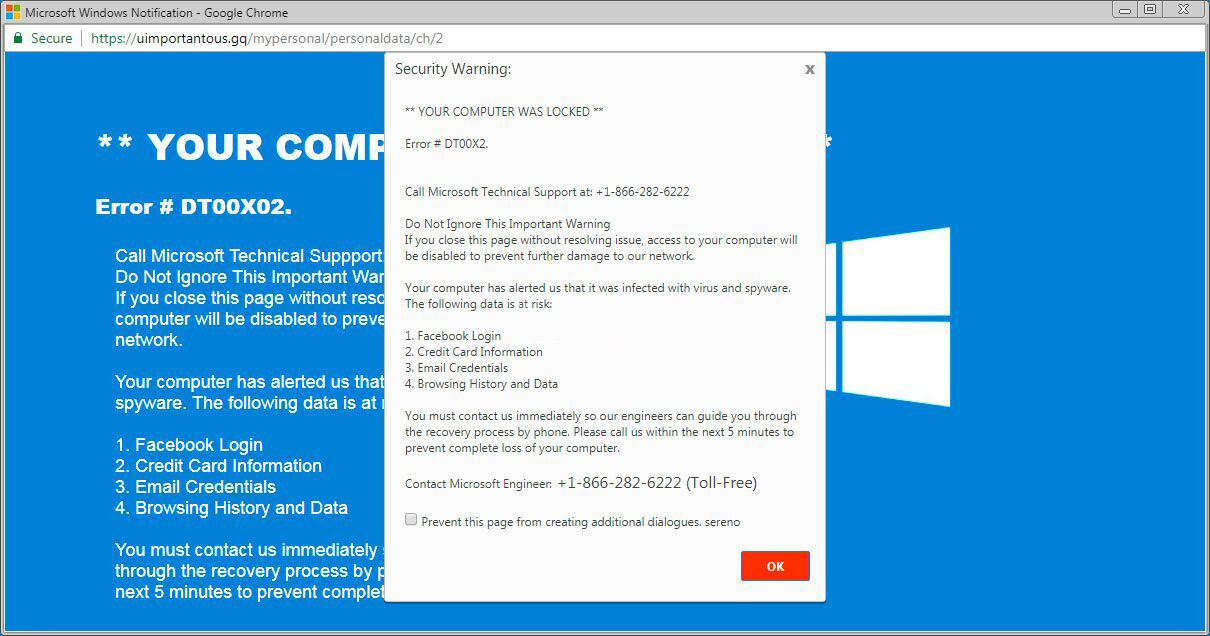
The example of Microsoft Tech support scam banner
Nowadays, there are two of the most widespread ways of malware distribution – bait e-mails and also injection into a hacked program. While the first one is not so easy to evade – you should know a lot to recognize a counterfeit – the 2nd one is simple to solve: just don’t use cracked programs. Torrent-trackers and various other providers of “free” applications (which are, exactly, paid, but with a disabled license checking) are really a giveaway point of malware. And Backdoor:Win64/Androm!ic is just amongst them.
How to remove the Backdoor:Win64/Androm!ic from my PC?
References
- Gossip about the backdoor in Intel processors on Reddit.


Leave a Comment