
Seeing the Worm:Win32/Vobfus!pz malware detection usually means that your PC is in big danger. This malware can correctly be named as ransomware – type of malware which ciphers your files and asks you to pay for their decryption. Removing it requires some peculiar steps that must be done as soon as possible.
Worm:Win32/Vobfus!pz detection is a virus detection you can spectate in your computer. It often shows up after the preliminary activities on your PC – opening the untrustworthy e-mail, clicking the banner in the Internet or setting up the program from dubious resources. From the instance it shows up, you have a short time to do something about it until it begins its destructive activity. And be sure – it is far better not to wait for these malicious effects.
What is Worm:Win32/Vobfus!pz virus?
Worm:Win32/Vobfus!pz Summary
In summary, Worm:Win32/Vobfus!pz virus actions in the infected system are next:
- Behavioural detection: Executable code extraction – unpacking;
- Reads data out of its own binary image;
- CAPE extracted potentially suspicious content;
- Drops a binary and executes it;
- Authenticode signature is invalid;
- Behavioural detection: Injection (inter-process);
- CAPE detected the embedded pe malware family;
- Anomalous binary characteristics;
- Attempts to modify Explorer settings to prevent hidden files from being displayed;
- Yara detections observed in process dumps, payloads or dropped files;
- Encrypting the files located on the target’s disk drives — so the victim cannot check these files;
- Blocking the launching of .exe files of anti-malware apps
- Blocking the launching of installation files of security tools
Ransomware has been a nightmare for the last 4 years. It is hard to realize a more hazardous virus for both individuals and corporations. The algorithms utilized in Worm:Win32/Vobfus!pz (typically, RHA-1028 or AES-256) are not hackable – with minor exclusions. To hack it with a brute force, you need to have more time than our galaxy currently exists, and possibly will exist. But that virus does not do all these terrible things immediately – it can require up to several hours to cipher all of your documents. Thus, seeing the Worm:Win32/Vobfus!pz detection is a clear signal that you need to begin the removal process.
Where did I get the Worm:Win32/Vobfus!pz?
Routine tactics of Worm:Win32/Vobfus!pz spreading are standard for all other ransomware examples. Those are one-day landing sites where victims are offered to download and install the free software, so-called bait e-mails and hacktools. Bait emails are a quite new strategy in malware distribution – you receive the e-mail that mimics some normal notifications about shipments or bank service conditions shifts. Inside of the e-mail, there is a corrupted MS Office file, or a link which leads to the exploit landing page.
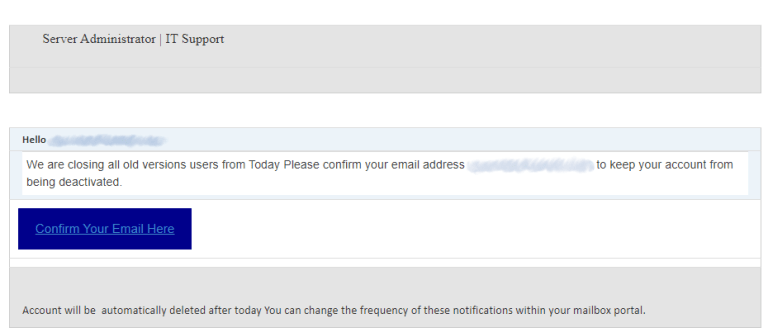
Malicious email message. This one tricks you to open the phishing website.
Avoiding it looks fairly simple, however, still demands a lot of focus. Malware can hide in various spots, and it is much better to stop it even before it goes into your system than to rely on an anti-malware program. Essential cybersecurity knowledge is just an important item in the modern world, even if your relationship with a PC stays on YouTube videos. That may save you a great deal of money and time which you would spend while trying to find a fix guide.
Worm:Win32/Vobfus!pz malware technical details
File Info:
name: C527937ED29A2D8DFCC8.mlwpath: /opt/CAPEv2/storage/binaries/53acca3bf900cf52203430fa5cc072541c3e72c0769695ff9573fe99b3b4d914crc32: 45ADAD38md5: c527937ed29a2d8dfcc8f8783f36ba71sha1: c8b5c072681d1991624c045faafc85dd7809b0dfsha256: 53acca3bf900cf52203430fa5cc072541c3e72c0769695ff9573fe99b3b4d914sha512: 8fac11f61993813bf8f0a7dcf269f7b021fb07aecdba6c6556bf6e42215ce5c2bfabaeff8d0a2648bea8b6f5d02d11c2bb827373c32d25c1d7252db29a6be011ssdeep: 6144:G2XxFdn53qLowKnvmb7/D26NID5UR2uNhVc5QTI/MfqZN:Gctn53qLowKnvmb7/D26rVc5AIMfqZNtype: PE32 executable (GUI) Intel 80386, for MS Windowstlsh: T1DE24B612FA01B41BF18698F05A6E8756782D2D7E26D0AC03B781BF5766705A7B8F031Fsha3_384: dd372a7b9393345128f9ee02c3f52f84bce71ebe5fea8aad006dcebeb483eeba3106d5acd2a4690d26b0bce743eef2c4ep_bytes: 68243d4000e8eeffffff000000000000timestamp: 2011-11-15 06:55:43Version Info:
ProductName: FileVersion: 1.00ProductVersion: 1.00InternalName: OriginalFilename:
Worm:Win32/Vobfus!pz also known as:
| Bkav | W32.AIDetectMalware |
| AVG | Win32:Evo-gen [Trj] |
| Elastic | malicious (high confidence) |
| MicroWorld-eScan | Gen:Variant.VBInject.11 |
| FireEye | Generic.mg.c527937ed29a2d8d |
| CAT-QuickHeal | Worm.VobfusVMF.S20100119 |
| Skyhigh | BehavesLike.Win32.VBObfus.dm |
| ALYac | Gen:Variant.VBInject.11 |
| Malwarebytes | Generic.Malware.AI.DDS |
| Zillya | Worm.WBNAGen.Win32.12 |
| Sangfor | Suspicious.Win32.Save.vb |
| K7AntiVirus | EmailWorm ( 0054d10f1 ) |
| K7GW | EmailWorm ( 0054d10f1 ) |
| CrowdStrike | win/malicious_confidence_100% (D) |
| Baidu | Win32.Worm.Autorun.l |
| VirIT | Trojan.Win32.Generic.CCEE |
| Symantec | W32.Changeup |
| tehtris | Generic.Malware |
| ESET-NOD32 | Win32/AutoRun.VB.APF |
| Cynet | Malicious (score: 100) |
| APEX | Malicious |
| ClamAV | Win.Trojan.Diple-8426 |
| Kaspersky | Worm.Win32.Vobfus.erbm |
| BitDefender | Gen:Variant.VBInject.11 |
| NANO-Antivirus | Trojan.Win32.WBNA.csfhek |
| SUPERAntiSpyware | Trojan.Agent/Gen-Autogen |
| Avast | Win32:Evo-gen [Trj] |
| TACHYON | Worm/W32.Vobfus.229376.E |
| Emsisoft | Gen:Variant.VBInject.11 (B) |
| F-Secure | Trojan.TR/VB.Inject.112561 |
| DrWeb | Trojan.VbCrypt.77 |
| VIPRE | Gen:Variant.VBInject.11 |
| TrendMicro | WORM_VOBFUS.SMAB |
| Trapmine | malicious.moderate.ml.score |
| Sophos | ML/PE-A |
| Ikarus | Trojan.Win32.Diple |
| Varist | W32/Vobfus.Z.gen!Eldorado |
| Avira | TR/VB.Inject.112561 |
| Antiy-AVL | Worm/Win32.WBNA.gen |
| Kingsoft | malware.kb.a.1000 |
| Microsoft | Worm:Win32/Vobfus!pz |
| Xcitium | TrojWare.Win32.VB.AVA@4paxk7 |
| Arcabit | Trojan.VBInject.11 |
| ZoneAlarm | Worm.Win32.Vobfus.erbm |
| GData | Gen:Variant.VBInject.11 |
| Detected | |
| AhnLab-V3 | Trojan/Win32.Jorik.R16322 |
| Acronis | suspicious |
| McAfee | VBObfus.cm |
| MAX | malware (ai score=82) |
| VBA32 | BScope.TrojanRansom.Blocker |
| Cylance | unsafe |
| Panda | Trj/Spyeye.C |
| TrendMicro-HouseCall | WORM_VOBFUS.SMAB |
| Rising | Worm.VobfusEx!1.99DC (CLASSIC) |
| Yandex | Trojan.GenAsa!QzBPxRjx8PM |
| SentinelOne | Static AI – Malicious PE |
| MaxSecure | Trojan.Malware.300983.susgen |
| Fortinet | W32/Diple.ZMH2!tr |
| BitDefenderTheta | Gen:NN.ZevbaF.36802.om0@aG1Hh5di |
| Cybereason | malicious.ed29a2 |
| DeepInstinct | MALICIOUS |
| alibabacloud | Trojan:Win/Vobfus.3e8172ff |


Leave a Comment