
The “Windows Defender Firewall Alert” scam is a cunning fraud that spreads through misleading websites, masquerading as legitimate Windows alerts. It tricks users into believing their system is infected, urging them to contact a fake support line.
The scam’s main actions include disabling real security software, installing malicious programs, and phishing for personal and financial information. Its deceitful tactics can lead to significant data theft, financial loss, and system compromise, making it a critical threat to be aware of.
“Windows Defender Firewall Alert” Scam Overview
In the latest research our team encountered the “Windows Defender Firewall Alert” scam while examining dubious websites. This scam impersonates Windows notifications, falsely alerting users that their device has an infection. Its purpose is to deceive victims into dialing a bogus support line, entangling them in a complex fraud.
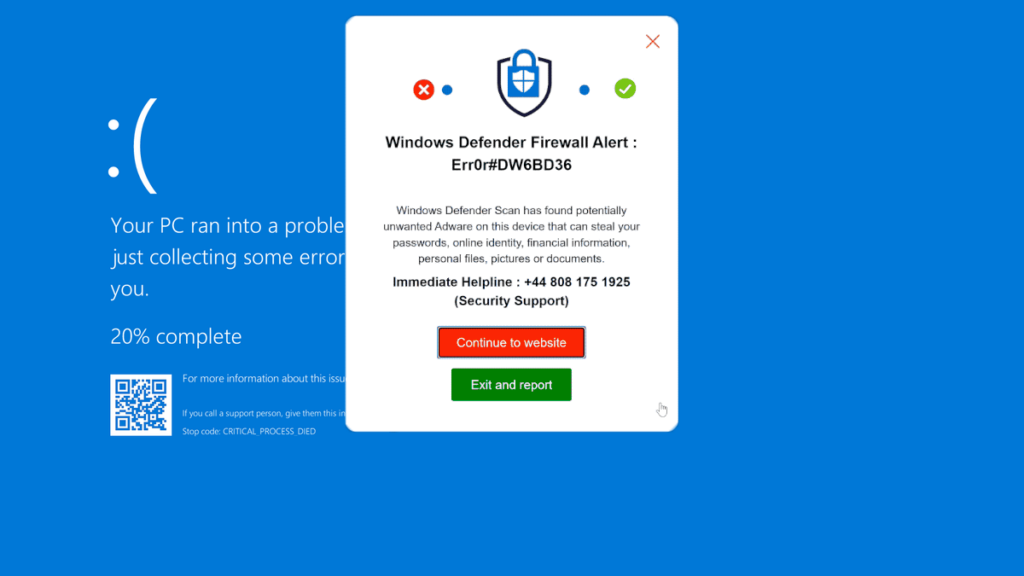
Screen of malicious scam notification
| Name | “Windows Defender Firewall Alert” scam |
| Threat Type | Phishing, Scam, Social Engineering, Fraud |
| Tech Support Scammer Phone Number | +44 808 175 1925 |
| Symptoms | Fake error messages, fake system warnings, pop-up errors, hoax computer scan. |
| Similar Behavior | “Your computer is disabled. Please call Microsoft”, “Error Code: 0x80073b01”,“Your Windows 10 is infected with viruses” |
| Damage | Loss of sensitive private information, monetary loss, identity theft, possible malware infections. |
How does “Windows Defender Firewall Alert” Scam works?
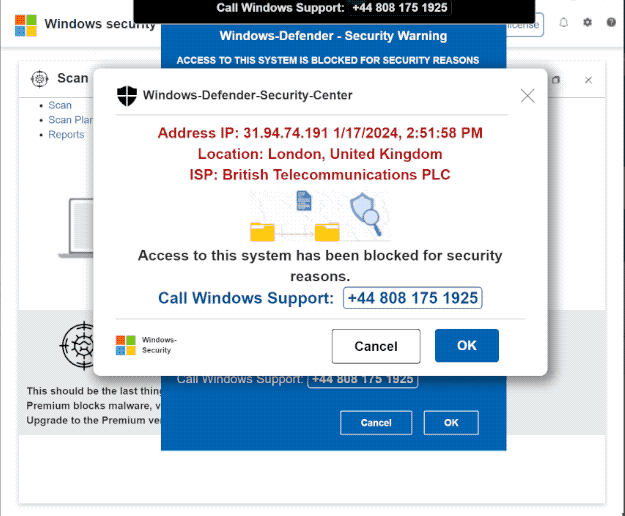
Fake Microsoft website
It’s crucial to understand that the “Windows Defender Firewall Alert” provides entirely fabricated information; no website has the capability to detect device threats remotely. This scam has no ties to Windows, Microsoft, or any legitimate products and services. The fraudsters, posing as support technicians over the phone, engage victims in an elaborate ruse. They might coax victims into financial transactions, personal information disclosure, unnecessary product purchases, software downloads (potentially harmful), and other risky actions.
How serious is this?
Scams, particularly those like the “Windows Defender Firewall Alert,” pose significant risks. They not only compromise system security by potentially installing malware such as trojans and ransomware but also threaten personal privacy by targeting sensitive information like login credentials and financial data. The consequences can range from financial loss to identity theft. Scammers often use sophisticated techniques to manipulate victims into divulging personal information or money, making these scams a serious concern. The impact can be long-lasting, affecting victims’ financial well-being and mental health, underscoring the need for vigilance and education on digital security practices.


Leave a Comment